


So, you just got a new electric car, super exciting! But then, boom, you get hit with a charging station fee and you’re left scratching your head, thinking, “why did I get charged a EV charging station fee when I bought a car?” It’s a common question, and honestly, the world of EV charging costs can feel a bit like a maze. We’re going to break down how these fees work, from home charging to public stations, and even those unexpected charges that pop up.
Key Takeaways
- Charging costs vary a lot depending on where you charge and what kind of charger you use.
- Home charging is usually the cheapest way to power up your EV.
- Public charging stations can have different pricing, like by the minute or by how much energy you use.
- Faster chargers, like DC Fast Chargers, usually cost more than slower ones.
- Sometimes, fees after buying your car are tied to dealership practices or pre-paid charging plans.
Understanding EV Charging Costs

So, you’re thinking about the real cost of owning an EV, huh? It’s not just about the sticker price of the car itself. You gotta factor in the juice that makes it go! Let’s break down what it really costs to keep your electric vehicle charged and ready to roll.
Charging Cost Formula Explained
Okay, so there’s a formula floating around that looks kinda scary, but it’s actually pretty straightforward. Basically, it helps you figure out how much a charge will cost based on your car’s range, how efficient it is, and the price of electricity.
Think of it like this:
Charging Cost = (Vehicle Range / Range Per kWh) x Cost Per kWh
- Vehicle Range: How far your car can go on a full charge.
- Range Per kWh: How many miles you get per kilowatt-hour (kWh).
- Cost Per kWh: What you pay for electricity.
Estimating Monthly EV Charging Expenses
To get a handle on your monthly charging bill, you’ll need to do a little homework. First, figure out how many miles you drive each month. Then, use that "miles per kWh" number from above to estimate how many kWh you’ll use. Finally, multiply that by the cost of electricity in your area. Don’t forget to account for both home and public charging if you plan to use both!
Factors Influencing Charging Costs
Lots of things can mess with your charging costs. Here are a few:
- Electricity Rates: These vary wildly depending on where you live. Some states have super cheap electricity, while others are crazy expensive.
- Charging Location: Charging at home is usually cheaper than using public charging stations.
- Charging Speed: DC fast chargers are convenient, but they usually cost more per kWh than Level 2 chargers.
- Driving Habits: If you’re a lead-foot, you’ll use more energy and spend more on charging. Gentle acceleration and consistent speeds are your friends.
- Battery Health: As your battery ages, it might not hold as much charge, meaning you’ll need to charge more often.
Home EV Charging Expenses
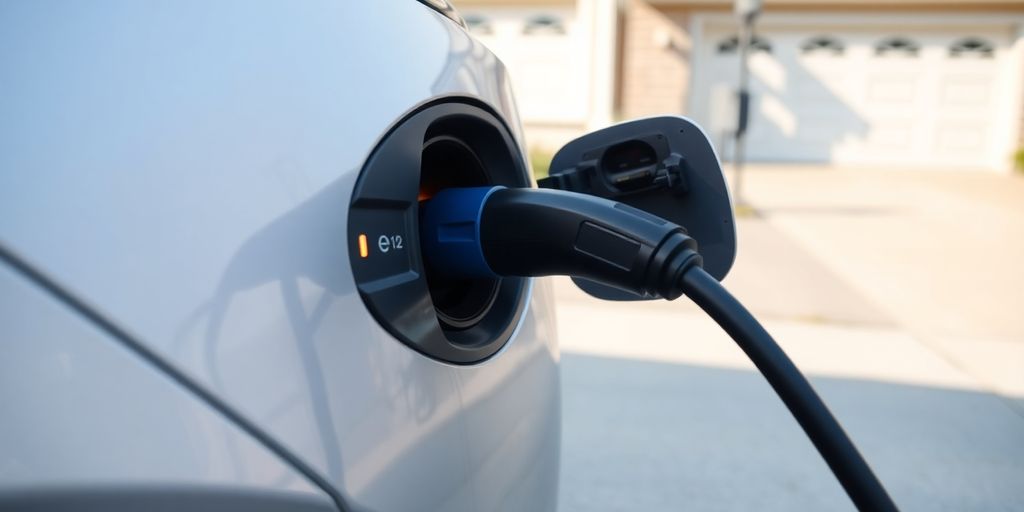
Calculating Residential Charging Costs
Okay, so you wanna figure out how much it’s gonna cost to charge your EV at home? It’s not rocket science, but there are a few things to keep in mind. First, you gotta know your electricity rate. Check your bill; it’s usually listed in cents per kilowatt-hour (kWh). Then, figure out how many kWh your car needs to fully charge. Multiply those two numbers, and boom, you’ve got a rough estimate. Keep in mind that this is just an estimate, and real-world conditions can affect the final cost.
Average Residential Electricity Rates
Electricity rates? They’re all over the place. What you pay in Idaho is probably way different than what someone in Hawaii is shelling out. In March 2023, the average in the US was around 15.85¢ per kWh, but it jumped a bit to 16.11¢ in April. Some states have much lower rates, while others are crazy high. It really depends on where you live and what your local utility company charges. Here’s a quick look at some example rates:
| State | Average Rate (¢/kWh) |
|---|---|
| Idaho | 10.24 |
| North Dakota | 10.24 |
| Hawaii | 43.18 |
Regional Differences in Home Charging Prices
Location, location, location! It’s not just about real estate; it’s about electricity too. Where you live has a HUGE impact on how much you’ll pay to charge your EV. States with cheap electricity, like those with lots of hydroelectric power, will have lower charging costs. States that rely on more expensive sources, like oil or natural gas, will see higher prices. Plus, some states have different regulations and incentives that can affect the final cost. So, do your homework and check out what’s happening in your neck of the woods.
Commercial EV Charging Station Fees
Commercial EV charging stations offer a convenient way to power up your electric vehicle when you’re away from home. However, understanding how these stations price their services is key to avoiding surprises. Unlike home charging, where you pay your standard residential electricity rate, commercial stations have different pricing models that can significantly impact your charging costs.
Variations in Commercial Charger Pricing
Commercial EV chargers don’t all charge the same way. Some offer free charging as an amenity, but most use either duration-based fees (charging by the hour) or kilowatt-hour (kWh) fees (charging for the amount of electricity you use). Some may even have a flat fee for a charging session. The price can vary widely depending on the location, charging speed, and network.
Duration-Based Charging Fees
With duration-based fees, you pay for the amount of time your vehicle is plugged in, regardless of how much electricity you actually draw. This can be beneficial if your car charges quickly, but it can be costly if your car charges slowly or if you leave your car plugged in longer than necessary. For example, you might pay $1 to $5 per hour, but this can vary.
Kilowatt-Hour (kWh) Charging Fees
Many commercial charging stations charge by the kilowatt-hour (kWh), which is a measure of the amount of electricity you use. This is similar to how you pay for electricity at home. However, commercial chargers often have a markup on the electricity cost compared to residential rates. The price per kWh can vary, but it’s important to know this rate to estimate your charging costs. In some states, duration-based fees are used instead of kWh fees due to regulatory reasons.
Comparing Level 2 and DC Fast Charging Costs
Cost of Level 2 Charging Stations
Level 2 charging stations are the workhorses of EV charging, offering a balance between speed and cost. They’re typically found in homes, workplaces, and public charging spots. The cost to use a Level 2 charger can vary. Some commercial locations offer it as a free perk, while others charge by the hour or kilowatt-hour (kWh). Expect to pay anywhere from $1 to $5 per hour, or $0.20 to $0.25 per kWh, but this can change based on location and provider. Keep in mind that your car’s onboard charger limits the maximum charging speed. So, even if the Level 2 charger can deliver 19.2kW, your car might only accept 7.2kW.
Higher Costs of DC Fast Charging
DC Fast Charging (DCFC), also known as Level 3 charging, is the speed demon of the EV world. It can add significant range to your EV in a short amount of time. However, this convenience comes at a higher price. DCFC stations are more expensive to install and maintain, and they typically charge a premium for electricity. The price can vary widely, from under $0.10/kWh to over $1/kWh, with an average around $0.35/kWh. This variation depends on factors like the station’s capital costs, operating expenses, and the local cost of electricity. Also, it’s important to note that not all EVs can use DCFC; plug-in hybrid electric vehicles (PHEVs) are often incompatible.
Charging Speed Versus Price
When deciding between Level 2 and DC Fast Charging, it’s a trade-off between speed and price. Level 2 charging is slower, taking several hours to fully charge your battery, but it’s generally more affordable. DC Fast Charging can get you back on the road much quicker, often in under an hour, but it will cost you more. Here’s a quick comparison:
- Level 2: Slower charging speeds, lower cost per kWh, suitable for overnight or workplace charging.
- DC Fast Charging: Much faster charging speeds, higher cost per kWh, ideal for road trips or when you need a quick charge.
- Consider your needs: If you have time and want to save money, Level 2 is the way to go. If you’re in a hurry and willing to pay more, DC Fast Charging is the better option.
Ultimately, the best choice depends on your individual needs and circumstances. Think about how much time you have, how much you’re willing to spend, and how much range you need to add to your battery.
Regional and Time-Based Pricing Variations
It’s easy to think charging your EV is a flat cost, but just like gas prices, what you pay can change depending on where you are and when you charge. These variations can really impact your overall expenses, so it’s good to be aware of them.
Electricity Price Fluctuations by State
The cost of electricity varies a lot across the country. For example, you might find rates under 11¢/kWh in states like Idaho or North Dakota, while in Hawaii, it could be over 43¢/kWh. These differences are due to a bunch of factors, like the availability of resources, local regulations, and infrastructure costs. If you’re planning a road trip, keep in mind that charging costs will change as you cross state lines.
Off-Peak Hour Charging Discounts
Many electricity providers offer lower rates during "off-peak" hours. These are usually during the night, on weekends, and some holidays when overall demand is lower. Some charging stations pass these savings on to you. If you can charge your car overnight, you might save a good amount of money. Check your local utility or charging network’s app to see if they offer time-of-use rates.
Impact of Battery Levels on Charging Costs
Most of the time, you won’t be charging from 0% to 100%. The amount you pay depends on how much you need to charge. If you only need to add a few miles to get home, you’ll pay less than someone who’s trying to fill up an almost-empty battery. Keep this in mind when estimating your charging costs.
Why Did I Get Charged a EV Charging Station Fee When I Bought a Car?
Understanding Initial Charging Station Fees
So, you just bought a shiny new EV and noticed a charge on your bill related to charging station fees? It’s more common than you think. Often, this fee covers the initial charging of your vehicle at the dealership. Dealerships want to ensure your car has enough juice for you to get home and start enjoying your new ride. It’s like a ‘full tank’ for a gas car, but with electrons instead of gasoline.
Dealership Charging Practices
Dealerships have different ways of handling EV charging. Some might include a small charging fee in the overall price of the car, while others list it as a separate item. It really depends on the dealership’s policies and how they structure their pricing. Some dealerships might even offer free charging for a limited time as a perk. It’s always a good idea to ask about their charging practices upfront to avoid any surprises.
Pre-Paid Charging Plans and Subscriptions
Sometimes, the charging fee you see is related to a pre-paid charging plan or subscription that the dealership includes with the car. These plans can offer discounted rates at certain charging networks or even free charging for a set period. Make sure you understand the terms of these plans, including which charging stations you can use and how long the subscription lasts. It’s a good way to save money on charging, but only if it fits your driving habits.
Navigating Unexpected Charging Fees
Okay, so you’re cruising along in your EV, feeling all eco-friendly, and then BAM! A charging fee pops up that you weren’t expecting. It happens. Let’s break down how to avoid those surprise costs and keep your charging budget in check.
Identifying Hidden Charging Costs
Sometimes, the advertised price isn’t the whole story. Keep an eye out for extra fees that might not be immediately obvious. These could include:
- Idle fees: Some networks charge you if you leave your car plugged in after it’s fully charged. They want to keep the chargers available for other drivers.
- Network membership fees: Some charging networks require a membership, and while it might offer lower rates, it’s still an added cost.
- Taxes and surcharges: Just like with gas, there might be taxes or other fees tacked onto your charging bill. Always check the final amount before confirming payment.
Understanding Charging Network Policies
Each charging network has its own rules, and it pays to know them. For example, Electrify America might have different pricing than ChargePoint. Read the fine print on their websites or apps to understand:
- How they calculate charging costs (per kWh, per minute, or a combination).
- Their idle fee policies.
- Any membership requirements or benefits.
- How they handle disputes or refunds.
Tips for Avoiding Surprise Fees
Here are some things you can do to minimize the chances of getting hit with unexpected charges:
- Always double-check the charging station’s pricing before plugging in. Most apps will show you the rates, but it’s good to confirm on the station itself.
- Set up notifications in your charging app. This way, you’ll get alerts when your car is almost fully charged, helping you avoid idle fees.
- Move your car promptly once it’s done charging. Be considerate of other EV drivers who need to use the charger.
- Keep an eye on your charging session in the app. This lets you monitor the cost and make sure everything is as expected.
- If you spot an error, contact the charging network’s customer support right away. Most companies are willing to help resolve legitimate issues.
Wrapping Things Up
So, yeah, getting hit with a charging fee right after buying your EV can feel a bit confusing. It’s not always as simple as just plugging in and going. You’ve got different charger types, different ways places charge you, and even where you live can change the price. But once you get the hang of how it all works, like checking for off-peak hours or knowing if you’re paying by the minute or by how much energy you use, it gets a lot easier. It’s just a new thing to learn, kind of like figuring out gas prices back in the day. Knowing these little details can really help you save some cash and make your EV experience a lot smoother.
Frequently Asked Questions
What makes up the cost of charging an electric car?
The cost of charging an electric car depends on a few things: where you charge (at home or at a public station), how fast you charge, and the price of electricity in your area. Home charging is usually cheaper, while fast public chargers can be more expensive.
How can I figure out how much it costs to charge my car?
You can figure out your home charging cost by looking at your electricity bill. It shows how much you pay per kilowatt-hour (kWh). Then, multiply that by how many kWh your car needs for a full charge. Public chargers often show their prices per kWh or per minute.
Does the cost of charging an EV change based on where I live or the time of day?
Yes, the cost of electricity can change a lot depending on where you live. Some states have much cheaper electricity than others. Also, some power companies offer lower rates during certain times of the day, like late at night, which can save you money.
What’s the difference in cost between Level 2 and DC Fast Charging?
Level 2 chargers are pretty common and charge your car at a medium speed, usually costing less. DC Fast Chargers are super quick but usually cost more per charge because they give you a lot of power very fast.
Why might I get free charging when I first buy my electric car?
Sometimes, when you buy a new EV, the dealership might include a free charging period or a special plan with a charging network. This means you might not pay for charging right away. It’s smart to ask your dealer about any such deals.
How can I avoid surprise charging fees?
To avoid unexpected fees, always check the price before you plug in at a public charging station. Many charging apps show the cost upfront. Also, understand if you’re paying by the minute or by the amount of electricity you use, as this can affect the total.
