


In India, the electric vehicle (EV) market is growing rapidly, and so is the need for reliable charging infrastructure. A variety of companies are stepping up to manufacture EV charging stations, making it easier for drivers to power their vehicles. If you’re curious about which company makes EV charging stations in India, you’re in the right place. This article explores some of the leading manufacturers, emerging players, and innovative startups in the market.
Key Takeaways
- Tata Power is a major player with a wide network of charging stations.
- Emerging companies like Statiq and EVRE are expanding the charging infrastructure in urban areas.
- Established firms such as Adani Total Gas are investing heavily in EV charging solutions.
- Innovative startups like Cubenz EV Chargers are focusing on advanced charging technology.
- Government initiatives are boosting the EV charging market through policies and incentives.
Leading Manufacturers Of EV Charging Stations
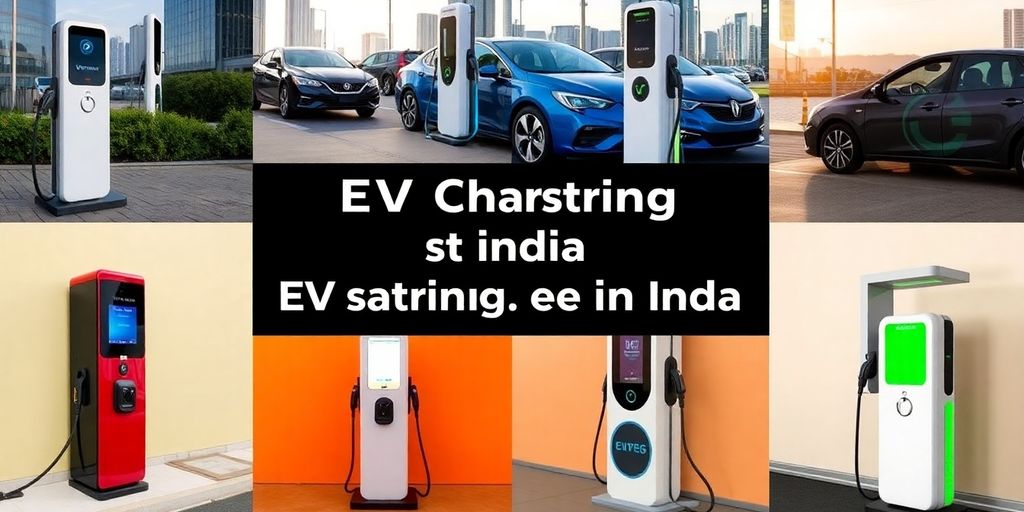
When you’re thinking about getting an EV charger, it’s good to know who’s actually making them. India has a growing number of companies in this space, some of which are pretty well-known.
Tata Power
Tata Power is a big name in the Indian energy sector, and they’re also making moves in the EV charging space. They’re setting up charging stations across the country. They’re not just about chargers, though; they’re involved in the whole EV ecosystem.
Servotech Power Systems
Servotech Power Systems is another player to watch. They’re focusing on making EV chargers and related tech. Servotech has ventured into the Charge Point Operator (CPO) business through its wholly-owned subsidiary, Incharz – Servotech EV Infra Pvt. Ltd.
Delta Electronics
Delta Electronics India is part of a global company, and they bring that international experience to the Indian market. They make a range of chargers, both AC and DC, and have been involved in some notable projects, like working with BHEL on charging infrastructure. They offer AC chargers (SBS-75X, Type-2) with power outputs from 1.1 kW to 22 kW, and DC chargers (GB/T, CCS, CHAdeMO) with power outputs from 15 kW to 200 kW.
Emerging Players In The EV Charging Market
India’s EV charging sector is seeing some interesting new companies pop up. They’re bringing fresh ideas and approaches to the table, trying to grab a piece of this growing market. It’s cool to see these companies trying to make a difference.
Statiq
Statiq is working to build a big charging network. They want to make it easy for EV owners to find a charger whenever they need one. They are partnering with businesses and property owners to get chargers in more places. The goal is to make owning an EV easier and more practical for everyone.
EVRE
EVRE is another company focused on setting up charging infrastructure. They’re trying to get businesses to put chargers in their parking lots. As more chargers become available, people will feel better about buying EVs. EVRE wants to help India depend less on oil and have cleaner air.
PlugNgo
PlugNgo, a brand by EV Motors India Pvt. Ltd., is developing a public charging network. They’re teaming up with real estate companies, EV makers, charger manufacturers, and others. PlugNgo wants to grow its network in India and even expand globally.
Established Companies In EV Infrastructure
Adani Total Gas
Adani Total Gas is making a play in the EV charging space, which makes sense given their existing infrastructure. I think they’re leveraging their current network to add charging stations, which could give them a real advantage. It’s like, they already have the gas stations, why not add chargers too?
ChargePoint India
ChargePoint is a big name globally, and their India presence is definitely something to watch. They’ve got a range of charging solutions and a pretty established network, so they’re not exactly new to the game. I’ve seen their chargers popping up in a few places, and they seem to be focusing on both public and private charging solutions.
Fortum India
Fortum India is another established player that’s been around for a bit. They’re not just about throwing up chargers; they’re looking at the whole energy picture, including renewable sources. I think that’s a smart move, especially as we try to make EVs truly green. They’ve been involved in some pretty big projects, so they’ve got the experience to handle large-scale deployments.
Innovative Startups In EV Charging Solutions
India’s EV charging landscape isn’t just about the big players; several innovative startups are bringing fresh ideas and approaches to the table. These companies are often more agile and focused on specific niches, contributing to a more diverse and dynamic market.
Cubenz EV Chargers
I’ve been hearing a lot about Cubenz lately. They’re really trying to make a splash with their smart EV charging solutions, especially for homes and housing societies. They offer a pretty straightforward process: click, fill, confirm, install, relax. It sounds almost too easy, but people seem to like the convenience.
Griden Power
Griden Power is another name that keeps popping up. They seem to be focusing on building a reliable and user-friendly network. It’s all about making sustainable transportation more practical. They’re committed to promoting eco-friendly solutions and a greener world.
Amara Raja
Amara Raja, while already established in the battery business, is also making moves in the EV charging space. They’re offering a range of AC chargers, portable AC chargers, and even battery swapping stations. Minda Corporation has even acquired a stake in EVQPOINT Solutions, which is interesting. They’re definitely trying to cover all the bases, from home charging to more public options.
Key Features Of EV Charging Stations
Alright, let’s talk about what makes an EV charging station tick. It’s not just about plugging in; there’s more than meets the eye. From the type of charger to how fast it juices up your ride, and how easy it is to use, it all matters.
Types Of Chargers
Okay, so you’ve got a few main types of chargers out there. You’ve probably heard of Level 1, Level 2, and DC Fast Charging (DCFC). Level 1 is like your standard wall outlet – super slow, but it works in a pinch. Level 2 is faster, what you’d usually find at homes or workplaces. DC Fast Charging is the speed demon, giving you a significant charge in a short amount of time, perfect for road trips.
Charging Speed
Charging speed is a big deal, right? Nobody wants to sit around for hours waiting for their car to charge. It depends on the charger type and your car’s battery capacity. Level 1 might give you a few miles per hour, Level 2 could get you 20-30 miles per hour, and DCFC? We’re talking potentially hundreds of miles in an hour, but it varies.
User Accessibility
User accessibility is key. Is the charging station easy to find? Is it working? Can you pay without a hassle? These are important questions. Things that make a charging station accessible:
- Clear signage and directions.
- Reliable operation and maintenance.
- Multiple payment options (app, card, etc.).
- A user-friendly interface on the charger itself.
- Good lighting and safe surroundings.
Basically, you want a charging experience that’s smooth and doesn’t leave you stranded or confused.
Government Initiatives Supporting EV Charging
Policy Framework
The government is really pushing for more electric vehicles, and it shows. They’ve rolled out a bunch of policies to make it easier for companies to set up charging stations. It’s all about creating a supportive environment, so we see more EVs on the road. These policies cover everything from safety standards to how the charging stations should be built and operated. It’s a big deal because it gives everyone a clear roadmap to follow.
Incentives For Manufacturers
To get more companies involved in making EV chargers, the government is offering some pretty sweet deals. These incentives can include:
- Tax breaks: Lowering the amount of tax companies have to pay.
- Subsidies: Direct financial assistance to help with costs.
- Reduced import duties: Making it cheaper to bring in parts from other countries.
These perks make it more attractive for businesses to invest in EV charging tech. It helps lower the initial costs, which can be a big hurdle for many companies.
Public-Private Partnerships
The government isn’t doing this alone. They’re teaming up with private companies to build out the EV charging infrastructure. This means:
- Sharing the costs: Both the government and private companies put money into the projects.
- Combining expertise: The government brings the policy and planning, while private companies bring the tech and know-how.
- Faster rollout: By working together, they can get more charging stations up and running quickly.
These partnerships are key to making sure we have enough charging stations to support the growing number of EVs. It’s a win-win situation for everyone involved.
Future Trends In EV Charging Infrastructure
The EV charging landscape is changing fast. It’s not just about more chargers, but smarter and more integrated solutions that will shape how we power our electric vehicles in the coming years. Here’s a peek at what’s coming:
Smart Charging Solutions
Smart charging is all about optimizing energy use and reducing costs. This means:
- Load balancing: Chargers that can adjust their power output based on grid demand, preventing overloads.
- Time-of-use optimization: Scheduling charging during off-peak hours when electricity is cheaper.
- App integration: Allowing users to monitor and control charging sessions remotely.
Integration With Renewable Energy
Combining EV charging with renewable energy sources like solar and wind power is becoming increasingly common. This can involve:
- On-site solar panels: Generating electricity directly at the charging station.
- Battery storage: Storing excess renewable energy for later use, ensuring a consistent power supply.
- Green energy tariffs: Sourcing electricity from renewable energy providers.
Expansion Plans
More chargers are needed, plain and simple. But it’s not just about quantity; it’s about strategic placement and accessibility. Expect to see:
- Increased public charging stations: More chargers in convenient locations like shopping malls, workplaces, and highway rest stops.
- Residential charging solutions: Easier and more affordable home charging options.
- Rural area expansion: Addressing the charging gap in less populated areas to promote EV adoption nationwide.
Wrapping It Up
In conclusion, the landscape of EV charging stations in India is growing rapidly, with several companies stepping up to meet the demand. From established names like Tata Power and Fortum to newer players like Statiq and EVRE, there’s a mix of options for anyone looking to set up charging infrastructure. Each company brings its own strengths to the table, whether it’s extensive networks, innovative technology, or partnerships that enhance service delivery. As electric vehicles become more popular, these companies will play a key role in making charging accessible and convenient for all users. So, if you’re considering getting into the EV space, now’s a great time to explore these options.
Frequently Asked Questions
What companies manufacture EV charging stations in India?
Some of the main companies that make EV charging stations in India include Tata Power, Servotech Power Systems, Delta Electronics, Adani Total Gas, ChargePoint India, and Fortum India.
What are the different types of EV chargers?
There are mainly two types of EV chargers: AC chargers and DC chargers. AC chargers are typically used for home charging, while DC chargers are used for fast charging at public stations.
How fast can EV charging stations charge a vehicle?
The charging speed can vary. Regular AC chargers can take several hours, while DC fast chargers can charge an EV to about 80% in 30 minutes or less.
Are there government programs to support EV charging stations?
Yes, the Indian government has introduced various policies and incentives to promote EV charging infrastructure, including financial support for manufacturers and partnerships with private companies.
What are the future trends in EV charging?
Future trends include smart charging solutions that use technology to optimize charging times and costs, as well as integrating renewable energy sources into the charging network.
How can I find an EV charging station near me?
You can use mobile apps or websites that list charging stations, or you can check with your EV manufacturer for their recommended charging networks.
