


The rise of electric vehicles (EVs) has sparked a lot of questions, especially about charging infrastructure. With more people considering the switch to electric, many are asking: when will there be EV charging stations everywhere? While the landscape is changing rapidly, there are still hurdles to overcome before we see charging stations as common as gas pumps. Let’s explore the current state of EV charging, the factors driving its growth, and what the future looks like.
Key Takeaways
- Currently, there are over 210,000 public EV charging stations in the U.S., but this is still far fewer than gas stations.
- Government incentives and policies play a significant role in expanding charging infrastructure.
- Technological advancements, like fast charging and renewable energy integration, are crucial for future growth.
- Gas stations are transitioning to include EV chargers, making them ideal for convenient charging locations.
- By 2030, experts predict there could be around 500,000 charging stations available across the country.
Understanding The Current EV Charging Landscape
Current Number Of Charging Stations
Okay, so where are we really at with EV chargers? It’s not as simple as just counting them. We need to think about different charger levels (Level 2 vs. DC fast charging) and how reliable they are. The total number of EV charging stations is growing, but the pace needs to pick up significantly to meet projected demand. I saw a thing the other day that said satisfaction with charging infrastructure is down year over year. That’s not good! We need more chargers, and they need to work when we get there.
Geographic Distribution Of Chargers
It’s no secret that some areas are way better than others when it comes to EV charging. Coastal states, like California, tend to have a much higher concentration of charging stations compared to, say, the Midwest. This creates a real problem for long-distance travel. You can’t just assume you’ll find a charger when you need one. It’s important to consider the number of stations by state when planning a trip. Here’s a quick breakdown:
- High Density: California, New York, Florida
- Medium Density: Washington, Texas, Colorado
- Low Density: Montana, Wyoming, North Dakota
This uneven distribution is a major hurdle to overcome if we want widespread EV adoption.
Challenges In Accessibility
Accessibility isn’t just about location; it’s about who can use the chargers. Are they in apartment complexes? Are they in rural areas? Are they working? Are they easy to use? There are a bunch of challenges. For example, many apartment dwellers don’t have access to home charging, making public chargers their only option. And even when chargers are available, payment can be a pain. I read that EV drivers have to keep two or three apps on their phone just to pay for EV charging across the major networks. That’s crazy! We need to simplify the EV charge card situation and make charging more accessible for everyone.
Factors Influencing Charging Station Expansion
Government Incentives And Policies
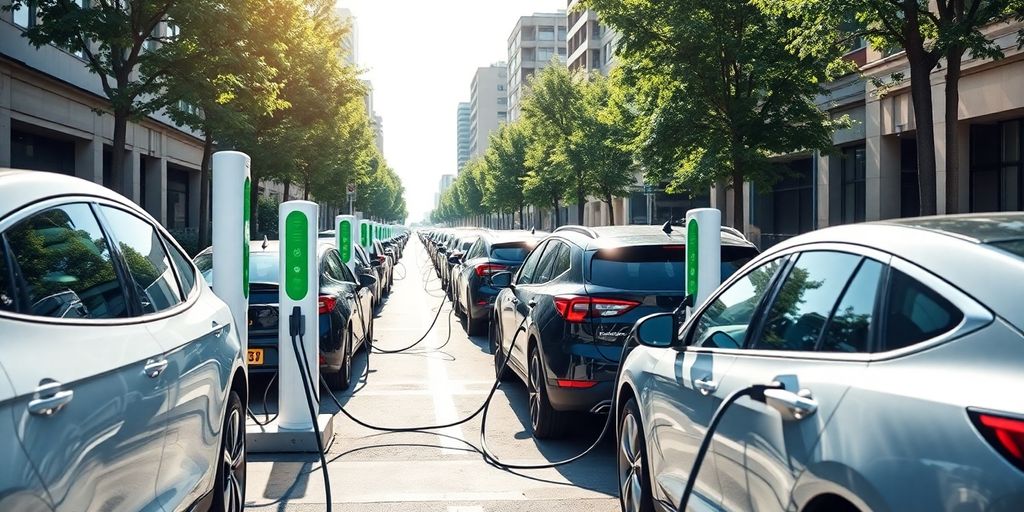
Government involvement is a big deal. Tax breaks and grants for installing charging stations can really speed things up. It’s like, if the government says, "Hey, we’ll help you pay for it," more businesses and individuals are likely to jump on board. Plus, policies that require new buildings to include EV charging infrastructure can make a huge difference over time. Think about it: every new apartment complex or office building with chargers already installed? That’s a win.
Market Demand For Electric Vehicles
The more EVs on the road, the more charging stations we’ll need. It’s simple supply and demand. As more people switch to electric cars, businesses will see the potential to make money by installing chargers. And it’s not just about the number of EVs, but also how often they’re used. If people are driving their EVs a lot, they’ll need to charge them more often, which means more demand for public charging stations. This increased demand will naturally drive the expansion of charging Clipper Creek station availability.
Investment From Automakers
Automakers are putting serious money into EVs, and that includes investing in charging infrastructure. They know that if people are worried about where they’re going to charge their cars, they’re less likely to buy them. So, companies like Tesla, GM, and Ford are all working to build out charging networks. Tesla’s Supercharger network is a prime example, but other automakers are partnering with charging companies to create even more options. This investment is crucial for making EVs a viable option for more people. It’s not just about building the cars; it’s about making sure people can actually use them. Automakers are also motivated to invest in charging infrastructure to support their growing EV fleets and ensure customer satisfaction. They understand that a robust charging network is essential for the widespread adoption of electric vehicles.
Technological Advances In Charging Infrastructure
High-Speed Charging Solutions
Okay, so, the big thing everyone’s talking about is faster charging. Nobody wants to sit around for hours waiting for their car to charge, right? High-speed charging is the key to making EVs more practical for everyday use. We’re seeing some pretty cool advancements here. For example, the installation timelines for EV charging stations are getting shorter, which is great.
- Higher voltage systems are being developed.
- Better cooling tech means more power without overheating.
- New charging protocols are streamlining the process.
Integration Of Renewable Energy
Imagine charging your EV with sunshine! That’s the idea behind integrating renewable energy sources like solar and wind into charging stations. It’s not just about being green; it can also help reduce the strain on the power grid. Plus, it can lower the cost of charging in the long run. Automakers are even adopting wireless charging technology, which is pretty neat.
- Solar panels on charging station canopies.
- Wind turbines providing supplemental power.
- Battery storage systems to balance energy supply and demand.
Smart Charging Technologies
Smart charging is all about making the charging process more efficient and convenient. Think about it: you don’t always need a full charge right away. Smart charging can optimize charging times based on your needs and the availability of electricity. This can help reduce energy costs and prevent overloading the grid. It’s also about building EV charging infrastructure that’s actually smart.
- Load balancing to prevent overloading circuits.
- Scheduled charging during off-peak hours.
- Remote monitoring and control via smartphone apps.
The Role Of Gas Stations In EV Charging
Transitioning Gas Stations To Charging Stations
Gas stations are starting to see the writing on the wall. With electric vehicles becoming more popular, many are looking at how they can adapt. Instead of just selling gasoline, they’re beginning to offer EV charging as well. BP, for example, is investing big in EV charging infrastructure, planning to add lots of chargers across the US. Shell has its Shell Recharge brand, and Pilot and Flying J are working with GM Energy. It makes sense – people are already used to stopping at gas stations, so why not give them a place to charge their EVs?
Benefits Of Charging At Gas Stations
There are some real advantages to having EV chargers at gas stations. For one, gas stations are usually in convenient locations, right off major roads. Plus, they offer amenities like restrooms, snacks, and drinks. If you’ve ever had to wait a while for your EV to charge, you know how important those things can be! Also, gas stations are typically staffed, which can make it easier to report problems with the chargers or get help if you need it. You can find EV charging solutions at many gas stations now.
Consumer Preferences For Charging Locations
Where people prefer to charge their EVs is interesting. A lot of EV owners actually do most of their charging at home. It’s just more convenient. But when they’re on a road trip, that’s when public charging stations become important. And many drivers prefer the familiarity and convenience of gas stations. They know what to expect, and they can take care of other needs while their car is charging. Plus, with fast chargers becoming more common, you can get a pretty good charge in about half an hour. It’s almost like filling up with gas, but cheaper! You can use a charge card at many locations.
Future Projections For EV Charging Stations
Expected Growth In Charging Infrastructure
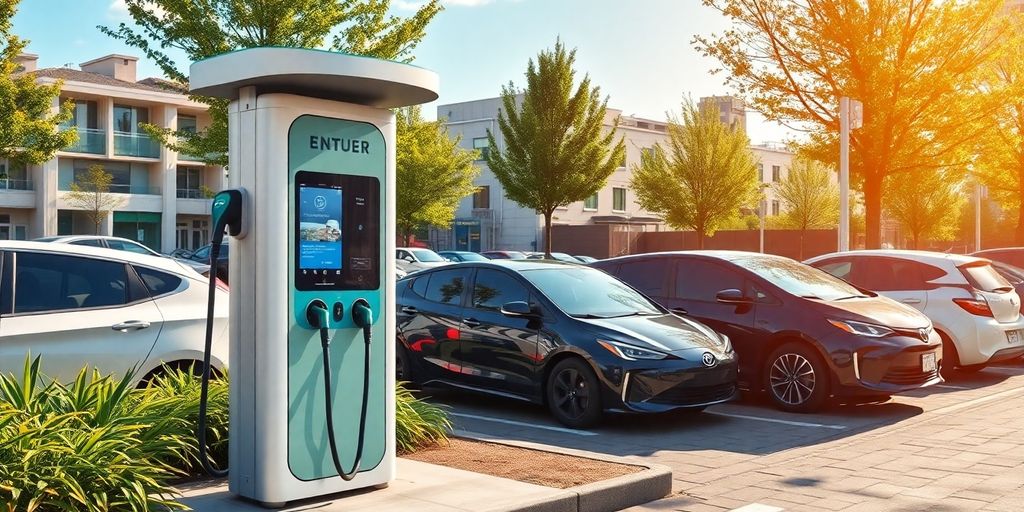
Okay, so, where are we headed with all this EV charging stuff? Well, most experts seem to agree that we’re going to see a HUGE increase in the number of charging stations over the next few years. I’m talking like, a lot. The growth is expected to be exponential, especially as more people switch to electric vehicles. It’s not just about having more chargers, but also about having them in more convenient locations. Think shopping malls, workplaces, and even your local grocery store parking lot. It’s all about making it easier for EV owners to juice up their rides without going out of their way. Plus, with companies like Travel Center and Electrify America teaming up to install high-speed DC fast charging at travel centers, long road trips in EVs are becoming way more feasible.
Impact Of Urban Planning On Charging Availability
Urban planning is going to play a big role in how accessible EV charging becomes. Cities are starting to realize they need to incorporate charging infrastructure into their development plans. This means things like requiring new buildings to include EV chargers, or setting aside public spaces for charging stations. For example, Boston now requires that 5% of parking spaces in new constructions be equipped with EV chargers. Smart, right? The more cities prioritize EV infrastructure, the easier it’ll be for people to own and use electric vehicles. It’s all about making EV charging equipment upgrades a seamless part of city life.
Predictions For 2030 And Beyond
Looking ahead to 2030 and beyond, the future of EV charging is looking pretty bright. Some predictions say that by then, the number of EV charging stations will be comparable to the number of gas stations we have today. That’s a big deal! We’re also likely to see some cool advancements in charging technology, like wireless charging and even faster charging speeds. Plus, with cities aiming for things like 20% of new car sales being electric by 2025 (like in NYC), and public bus systems going all-electric by 2040, the demand for transportable DC charging will only keep growing. It’s an exciting time to be an EV enthusiast, and the future looks electric!
Consumer Behavior And EV Adoption
Range Anxiety And Charging Availability
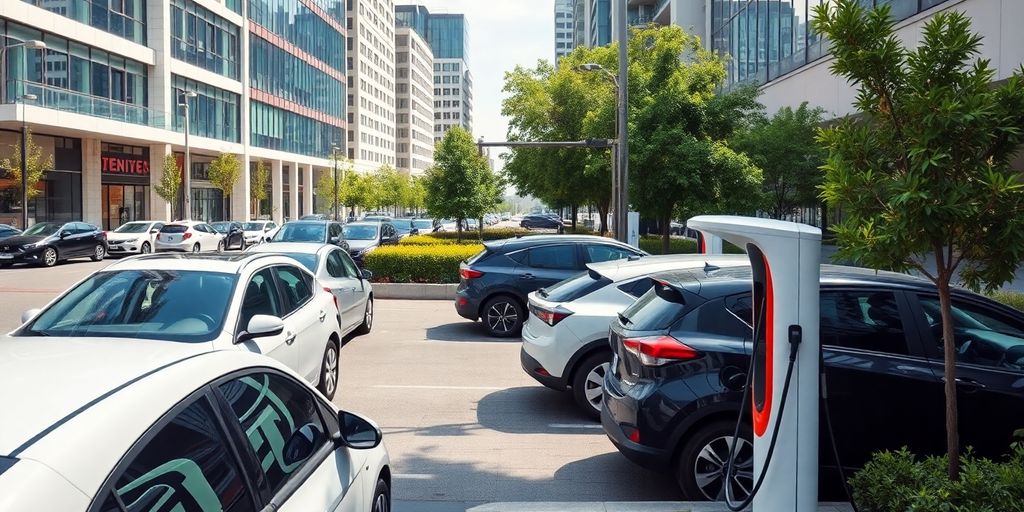
Okay, so let’s talk about what’s really on people’s minds when they think about switching to an EV. It’s not the cool tech or saving the planet (though those are nice bonuses!). It’s range anxiety. People are worried they’ll get stranded with a dead battery and no place to charge. It’s a valid concern! You see articles about EV charging solutions all the time, but are they enough?
Think about it: you’re used to gas stations being everywhere. EV chargers? Not so much. This fear definitely impacts whether people are willing to take the plunge and buy an electric car. The more charging stations there are, the less anxiety there will be, and the more EVs we’ll see on the road. It’s a pretty direct relationship.
Influence Of Charging Station Locations
Where charging stations are located matters a lot. No one wants to sit in a random parking lot for an hour while their car charges. People want to charge where they already are – at grocery stores, shopping malls, movie theaters, workplaces, etc.
- Convenience is key. If charging is easy and integrated into daily life, people are way more likely to consider an EV.
- Safety is also a factor. Well-lit, secure charging locations are a must, especially at night.
- Amenities matter. Access to restrooms, Wi-Fi, and nearby shops can make the charging experience much more pleasant.
It’s not just about having charging stations; it’s about having them in the right places. Automakers are starting to realize this, and private sector interest in EVs is growing.
Public Perception Of Electric Vehicles
Public perception of EVs is a mixed bag. Some people are super enthusiastic, seeing them as the future of transportation. Others are skeptical, citing concerns about cost, range, and charging infrastructure. A lot of the negativity comes from misinformation or outdated ideas. Remember the ill-fated EV1? That didn’t help things!
Here’s what influences public opinion:
- Media coverage: Positive reviews and stories about EVs can sway opinions. Negative press about range issues or charging problems can do the opposite.
- Government policies: Incentives like tax credits can make EVs more attractive. Regulations that favor EVs can also shift public perception.
- Personal experience: People who have driven or ridden in an EV are more likely to have a positive view of them. Word-of-mouth is powerful!
Changing public perception takes time and effort. It requires education, transparency, and, most importantly, a reliable and convenient charging infrastructure. If people see that EVs are practical and easy to use, they’ll be much more likely to embrace them.
Innovative Solutions For Charging Accessibility
Mobile Charging Units
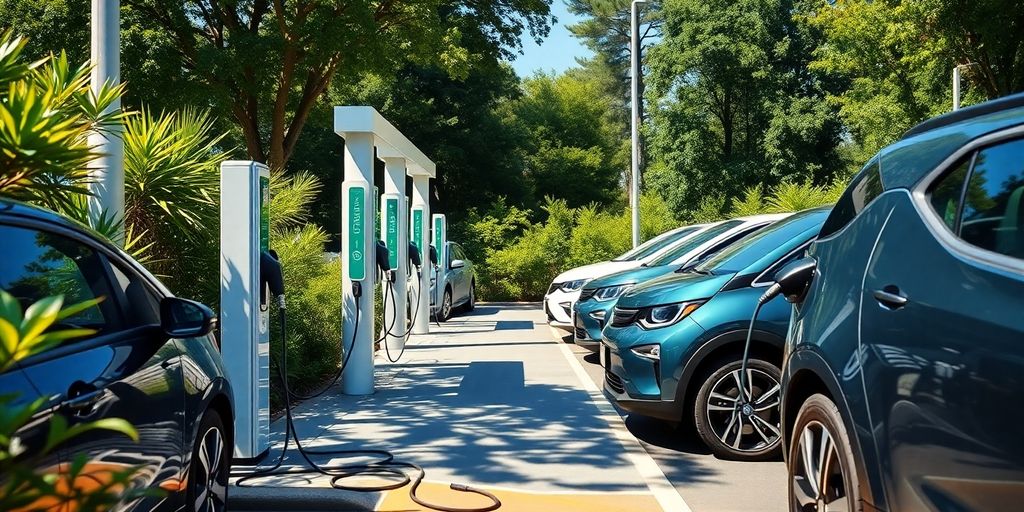
Imagine needing a charge but being nowhere near a station. Mobile charging units are stepping in to solve this! These units, often mounted on trucks or trailers, can deliver a charge directly to stranded EVs. This is especially useful in rural areas or during emergencies. Think of it like roadside assistance, but for your battery. It’s not just about convenience; it’s about peace of mind. Some companies are even experimenting with drone-based charging for hard-to-reach locations. It’s still early days, but the potential is huge.
Partnerships With Retailers
Why not charge while you shop? Retailers are increasingly partnering with EV charging networks to install stations in their parking lots. This is a win-win: customers get a convenient charging option, and retailers attract more business. You can now find commercial EV charging stations at grocery stores, shopping malls, and even fast-food restaurants. The idea is simple: make charging part of your everyday routine. Plus, retailers can use these stations to promote their sustainability efforts and attract environmentally conscious consumers. It’s a smart move all around.
Community Charging Initiatives
Charging shouldn’t just be for homeowners with garages. Community charging initiatives are popping up to make EV ownership accessible to everyone. These initiatives often involve installing charging stations in apartment complexes, workplaces, and public parking areas. Some programs even offer incentives for residents to share their home chargers with neighbors. This is particularly important in urban areas where many people live in apartments or condos. By fostering a sense of community around EV charging, we can accelerate adoption and make electric vehicles a viable option for more people. AMPPAL specializes in electric vehicle charging solutions for these types of initiatives. Here are some benefits:
- Increased accessibility for apartment dwellers
- Reduced range anxiety for EV owners
- Promotion of sustainable transportation options
Looking Ahead: The Future of EV Charging Stations
So, when will we see charging stations everywhere? Honestly, it’s hard to say for sure. The good news is that the momentum is building. With more electric vehicles on the road and a growing demand for charging options, we can expect to see a lot more stations popping up in the next few years. Cities and states are pushing for more infrastructure, and companies are stepping up to meet that need. Sure, we’re not quite at the point where you can find a charger on every corner like gas stations, but we’re getting there. As technology improves and more people make the switch to electric, the landscape will change. It’s just a matter of time before charging your EV becomes as easy as filling up at a gas station.
Frequently Asked Questions
What is the current number of EV charging stations in the U.S.?
As of now, there are over 210,000 public charging stations for electric vehicles in the United States.
Why is the distribution of charging stations uneven?
Charging stations are often concentrated in certain areas, like California, while other regions may have fewer options. This can make it hard for some people to find a nearby station.
What factors are driving the growth of charging stations?
Government incentives, increased demand for electric vehicles, and investments from car companies are all helping to expand the number of charging stations.
How will technology improve charging options in the future?
New technologies like fast charging, using renewable energy, and smart charging systems are expected to make charging easier and faster.
What role do gas stations play in the future of EV charging?
Gas stations are transitioning to include charging stations, making them convenient places for EV drivers to charge while they take a break.
What can consumers expect regarding charging station availability in the future?
Experts predict that by 2030, there could be around 500,000 charging stations in the U.S., making it much easier for EV owners to find a place to charge.
