


UPS is making strides in developing street-embedded EV charging infrastructure to support the growing demand for electric vehicles (EVs). With a focus on innovative technologies, collaborations, and sustainable solutions, the company is working to create a reliable charging network that meets the needs of urban and rural areas alike. This article explores what UPS is doing now to enhance EV charging infrastructure, ensuring efficient delivery services while reducing its carbon footprint.
Key Takeaways
- UPS is exploring electric road systems that allow vehicles to charge while driving.
- The company is partnering with EV specialists like Tevva Motors to develop new technologies.
- Investment in sustainable solutions includes funding from government initiatives and low-emission technologies.
- UPS is expanding its charging network with hubs and public charging stations in urban areas.
- Community engagement is key, with UPS promoting educational campaigns about the benefits of EVs.
Innovative Technologies For EV Charging
Integration of Electric Road Systems
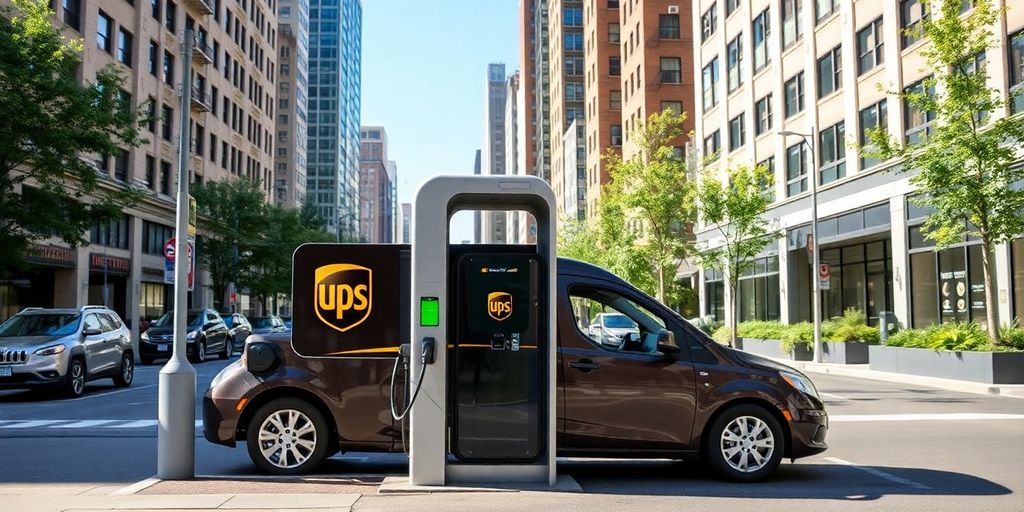
Okay, so electric road systems (ERS) are kinda wild, right? Imagine driving down the highway and your car is just…charging. No stopping, no plugging in. That’s the dream with ERS. There are a couple of ways to do it, like overhead lines (think trams, but for trucks) or embedding charging tech right into the road itself. The embedded tech is trickier, but it could work for all kinds of vehicles. It’s still early days, but the potential is huge. Think about the charging infrastructure implications!
Development of Battery-Swapping Stations
Battery-swapping stations are another interesting idea. Instead of waiting for your EV to charge, you just roll up to a station, a robot swaps out your empty battery for a full one, and you’re on your way. It’s supposed to be way faster than charging, like filling up a gas tank. The big challenge is standardization. If every car has a different battery, it’s a logistical nightmare. But if we can get that sorted, it could be a game-changer. I wonder if the new EV charger plants will consider this.
Utilization of Inductive Charging Methods
Inductive charging, or wireless charging, is pretty cool. You basically park your car over a charging pad, and it charges without any cables. It’s super convenient, but it’s also slower and less efficient than plugging in. Right now, it’s mostly used for smaller devices, but there’s a lot of research going into scaling it up for EVs. Imagine parking at home and just automatically charging your car. That’s the goal. It’s all about making EV ownership easier, right?
Collaborations With EV Specialists
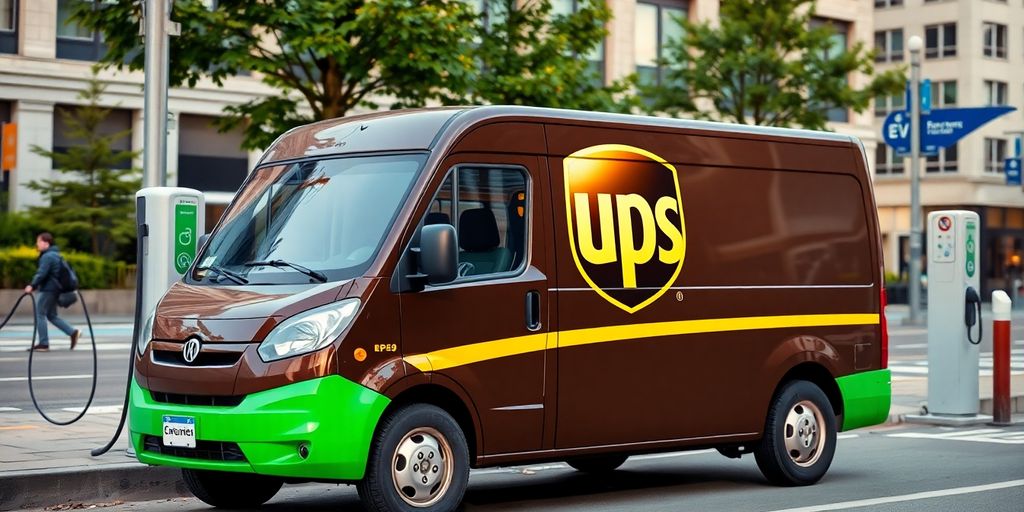
UPS isn’t going it alone when it comes to developing street-embedded EV charging. They’re teaming up with experts to make it happen. It’s like they’re assembling a super team of EV enthusiasts!
Partnerships with Tevva Motors
UPS has been working with Tevva Motors, an EV specialist based in Essex. These partnerships are key to developing new electric vehicles tailored for UPS’s specific needs. For example, Tevva helped create some range-extended EVs (REEVs) for UPS, which use a smaller diesel engine to recharge the battery when needed. This is especially useful for longer routes or when driving between cities. These vehicles were also part-funded by the UK’s Office for Low Emission Vehicles (OLEV) and Innovate UK. It’s all part of UPS’s strategy to test different alternative fuel vehicles and find the best solutions for reducing their carbon footprint. This helps ensure they meet safety standards for EVs.
Engagement with Local Governments
UPS also understands that working with local governments is important for rolling out EV charging infrastructure. They need permits, approvals, and sometimes even financial support. By working closely with city councils and other local authorities, UPS can make sure their charging stations are installed in the right places and meet all the local regulations. This collaborative approach helps smooth the way for EV deployment and ensures that the infrastructure benefits the community.
Collaboration on Charging Infrastructure Projects
Beyond individual partnerships, UPS is also involved in larger collaborative projects focused on building out charging infrastructure. This might involve working with other companies, utilities, and even research institutions to develop new charging technologies and strategies. These projects are often aimed at solving specific challenges, such as how to efficiently charge a large fleet of EVs overnight or how to make charging stations more accessible in urban areas. By pooling resources and expertise, these collaborations can accelerate the development of street-embedded EV charging and make it a reality sooner rather than later.
Investment In Sustainable Solutions
UPS isn’t just talking about going green; they’re putting their money where their mouth is. It’s not just about slapping some solar panels on a building; it’s a much bigger commitment than that. They’re actively seeking out and investing in solutions that will make a real difference.
Funding from Government Initiatives
One way UPS is boosting its sustainability efforts is by tapping into government funding. There are a lot of programs out there designed to help companies transition to cleaner operations, and UPS is definitely taking advantage. This funding helps offset the costs associated with things like buying electric vehicles and installing charging infrastructure. It’s a win-win: UPS gets to upgrade its fleet, and the government gets to see its green initiatives in action. This is especially helpful when considering the costs of EV charging points.
Investment in Alternative Fuel Vehicles
UPS is making a big push to move away from traditional gasoline and diesel vehicles. They’re investing heavily in alternative fuel options, including:
- Electric vehicles (EVs): Obvious, right? But it’s a huge investment, especially when you’re talking about replacing an entire fleet.
- Renewable natural gas (RNG): This is natural gas produced from organic waste, so it’s a much cleaner alternative to traditional natural gas.
- Propane: Another cleaner-burning fuel that UPS is exploring.
The goal is to significantly reduce their carbon footprint by switching to these alternative fuels. It’s a long process, but they’re making steady progress.
Support for Low Emission Technologies
Beyond just changing the fuel they use, UPS is also investing in technologies that reduce emissions in other ways. This includes things like:
- Aerodynamic improvements to their vehicles: Simple changes to the design of their trucks can make a big difference in fuel efficiency.
- Optimized routing software: Using data to plan the most efficient routes reduces mileage and emissions.
- Investing in research and development: They’re constantly looking for new ways to reduce their environmental impact. This is important for business sustainability in the long run.
Expansion of Charging Networks
Establishment of Charging Hubs
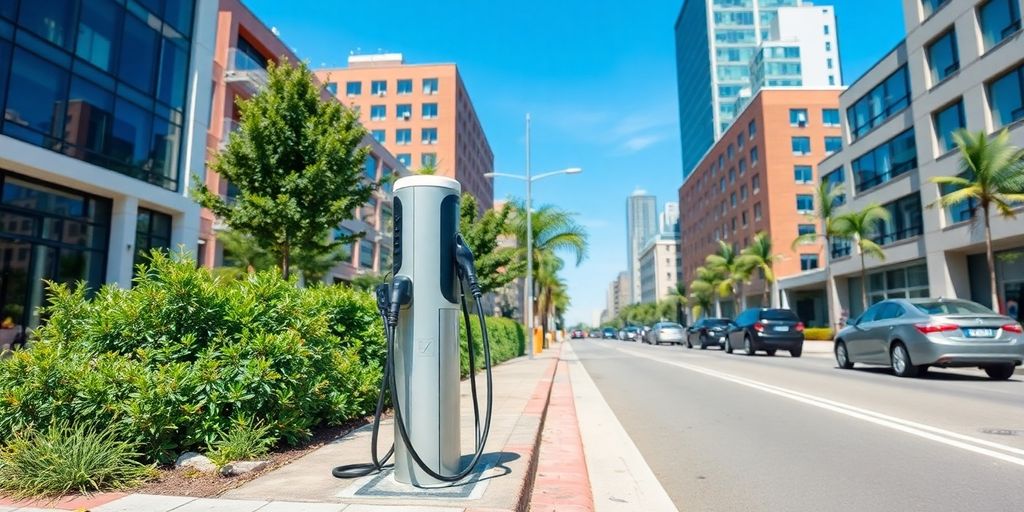
Charging hubs are becoming a key part of the EV infrastructure landscape. These centralized locations, equipped with multiple charging stations, aim to provide convenient and efficient charging for EV drivers. Think of them as gas stations, but for electric cars. They’re popping up in strategic spots to cater to the growing number of EVs on the road. New Zealand is aiming for one charging hub every 150-200 km on main highways.
Deployment of Public Charging Stations
Beyond hubs, there’s a big push to get more public charging stations out there. It’s not just about having chargers; it’s about having enough to meet demand and making sure they’re reliable. The EU’s AFIR regulation requires fast chargers every 60 km along major transport routes. The United States has already installed more than 180,000 public chargers towards the goal of 500,000 by 2030. China is shifting focus to charging infrastructure development, targeting full coverage in cities and on highways by 2030, as well as expanded rural coverage.
Focus on Urban Charging Solutions
Urban areas present unique challenges for EV charging. Space is limited, and many residents lack access to home charging. That’s why there’s a growing focus on urban charging solutions, like on-street charging and charging stations in parking garages. These solutions aim to make EV ownership more accessible for city dwellers. China has also begun to support more sustainable charging behaviour, with the aim that 60% of EV charging occurs off-peak by 2025, starting with five pilot cities.
Research and Development Initiatives
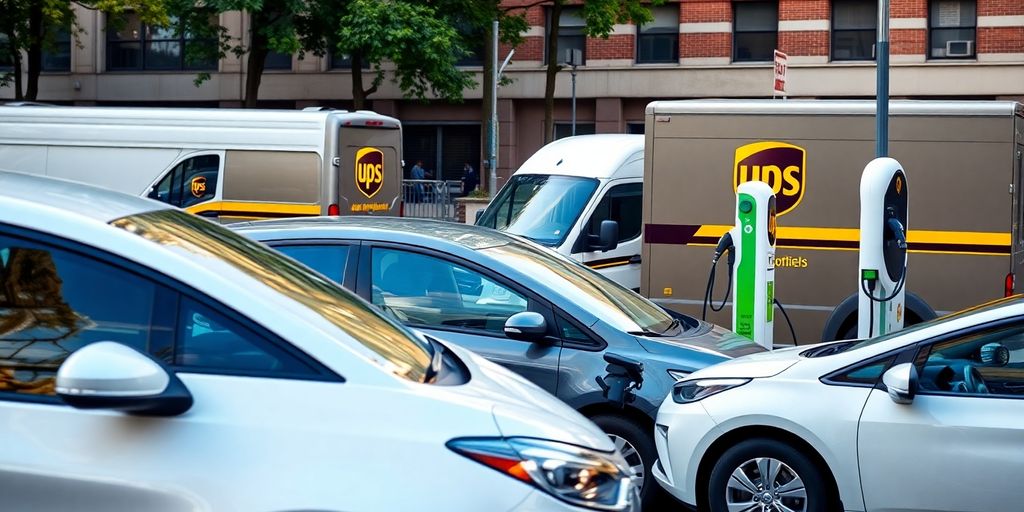
UPS isn’t just sitting back and waiting for the future of EV charging to arrive; they’re actively shaping it through various research and development initiatives. It’s not enough to just install chargers; they need to figure out what works best, what’s most efficient, and what’s actually going to be used.
Continuous Evaluation of EV Technologies
UPS is constantly looking at new EV tech. They’re not married to any one solution. They’re checking out different battery types, charging methods, and vehicle designs to see what fits their needs best. This includes:
- Testing new battery chemistries for longer life and faster charging.
- Analyzing the performance of different EV models in real-world delivery scenarios.
- Evaluating the efficiency of various charging systems under different conditions.
Pilot Programs for New Charging Solutions
UPS runs pilot programs to test new charging solutions before rolling them out on a larger scale. This helps them identify potential problems and fine-tune their approach. For example, they might test a new type of fast charger in a specific location to see how it performs under heavy use. These pilot programs are super important because they give UPS real-world data to work with, instead of just relying on lab results. It’s like a beta test, but for EV infrastructure. AMPPAL offers commercial EV charging stations, providing essential information on pricing and technical aspects.
Data-Driven Approaches to Infrastructure Planning
UPS uses data to figure out where to put charging stations and how many they need. They look at things like delivery routes, charging patterns, and energy consumption to make informed decisions. This isn’t just guesswork; it’s about using information to make smart choices. Mercedes-Benz is revising its electric vehicle transition strategy while maintaining production of combustion engines.
They might use data like this:
| Data Point | Example |
|---|---|
| Delivery Route Data | Miles driven per day, stop frequency |
| Charging Patterns | Time of day vehicles are charged, duration |
| Energy Consumption | kWh used per mile, peak demand |
By analyzing this data, UPS can optimize its charging infrastructure and make sure it’s meeting the needs of its electric fleet. It’s all about being efficient and making the most of their investment. They also look into Planning, Testing, R&D to make sure they are up to date.
Regulatory Compliance and Standards
It’s not the most exciting part of the EV revolution, but someone’s gotta make sure everything’s safe and plays nice together. For UPS, that means staying on top of a whole bunch of rules and guidelines. It’s a moving target, too, as governments and organizations update standards to keep up with the tech.
Adherence to National Charging Standards
UPS needs to make sure its charging infrastructure meets all the national standards. This includes things like safety regulations, power requirements, and accessibility guidelines. It’s not just about plugging in and charging; it’s about doing it safely and reliably. For example, in North America, the NACS is becoming increasingly important.
Collaboration with Regulatory Bodies
UPS doesn’t just sit back and wait for the rules to come down. They actively work with regulatory bodies to help shape the standards. This way, they can share their experiences and insights, making sure the rules are practical and effective. It’s a two-way street, with UPS learning from the regulators and vice versa. This collaboration is key to legal/government regulation.
Implementation of Interoperability Standards
Imagine if your phone charger only worked with one brand of phone. That’d be a nightmare, right? Same goes for EV chargers. UPS is working to implement interoperability standards, so any EV can use any of their chargers. This makes things easier for everyone and helps speed up the adoption of EVs. Wireless charging is one area where wireless EV charging could really benefit from interoperability.
Community Engagement and Awareness
UPS isn’t just throwing up charging stations and hoping for the best. They’re actively trying to get communities on board with the whole EV thing. It’s not enough to have the tech; people need to understand it and want it.
Educational Campaigns on EV Benefits
UPS is running educational campaigns to show people why EVs are a good thing. I think it’s smart to highlight the benefits of electric vehicles. They’re doing things like:
- Hosting workshops at local community centers. They explain how EVs work, what the benefits are, and how charging infrastructure will be set up in the area. It’s all about making it less intimidating.
- Creating easy-to-understand brochures and online content. No jargon, just simple facts about emissions, cost savings, and how EVs can improve air quality.
- Partnering with schools to include EV education in science and tech programs. Get the kids excited, and they’ll get their parents interested, too.
Partnerships with Local Businesses
UPS knows they can’t do it alone. They’re teaming up with local businesses to make EV charging more accessible and convenient. It’s a win-win, really. Here’s how it’s shaking out:
- Offering incentives to businesses that install charging stations on their property. Things like tax breaks or help with installation costs. This makes it easier for businesses to say yes.
- Working with restaurants and shops to offer discounts to EV drivers who charge their vehicles while they’re there. A little perk to encourage EV adoption.
- Creating a network of "EV-friendly" businesses that promote EV use and provide information about charging options. It’s like a little club for EV drivers.
Involvement in Community Charging Initiatives
UPS is getting involved in community charging initiatives to make sure everyone has access to charging, not just those who can afford it. This is especially important in lower-income areas where EV adoption might be slower.
- Supporting the development of public charging stations in underserved communities. Making sure everyone has a place to plug in, regardless of where they live.
- Partnering with community organizations to offer EV car-sharing programs. This gives people a chance to try out an EV without having to buy one.
- Providing training and job opportunities in EV maintenance and charging infrastructure installation. Creating jobs and helping people learn new skills in a growing industry.
Looking Ahead: UPS and the Future of EV Charging
So, what’s next for UPS in the world of electric vehicle charging? They’re really pushing to make charging more accessible right where people live and work. With their new partnerships and projects, they’re not just thinking about today but also planning for a greener future. As they roll out more charging stations, it’s clear they want to be a big part of the EV movement. It’s exciting to see a major player like UPS stepping up to the plate. If they keep this momentum going, we might just see a lot more electric trucks on the road, making deliveries cleaner and more efficient.
Frequently Asked Questions
What is UPS doing to support electric vehicle charging?
UPS is working on new technologies and partnerships to improve charging for electric vehicles (EVs). They are focusing on building charging stations in cities and developing ways to charge vehicles while they drive.
How is UPS collaborating with other companies?
UPS has teamed up with companies like Tevva Motors to create new electric vehicles. They are also working with local governments to set up charging stations and improve infrastructure.
What kind of investments is UPS making in green technology?
UPS is putting money into sustainable solutions, including alternative fuel vehicles and charging technology. They are also getting support from government programs to help with these investments.
How is UPS expanding its charging network?
UPS is setting up charging hubs and public charging stations to make it easier for people to charge their electric vehicles, especially in urban areas.
What research is UPS conducting on EV charging?
UPS is constantly testing new technologies for electric vehicles and charging solutions. They use data to plan where to build charging stations effectively.
How does UPS ensure it follows regulations for EV charging?
UPS makes sure to follow national standards for charging stations. They also work with regulatory bodies to promote interoperability, which means different charging stations can work with various vehicles.
