


Figuring out how to charge your electric vehicle (EV) at home can seem a bit much at first. But, honestly, it’s one of the best parts about owning an EV. Imagine plugging in your car at night and waking up to a full battery every morning. No more gas stations, no more waiting around. It’s super convenient. This guide will help you understand what is home EV charging, covering everything from picking the right equipment to getting it set up, so you can enjoy easy home charging without any surprises.
Key Takeaways
- Home EV charging offers a lot of convenience, letting you wake up to a fully charged car every day.
- Setting up a home charging station can cost anywhere from $1,150 to $2,750, including the charger and installation.
- You’ll need a licensed electrician to install a Level 2 charger, and they should check your home’s electrical system first.
- Using a standard 120-volt outlet (Level 1 charging) is usually only good for short daily drives, as it charges very slowly.
- Many EVs come with a 240-volt mobile charging cable that can work as your main home charger, though it might not be the fastest option.
Understanding Home EV Charging
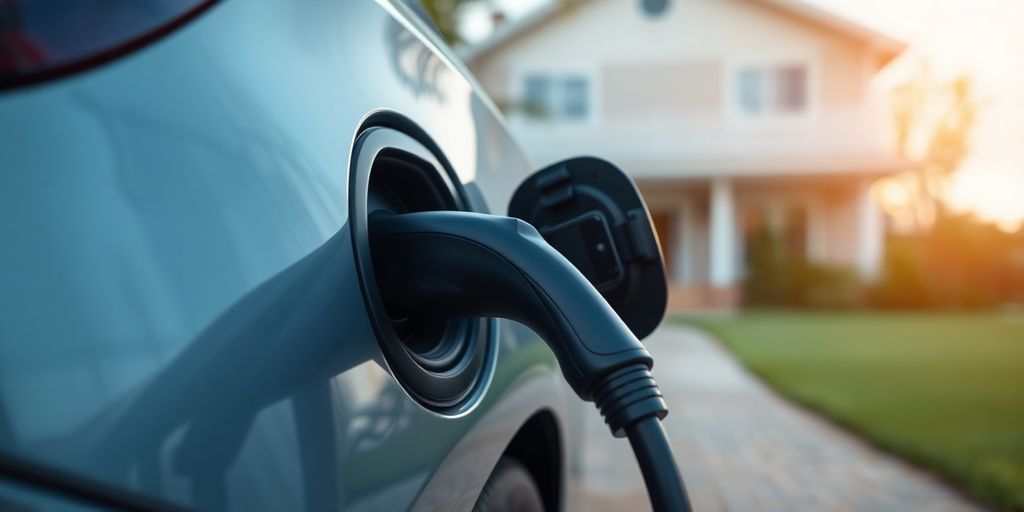
Home EV charging is becoming increasingly popular, and for good reason. It offers a level of convenience that public charging simply can’t match. Let’s break down what you need to know.
The Convenience Of Home Charging
Imagine never having to stop at a gas station again. That’s the reality with home EV charging. You simply plug in your car when you get home, and it’s fully charged and ready to go in the morning. No more detours, no more waiting in line. It’s like having your own personal fueling station right in your garage or driveway. This is especially great if you have a consistent daily commute. You can always start your day with a full battery.
Types Of EV Charging Equipment
There are primarily two levels of EV charging for home use:
- Level 1 Charging: This uses a standard 120-volt outlet. It’s the slowest method, adding only a few miles of range per hour. It’s often sufficient for plug-in hybrids or for those who drive very little each day.
- Level 2 Charging: This requires a 240-volt outlet, similar to what your dryer or oven uses. It’s significantly faster than Level 1, adding 20-60 miles of range per hour. Most EV owners opt for Level 2 charging for its speed and convenience. You’ll need a licensed electrician to install this.
Benefits Of Home EV Charging
Beyond the convenience, there are several other advantages to charging your EV at home:
- Cost Savings: Electricity is generally cheaper than gasoline, so you’ll save money on fuel costs. Plus, you can take advantage of off-peak electricity rates to save even more.
- Time Savings: No more trips to the gas station. You can use that time for other things.
- Increased Battery Life: Consistent, overnight charging can actually improve your EV’s battery health over the long term. It helps keep the battery within its optimal charge range.
- Convenience: Waking up to a fully charged car every morning is a game-changer. It eliminates range anxiety and makes EV ownership much more enjoyable. Think of it as always having a full tank, without ever visiting a gas station. This is a big deal for commercial real estate owners looking to attract tenants.
Cost Of Home EV Charger Installation
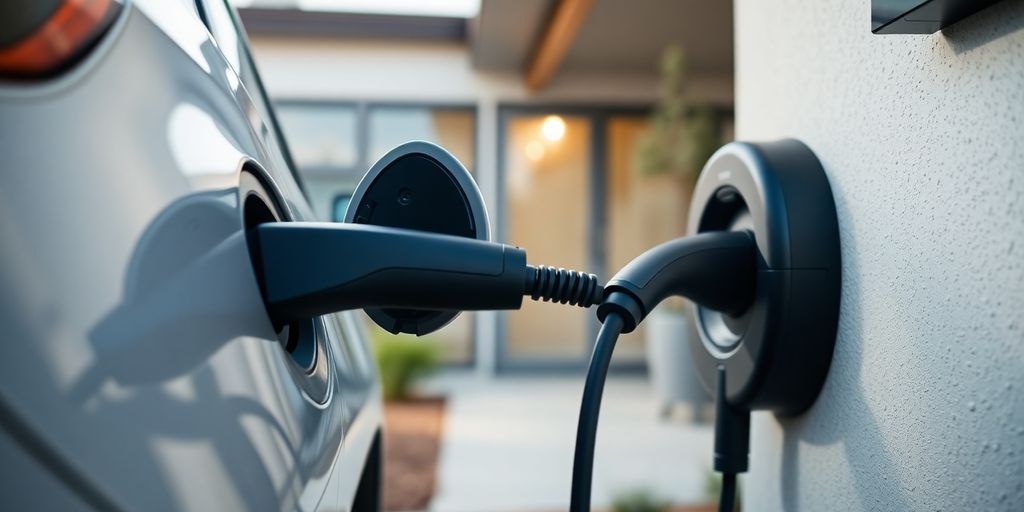
Average Installation Costs
Okay, so you’re thinking about getting an EV charger installed at home? Great! But let’s talk money. Most folks in the US end up spending somewhere between $1,150 and $2,750 for the whole shebang – charger and installation. The charger itself might run you $350 to $750. Then you’ve got the installation, which is where things can vary quite a bit. Expect to pay an electrician between $800 and $2,000, give or take. Keep in mind, these are just averages. Some people get quotes way higher, especially if they need electrical panel upgrades. If you are looking to save money, consider scheduling fleet charging during off-peak hours.
Factors Affecting Price
So, what makes the price jump around so much? A few things:
- Labor Costs: Electricians in some areas charge more than others. It’s just how it is.
- Charger Power: More powerful chargers might need beefier wiring, which means more money.
- Distance: The farther your electrical panel is from where you want the charger, the more it’ll cost in materials and labor.
- Complexity: Is it a simple install, or does the electrician have to jump through hoops? Tricky jobs cost more.
- Electrical Panel: Older homes might need a panel upgrade to handle the extra load. This can add a significant chunk to the bill. Some people are shocked to get a quote above $5,000, or in extreme cases $10,000.
Potential Rebates And Incentives
Alright, here’s the good news! You might be able to get some of that money back. Keep an eye out for rebates and incentives from:
- Federal Government: There are often federal tax credits for installing EV chargers.
- State Government: Many states offer their own rebates or tax credits.
- Local Utilities: Your local power company might have programs to help with the cost. For example, if you install a Level 2 (L2) EV charger within 120 days of getting your EV, you might qualify for a $4,200 rebate.
Do your homework and see what’s available in your area. It could save you a bundle! Also, make sure that the electrician uses a commercial grade plug. It’s probably $100 instead of $10, but it’s designed for that use.
Home Charging Installation Requirements
So, you’re thinking about getting a home EV charger installed? Awesome! But before you rush out and buy the fanciest model, there are a few things you need to consider to make sure your home is ready for it. It’s not quite as simple as plugging in a toaster, unfortunately.
Electrical System Inspection
First things first: get your electrical system checked out. You need to make sure your home’s wiring can handle the extra load of an EV charger. Older homes, in particular, might need upgrades to avoid tripping breakers or, worse, causing electrical fires. It’s a good idea to have a certified electrician take a look, even if you’re just planning on using a Level 1 charger. Better safe than sorry, right?
Licensed Electrician Necessity
Seriously, don’t try to DIY this. Unless you’re a qualified electrician, leave the installation to the pros. Messing with electrical wiring can be dangerous, and you could end up voiding your home insurance if something goes wrong. Plus, a licensed electrician will know the local codes and regulations, ensuring that your installation is up to snuff. You’ll want to find a good local electrician for the job.
Key Discussion Points With Electrician
When you talk to your electrician, be prepared to discuss a few key things. This isn’t just about getting a quote; it’s about making sure they understand your needs and can provide the best solution. Here’s a quick rundown:
- The type of EV you have: Different EVs have different charging requirements.
- Where you’ll park your EV: This will determine the best location for the charger.
- The type and speed of charger you want: Level 2 chargers are faster, but require a 240-volt circuit. Consider the home EV charger that fits your needs.
- The length of your charging cord: Make sure it’s long enough to reach your car comfortably.
- Permitting: Find out if any permits are required for the installation in your area.
By addressing these points upfront, you can avoid surprises and ensure a smooth installation process. It’s all about doing your homework and being prepared!
Charging With A Standard 120-Volt Outlet
Limitations Of Level 1 Charging
So, you’re thinking about using that regular ol’ wall outlet to charge your EV? Well, technically, you can. But let’s be real, it’s kinda like trying to fill a swimming pool with a garden hose. Level 1 charging, which is what you get from a standard 120-volt outlet, is the slowest way to charge your electric car. We’re talking adding maybe 3-5 miles of range per hour of charging. If you’ve got a super short commute, like just a few miles each day, it might work. But otherwise, prepare for some seriously long charging times. And in the dead of winter? Forget about it. You might just be fighting to keep the battery from losing charge, not actually gaining any.
Daily Commute Considerations
Okay, let’s say you do have a short commute. Is Level 1 charging still a good idea? Maybe. Think about your daily driving habits. Do you drive exactly the same distance every day? Or do you sometimes take longer trips? What about unexpected errands? If you’re constantly pushing the limits of what Level 1 charging can provide, you’re going to be stressed about range all the time. Plus, you’ll be stuck plugging in your car every single night for a long time. It’s doable, but it’s definitely not the most convenient way to schedule fleet charging.
Drawbacks Of Public Charging Reliance
Alright, so maybe you’re thinking, "I’ll just use the 120-volt outlet at home sometimes, and then hit up those public charging stations when I need a boost." Sounds like a plan, right? Not so fast. Relying on public charging all the time has its own set of problems. First off, it can get expensive. DC fast chargers can cost way more than charging at home. And constantly using those fast chargers isn’t great for your battery’s long-term health. Plus, you’re now beholden to the availability of public chargers. What if they’re all in use? What if they’re broken? Suddenly, your whole day is thrown off because you can’t find a charging station. Here’s a quick rundown:
- Cost: Public charging can be significantly more expensive.
- Battery Health: Frequent fast charging can degrade your battery faster.
- Inconvenience: Public chargers might be unavailable or unreliable.
Using Your EV’s 240-Volt Charging Cable
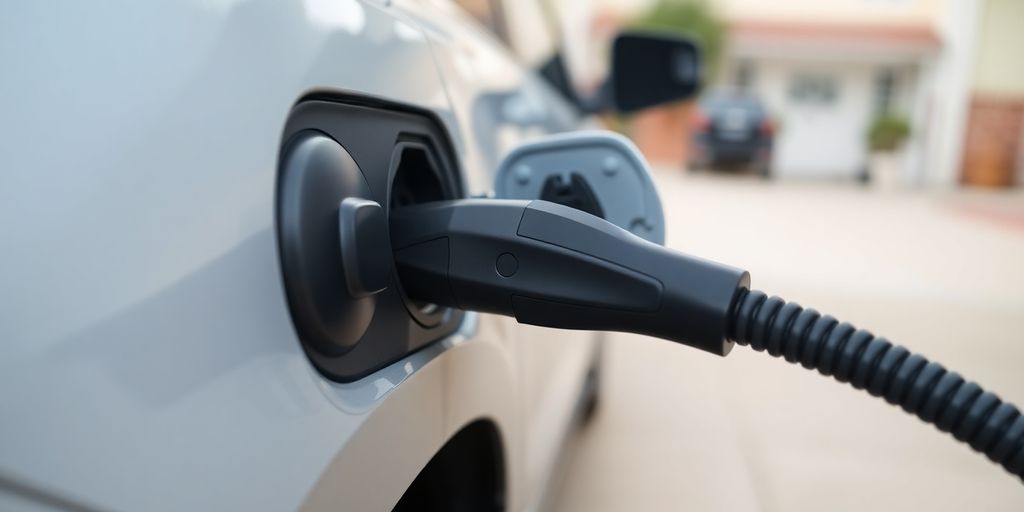
Many EVs come with a 240-volt charging cable, and it’s a totally valid option for home charging. It’s not always the absolute fastest, but it’s often good enough for most people’s needs. Let’s break down what you need to know.
Mobile Charging Cable Functionality
These cables are often called "mobile charging cables" because you can take them with you. But don’t let the name fool you; they work perfectly fine as your everyday home EV charger. The big advantage is convenience. You don’t necessarily need to buy a separate charging station right away. Just plug it in, and you’re good to go. It’s a great way to start charging at home without a big upfront investment.
Kilowatt Limitations
Okay, so here’s the thing: these mobile chargers usually have a limit on how much power they can deliver. Most of the time, they max out around 7.2 kilowatts. Now, that’s not bad at all, and it’s way faster than a standard 120-volt outlet. But if you want the absolute fastest charging at home, you might eventually want to upgrade to a dedicated charging station that can handle more juice. Still, for overnight charging, 7.2 kW is often plenty to top off your battery.
Mounting For Optimal Use
If your charging cable has a box that can be mounted to the wall, definitely do it! This takes a lot of strain off the outlet and makes everything safer and more stable. Think of it like this: you wouldn’t want a heavy lamp just dangling from its plug, right? Same idea here. Mounting the box keeps the connection secure and prevents any accidental unplugging or damage to the outlet. Plus, it just looks neater. If you’re thinking about EV charging regularly, this is a must.
Choosing The Right Home EV Charger
Okay, so you’re ready to ditch the gas station and charge up at home. Awesome! But with so many EV chargers out there, how do you pick the right one? It can feel overwhelming, but let’s break it down.
Importance Of Safety Certifications
First things first: safety. Don’t even think about buying a charger that isn’t safety certified. Look for certifications from well-known testing labs like UL or ETL. These certifications mean the charger has been tested to meet specific safety standards, reducing the risk of electrical hazards. It’s like buying a helmet for your head – you wouldn’t skimp on that, right? Same goes for your EV charger. Also, make sure that the electrician uses a commercial grade plug. It’s probably $100 instead of $10, but it’s designed for that use.
Smart Charger Features
Smart chargers are the way to go if you want more control and information about your charging. They connect to your Wi-Fi network and offer a bunch of cool features, such as:
- Remote monitoring: Check your charging status from your phone, no matter where you are.
- Scheduling: Set up charging times to take advantage of off-peak electricity rates. This can save you a lot of money over time. Understanding electricity rate plans is key here.
- Energy tracking: See how much electricity you’re using to charge your EV. This helps you understand your energy consumption and costs.
- Smart home integration: Some chargers can integrate with your smart home system, allowing you to control charging with voice commands or through your smart home app.
While these features are nice, they often come at a higher price. Decide if they’re worth the extra cost for your needs.
Considering Your Charging Needs
Think about your daily driving habits and how much you typically drive. Do you just need a top-up overnight, or do you need to fully recharge a depleted battery every day? This will help you determine the charging speed you need. Also, consider these points:
- Charging Level: Level 2 (240V) is almost always the best choice for home charging. It’s much faster than Level 1 (120V). Using your EV’s 240-Volt charging cable can be a good option.
- Amperage: Choose a charger with an amperage that matches your EV’s charging capabilities and your home’s electrical capacity. Remember, the circuit breaker for a charging station is always 125 percent larger than the amperage that you’ll charge at. As an example, a 9.6-kilowatt charger delivers 240 volts at 40 amps, but the unit will be wired with a 50-amp breaker in your electrical panel.
- Cord Length: A longer cord gives you more flexibility in where you can park your car relative to the charger. A cord that’s 20 feet or longer is ideal.
- Future-Proofing: Consider your future EV needs. Will you be getting another EV soon? Do you anticipate needing faster charging in the future? Choosing a charger with higher amperage capabilities now can save you money later. You might also want to think about whether to hardwire your EV charger or install a 240-volt plug.
By considering these factors, you can find the perfect home EV charger for your needs and budget. Don’t rush the decision – do your research and choose wisely! Remember to check the average installation costs before making a purchase.
Optimizing Your Home Charging Experience
Understanding Electricity Rate Plans
Okay, so you’ve got your home EV charger all set up. Now what? Well, it’s time to think about how you can save some money and get the most out of your charging setup. A big part of that is understanding your electricity rate plans. Most people just pay whatever the power company bills them, but there are often different options available. Look into whether your provider offers plans specifically for EV owners, or plans that offer lower rates during off-peak hours. It’s worth a little research to potentially save a lot of money over time. You might even find a plan that uses more renewable energy, which is a win-win!
Impact Of Time-Of-Use Plans
Time-of-use (TOU) plans can be a game-changer for EV owners. These plans charge different rates depending on the time of day. Typically, electricity is cheaper during the night and early morning, when demand is lower. This is perfect for charging your EV while you sleep! However, rates can be significantly higher during peak hours (usually late afternoon and early evening). So, if you can shift your charging to off-peak times, you can save a bundle. Just make sure you understand the rate schedule and plan your charging accordingly. It might mean setting a timer on your charger or using a smart charger with scheduling features. Also, be aware that some TOU plans have demand charges, which are based on your highest electricity usage in a given period. If you suddenly draw a lot of power, like when you start charging your EV and run the AC at the same time, you could get hit with a hefty fee.
Long-Term Battery Health
Charging habits can really affect how long your EV battery lasts. Here are a few things to keep in mind:
- Avoid consistently charging to 100%: It’s generally better to keep your battery between 20% and 80% for daily use. Charging to full capacity all the time can put extra stress on the battery and shorten its lifespan.
- Minimize fast charging: DC fast charging is convenient, but it generates more heat, which can degrade the battery over time. Try to use Level 2 charging at home as much as possible.
- Keep the battery cool: Extreme temperatures, both hot and cold, can harm the battery. Park in the shade during the summer and in a garage during the winter, if possible. Some EVs have battery thermal management systems to help regulate the temperature, but it’s still good to be mindful of the environment.
Thinking about these things can help you extend the life of your EV battery and keep it running smoothly for years to come. Also, don’t forget to check your car’s warranty for specific guidelines on battery care. Understanding EV charging stations is important for battery health.
Wrapping Things Up
So, that’s the scoop on home EV charging. It might seem like a lot to take in at first, with all the talk about Level 1s and Level 2s, and figuring out what your house can even handle. But honestly, once you get it set up, it’s a game-changer. No more hunting for public chargers or waiting around. You just plug in when you get home, and wake up to a full battery. It’s super convenient and, in the long run, it can save you some cash compared to always using those fast chargers out in town. Just do your homework, maybe chat with an electrician, and you’ll be all set for easy EV living.
Frequently Asked Questions
Why is charging my EV at home so great?
Charging your electric car at home is super handy. Imagine plugging in your car at night and waking up to a full battery in the morning. A Level 2 charger, which uses 240 volts, makes this possible. Once you get used to this, you’ll wonder how you ever managed without it.
How much does it cost to set up an EV charger at home?
The cost can change a lot. Most folks in America will pay about $1,150 to $2,750 to buy and set up a 240-volt charging station. The charger itself might be $350 to $750, and getting it installed usually costs between $800 and $2,000.
Can I use my EV’s 240-volt charging cable as my home charger?
Yes, you can use the 240-volt charging cable that came with your EV as your main home charger. These are often called mobile charging cables. They might not be the fastest, usually around 7.2 kilowatts, but they’re good enough for most people. If you can, mount the power box on the wall to keep it from straining the outlet.
Can I charge my EV using a regular wall outlet?
You can, but it’s not ideal for everyone. Using a regular 120-volt outlet (Level 1 charging) only works well if you don’t drive much each day, say 30 miles or less, and charge often. This type of charging only adds about three miles of range per hour. If it’s really cold, you might not even gain any charge.
What should I look for when choosing a home EV charger?
When picking a home charger, make sure it has safety certifications like UL or ETL. These show that the charger has been tested and meets safety rules. Some cheaper chargers skip these, but it’s risky because a bad charger could cause big problems or even a fire. Also, think about smart chargers with Wi-Fi if you want to track your charging use and costs.
How can I make my home EV charging better and save money?
First, understand your electricity plan. Adding an EV will make your electric bill go up. If you have a time-of-use plan, charging at certain times can cost twice as much. Charging your car when electricity is cheaper can save you money and is better for your car’s battery in the long run.
