


When it comes to charging your electric vehicle (EV), one of the most common questions is about the right extension cord to use. Knowing what gauge cord for EV charging station is crucial for ensuring safety and efficiency. With different charging levels and power requirements, selecting the proper cord can make a big difference in your charging experience. This guide will help you understand the factors involved in choosing the right cord for your EV.
Key Takeaways
- Use a 12-gauge cord for Level 1 charging and a 10-gauge for Level 2.
- Check the amp rating of the cord to match your charger’s needs.
- Choose the shortest cord possible to reduce voltage drop.
- Look for cords certified by UL or CSA for safety.
- Regularly inspect your cord for wear and tear.
Understanding EV Charging Requirements
Different Levels of EV Charging
Okay, so before we even think about extension cords, we need to get the basics down. EV charging isn’t just plug-and-go; there are different levels, and they all have different power needs. You’ve got Level 1, which is like plugging into a regular wall outlet – super slow. Then there’s Level 2, which is faster but needs a special 240-volt outlet. And finally, Level 3 (DC fast charging), which is like a supercharger you find at public stations. Knowing which level you’re dealing with is the first step.
Power Needs for Level 1 and Level 2
Let’s break down the power thing a bit more. Level 1 is your standard 120V outlet, usually around 12 amps. It’s fine for a little top-off, but not great for a full charge. Level 2 is where it gets interesting. These chargers use 240V and can range from 16 amps all the way up to 80 amps, depending on your car and charger. The higher the amps, the faster you charge, but also the more juice you’re pulling. Here’s a quick table:
| Charging Level | Voltage | Typical Amperage | Charging Speed |
|---|---|---|---|
| Level 1 | 120V | 12A | Slow |
| Level 2 | 240V | 16-80A | Medium to Fast |
Importance of Proper Gauge
Now, why does all this power stuff matter when we’re talking about extension cords? Well, the gauge of the cord – that’s the thickness of the wires inside – has to match the amount of power flowing through it. If the gauge is too thin, the cord can overheat, melt, and even start a fire. Not good! Using the right gauge is absolutely critical for safety and to make sure you’re actually getting the charging speed you expect. Think of it like a pipe: if the pipe is too small, you won’t get enough water through, and the pipe could burst. Same idea with electricity.
Choosing the Right Extension Cord
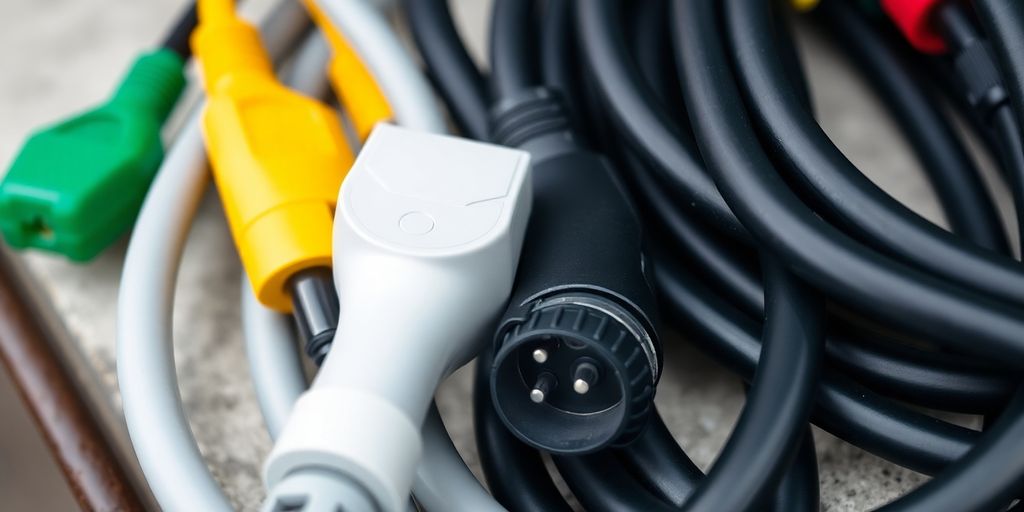
Okay, so you’re thinking about using an extension cord for your EV charger. It’s not always ideal, but sometimes you gotta do what you gotta do. Picking the right one is super important for safety and getting a decent charge. Let’s break down what to look for.
Gauge Recommendations for EV Charging
The gauge of the wire inside the extension cord matters A LOT. Think of it like this: the lower the gauge number, the thicker the wire, and the more electricity it can handle. For Level 1 charging (that’s your standard 120V outlet), a 12-gauge cord is usually okay. But for Level 2 (240V), you’re probably going to need a 10-gauge or even lower. Don’t skimp here! Using too thin of a cord can lead to overheating and, well, fire. Nobody wants that.
Length Considerations for Safety
Alright, so you might think a longer cord is always better, but not really. The longer the cord, the more the voltage can drop. Voltage drop means your EV isn’t getting all the power it needs, and that means slower charging. Plus, longer cords are more likely to overheat. Try to get the shortest cord that will still reach your car comfortably. No extra slack lying around, okay?
Certifications to Look For
Before you buy any extension cord, check for certifications from places like UL (Underwriters Laboratories) or CSA (Canadian Standards Association). These guys test the cords to make sure they meet certain safety standards. If it’s got their stamp of approval, you can feel a little better about using it. Also, if you’re charging outside, make sure the cord is rated for outdoor use. You don’t want something that’s going to short out the first time it gets wet. I mean, come on.
Extension Cord Recommendations
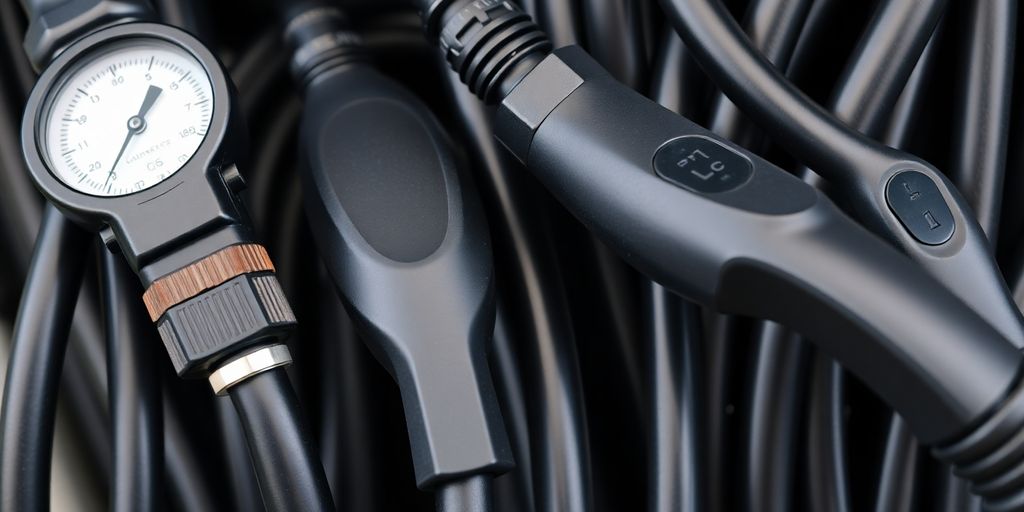
Best Cords for Level 1 Charging
For Level 1 charging, you don’t need to go overboard, but don’t skimp either. A good quality, outdoor-rated 12-gauge extension cord should do the trick. Just make sure it’s long enough to reach your car without being excessively long. Excess length just means more resistance and potential voltage drop. I’ve had good luck with some of the heavy-duty extension cords you can find at most hardware stores. Just double-check the gauge and that it’s rated for outdoor use.
Top Choices for Level 2 Charging
Okay, Level 2 charging is where things get a little more serious. Honestly, the best recommendation is to avoid using an extension cord altogether if you can. Seriously. Install a dedicated 240-volt outlet near where you park. It’s safer and more efficient. But, if you absolutely have to use an extension cord for Level 2, you need to be extra careful. Look for a 10-gauge cord, minimum.
There are some extension cords specifically designed for EV charging, like the Lectron Tesla EV Extension Cord. It supports up to 48A and 240V.
Features of Quality EV Extension Cords
When you’re picking out an extension cord for EV charging, there are a few things you absolutely need to look for:
- Heavy-Duty Construction: The cord needs to be able to handle the amperage without overheating. Look for thick insulation and sturdy connectors.
- Outdoor Rating: Even if you plan to use it mostly indoors, an outdoor-rated cord is more resistant to moisture and wear.
- Proper Gauge: This is the most important thing. For Level 2, don’t go any thinner than 10-gauge. For Level 1, 12-gauge is usually okay.
- UL or CSA Certification: This means the cord has been tested and certified to meet safety standards. It’s worth the extra cost for peace of mind.
- Ampere Rating: Make sure the cord’s ampere rating is equal to or greater than your car charger’s requirement.
The Risks of Using Extension Cords
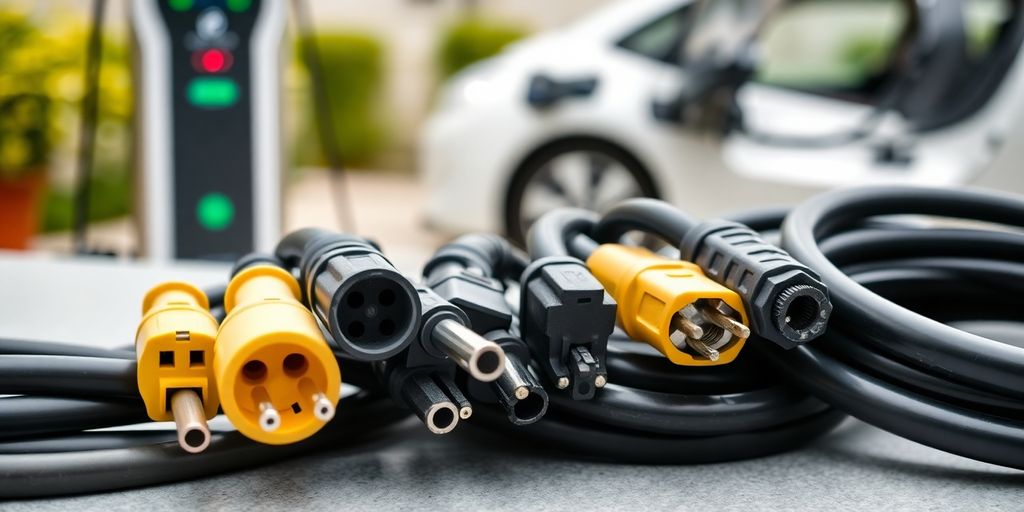
Potential Overheating Issues
Using the wrong extension cord with your EV charger is like putting a tiny straw on a fire hose – it just can’t handle the flow. The biggest risk is overheating. When a cord can’t handle the current, it heats up, and that heat can melt the insulation, damage the charger, or even start a fire. It’s not worth saving a few bucks to risk your car or your house!
Fire Hazards from Incorrect Gauges
Think of gauge as the thickness of the wire inside the cord. A lower gauge number means a thicker wire, which can handle more current. If you use a cord with too high a gauge number (too thin), it’s like using a weak link in a chain. It’s going to break, or in this case, overheat and potentially cause a fire. It’s especially risky if you’re charging for hours at a time, which is often the case with EVs. Here’s a quick rundown:
- Too thin of a cord = Overheating
- Damaged insulation = Fire hazard
- Continuous use = Increased risk
Impact on Charging Efficiency
Beyond the safety risks, using the wrong extension cord can also mess with your charging efficiency. A cord that’s too long or too thin can cause voltage drop, meaning your EV isn’t getting the full power it needs. This translates to longer charging times and potentially incomplete charges. Nobody wants to wake up to a car that’s not ready to go. It’s like trying to fill a pool with a leaky bucket – you’ll get there eventually, but it’ll take forever. Plus, it puts extra strain on your charger, which could shorten its lifespan.
- Voltage drop = Slower charging
- Incomplete charges = Frustration
- Strained charger = Shorter lifespan
Factors to Consider When Selecting Cords
Ampere Rating Requirements
When you’re picking out an extension cord for your EV, the first thing you gotta check is the ampere rating. Basically, your EV charger needs a certain amount of juice to work right, and the cord has to be able to handle that without overheating or causing problems. Look on your charger, it will tell you the amps it needs. Don’t just guess, or you could end up with a cord that’s too weak and fries itself (or worse!).
Minimizing Voltage Drop
Voltage drop is a sneaky problem that can slow down your charging and even damage your EV’s battery over time. It happens when the electricity loses some of its oomph as it travels through the cord, especially if the cord is too long or too thin. To keep voltage drop to a minimum, go for a shorter, thicker cord. Think of it like this: a wide pipe lets water flow easily, while a narrow pipe restricts it. Same idea with electricity!
Regular Inspection and Maintenance
Okay, so you’ve got your cord, you’re charging your EV, great! But don’t just forget about it. You need to give that cord a once-over every now and then. Here’s what to look for:
- Cracks or cuts in the insulation: These can be a shock hazard, especially if you’re charging outside in the rain.
- Loose connections: Make sure the plug is fitting snugly into both the outlet and the charger. A loose connection can cause heat and even sparks.
- Discoloration or melting: This is a sign that the cord is overheating, which is a big no-no.
If you see any of these problems, stop using the cord immediately and replace it. It’s not worth risking your safety or your EV to save a few bucks.
Common Misconceptions About EV Charging Cords
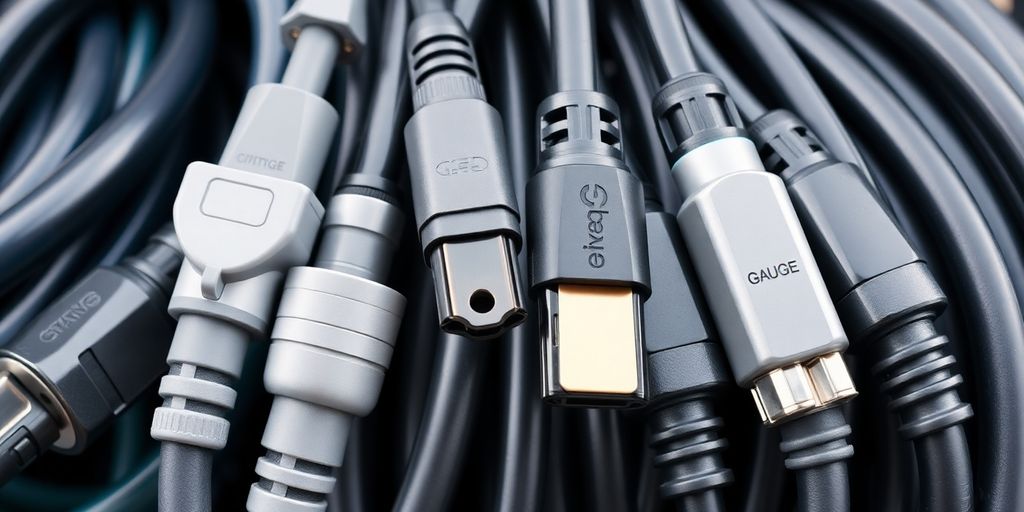
Using Household Extension Cords
I see this mistake all the time. People think, "Oh, it’s just an extension cord, what’s the big deal?" and grab whatever they have lying around the house. Big mistake! Those thin, cheap extension cords you use for lamps or your phone charger? They’re not built to handle the high current demands of EV charging. It’s like trying to run a marathon in flip-flops – it’s just not going to work, and you’re asking for trouble. You need a heavy-duty cord specifically designed for EV charging.
Assuming All Cords Are Compatible
Not all extension cords are created equal. Just because it has a plug doesn’t mean it’s safe for EV charging. You’ve got to check the gauge (thickness) and the amperage rating. A cord that’s too thin can overheat, melt, and even cause a fire. It’s like using the wrong size wrench on a bolt – you might get it to turn, but you’ll probably strip the threads. Always double-check the specs to make sure the cord is compatible with your EV charger.
Believing Length Doesn’t Matter
Okay, so you know you need a heavy-duty cord, but you figure, "The longer, the better, right?" Not necessarily. The longer the cord, the more resistance it has, which means more voltage drop. Voltage drop can slow down your charging time and even damage your EV’s battery over time. It’s like trying to drink through a really long straw – you have to work harder to get the same amount of liquid. So, get the shortest cord that will safely reach your car, and no longer.
Safety Tips for EV Charging
Avoiding Overloading Circuits
Okay, so you’re juiced about your EV, but let’s talk safety. Don’t be that person who trips the breaker every time they plug in. Seriously, figure out what else is on the circuit you’re using. Is the fridge, microwave, and your gaming rig all fighting for power? Probably not a good idea to add your EV to the mix. Consider having a dedicated circuit installed for your EV charger. It’s a bit of an upfront cost, but it’s way cheaper than a house fire. Plus, it’ll charge faster!
Using Weatherproof Cords
Charging outside? Rain or shine? You NEED a weatherproof cord. I mean, duh, right? But seriously, don’t skimp on this. Those cheap indoor extension cords are NOT designed for the elements. Look for cords specifically rated for outdoor use. They’ll have extra insulation and protection against moisture. It’s not just about the rain, either. Think about snow, ice, and even just damp ground. Water and electricity? Bad combo.
Proper Storage and Handling
Alright, charging is done, time to put away the cord. Don’t just leave it lying around like a snake waiting to trip someone. Coil it neatly and store it in a dry place. Avoid kinking or twisting the cord, as this can damage the wires inside. And for the love of all that is holy, don’t run over it with your car! A damaged cord is a dangerous cord. Treat your EV charging cords with respect, and they’ll keep you and your car safe.
Wrapping It Up
So, when it comes to picking the right gauge cord for your EV charging station, it really boils down to a few key points. For most Level 1 chargers, a 12-gauge cord should do the trick. If you’re using a Level 2 charger, you might want to step it up to a 10-gauge cord. Always check the amp rating to make sure it matches your charger’s needs. And remember, shorter cords are better to avoid any voltage drop. Keep an eye on your cords for any wear and tear, and don’t hesitate to replace them if they look damaged. With the right cord, you can charge your EV safely and efficiently, keeping your ride ready to hit the road.
Frequently Asked Questions
What gauge extension cord should I use for charging my EV?
For most electric vehicle (EV) chargers, a 12-gauge extension cord is a good choice. But always check your charger’s requirements to be sure. Lower gauge numbers mean thicker wires, which can handle more electricity without getting too hot.
Is it safe to use an extension cord for my EV charger?
Yes, it’s safe if you use an extension cord made for EV charging. These cords are specially designed to carry high amounts of electricity safely.
Do I need a 10 or 12-gauge extension cord for my EV?
It depends on your charger. For Level 1 chargers, a 12-gauge cord is usually fine. For Level 2 chargers, a 10-gauge cord may be needed.
What should I consider when choosing an extension cord for my EV?
Make sure the cord can handle the amps your charger needs, keep the length short to avoid voltage drop, and check for any damage regularly.
Can I use a regular household extension cord for my EV?
No, regular household extension cords aren’t made for the high power needed for EV charging. You should use a cord specifically designed for EVs.
What are the risks of using the wrong extension cord for EV charging?
Using the wrong cord can cause overheating, which might lead to fires or damage your charger and EV. Always choose the right cord to stay safe.
