


So, you’re thinking about getting an electric car, or maybe you already have one and you’re wondering about the best way to charge it up. It’s a pretty common question, what charging levels do most EV users use? It turns out there are a few different options, and what works best really depends on how you drive and what your daily routine looks like. Let’s break down the main ways people charge their electric vehicles, from the slowest to the super-fast, and figure out what makes sense for everyday use.
Key Takeaways
- Most EV owners at home lean towards Level 2 charging because it’s a good balance of speed and convenience for daily driving.
- Level 1 charging is super basic and slow, really only good for topping off a few miles or as a backup when nothing else is around.
- Level 2 charging is way faster than Level 1 and you’ll find it in lots of places, like homes, workplaces, and public spots.
- There’s a noticeable difference in how efficient Level 1 and Level 2 chargers are, with Level 2 usually wasting less energy.
- AC and DC charging are different because of where the power gets converted; DC charging is much quicker since the conversion happens outside the car.
Understanding EV Charging Levels
The Three Primary Charging Levels
So, you’re thinking about getting an EV, or maybe you already have one. One of the first things you’ll need to wrap your head around is charging. It’s not like filling up at a gas station; there are different levels, and they all have their quirks. There are essentially three main levels of EV charging, each offering different speeds and use cases. These levels are Level 1, Level 2, and Level 3 (also known as DC Fast Charging).
- Level 1: This is your standard household outlet. Slow, but convenient.
- Level 2: Faster than Level 1, usually installed at homes or public charging stations. Think of it as the sweet spot for many EV owners.
- Level 3 (DC Fast Charging): The speed demon of the group. Found at public charging stations and can add a significant amount of range in a short time.
Factors Influencing Charging Level Choice
Choosing the right charging level isn’t just about speed; it’s about your lifestyle, driving habits, and budget. I mean, if you only drive 20 miles a day, do you really need a super-fast charger at home? Probably not. But if you’re a road warrior, DC Fast Charging might become your best friend. Here are some things to consider:
- Daily Commute: How far do you drive each day?
- Home Charging Availability: Can you install a Level 2 charger at home?
- Access to Public Charging: Are there charging stations near your work or frequently visited locations?
- Budget: Different charging levels require different equipment and installation costs. Consider the costs before making a decision.
Distinctions Between Charging Levels
Okay, let’s break down the key differences between these charging levels. It’s not just about speed; it’s about voltage, installation, and where you’ll find them. Level 1 is like a trickle charger, using a standard 120V outlet. Level 2 EV charging steps it up to 240V, requiring a dedicated circuit. And Level 3? That’s where things get serious, with high-voltage DC power that can charge your EV much faster. Here’s a quick comparison:
| Feature | Level 1 | Level 2 | Level 3 (DC Fast Charging) |
|---|---|---|---|
| Voltage | 120V | 240V | 400V+ |
| Speed | Slow (3-5 miles of range per hour) | Moderate (20-30 miles of range per hour) | Fast (60+ miles of range per hour) |
| Installation | No special installation required | Requires dedicated 240V circuit | Requires specialized equipment |
| Common Locations | Home | Home, public charging stations | Public charging stations |
What Charging Levels Do Most EV Users Use at Home?
Level 1 Charging: The Basics
Level 1 charging is the simplest form of EV charging, using a standard 120V household outlet. Think of it as plugging your EV into the wall, just like your phone. It’s convenient because you don’t need any special equipment installed. However, it’s also the slowest. You’ll typically get only 3-5 miles of range per hour of charging. For someone who drives very little each day, this might be enough to top off the battery overnight. But for most EV owners, it’s just too slow to be practical as a primary charging method. It’s more of a backup option or suitable for plug-in hybrids with smaller batteries. You can use EV chargers at home.
Level 2 Charging: The Preferred Home Option
Level 2 charging is the most common choice for EV owners at home. It uses a 240V outlet, similar to what your dryer or oven uses. This requires installing a dedicated charging station, but the payoff is significantly faster charging speeds. With Level 2, you can get anywhere from 12 to 80 miles of range per hour of charging, depending on the amperage of the charger and the car’s charging capabilities. This makes it much easier to fully charge your EV overnight and start each day with a full battery. Plus, many utility companies offer incentives for installing Level 2 chargers, making it an even more attractive option.
Why Level 2 is Often Chosen Over Level 1
There are several reasons why Level 2 charging is the preferred choice for most EV owners:
- Speed: The most obvious advantage is the charging speed. Level 2 can charge an EV much faster than Level 1, making it more convenient for daily use.
- Convenience: With Level 2, you can fully charge your EV overnight, ensuring you always have a full battery. This eliminates range anxiety and makes EV ownership more seamless.
- Cost Savings: While Level 2 requires an initial investment in the charging station and installation, it can save you money in the long run. Many utility companies offer lower electricity rates during off-peak hours, which you can take advantage of with a Level 2 charger. You can also schedule EV fleet charging to save money.
- Future-Proofing: As EV batteries get larger and driving ranges increase, Level 2 charging will become even more essential. Investing in Level 2 now ensures you’re prepared for the future of EV technology.
Level 1 EV Charging: Practicality and Limitations
Speed and Range Per Hour
Level 1 charging is the most basic form of EV charging, utilizing a standard 120V household outlet. It’s also the slowest, typically adding only 3-5 miles of range per hour of charging. This makes it suitable for topping off the battery, but not for quickly replenishing a significant amount of charge. Think of it as trickle-charging your EV. It’s like filling a swimming pool with a garden hose – it’ll get there eventually, but it’ll take a while.
Typical Use Cases for Level 1 Charging
Level 1 charging is best suited for specific situations:
- Low Mileage Drivers: If you only drive a short distance daily (e.g., less than 30-40 miles), Level 1 might suffice to replenish your battery overnight.
- Plug-In Hybrid Owners: PHEVs often have smaller batteries, making Level 1 charging a viable option for overnight refills.
- Backup Charging: Level 1 can serve as a backup when Level 2 or DC fast charging isn’t available. It’s better than nothing!
- Workplace Charging (if available): Some workplaces offer standard outlets where employees can trickle-charge during the workday. This can add a few extra miles to your daily range.
When Level 1 Charging is Not Practical
While Level 1 charging has its place, it’s not ideal for everyone. Here’s when it falls short:
- Long Commutes: If you have a long commute or frequently drive long distances, Level 1 charging won’t be able to keep up with your energy needs. You’ll spend far too long waiting for your car to charge. Consider EV charging systems for faster options.
- Large Battery EVs: EVs with large batteries require significantly longer charging times with Level 1. Fully charging a depleted battery could take days.
- Limited Charging Time: If you don’t have access to overnight charging or need to quickly replenish your battery, Level 1 is not a practical solution. You’ll need to explore faster charging options like Level 2 or DC fast charging. The installation costs for public EV charging stations might be worth it in the long run.
Level 2 EV Charging: Speed and Accessibility
Significant Speed Increase Over Level 1
Level 2 charging is a big step up from Level 1. It uses a 208-volt to 240-volt outlet, which means your EV charges much faster. Think of it like this: Level 1 is like filling a glass with a teaspoon, while Level 2 is like using a regular cup. The difference in charging time is significant. You can get a full charge overnight, which is way more convenient. This makes Level 2 a popular choice for home charging.
Common Locations for Level 2 Chargers
Level 2 chargers aren’t just for homes. You’ll find them in a bunch of other places too:
- Workplaces: Many companies are installing Level 2 EV chargers to attract employees and support sustainability.
- Public Parking Garages: These are great for topping off your battery while you shop or attend an event.
- Hotels: Hotels often offer Level 2 charging as an amenity for guests with EVs.
- Shopping Centers: Some malls and shopping centers are adding chargers to encourage longer visits.
These locations make it easier to keep your EV charged while you go about your day. It’s all about accessibility and convenience.
Ideal Scenarios for Level 2 Charging
Level 2 charging really shines in certain situations. Here are a few examples:
- Overnight Home Charging: Plug in your car when you get home, and it’s ready to go in the morning.
- Workplace Charging: Top off your battery during the workday, so you have plenty of range for your commute.
- Charging at Apartments: If your apartment complex offers Level 2 charging, it’s a great way to keep your EV ready to go. Consider looking at the top EV charging companies for installation.
Level 2 charging strikes a good balance between speed and cost. It’s faster than Level 1 and more accessible than DC fast charging, making it a solid choice for many EV owners.
Efficiency and Longevity of Charging Solutions
Energy Efficiency Differences Between Levels
When it comes to EV charging, not all energy is created equal. Level 1 and Level 2 chargers have different efficiency ratings, which means that for every unit of electricity you pay for, a slightly different amount actually makes it into your car’s battery. Level 2 chargers generally boast higher efficiency, meaning less energy is lost in the process.
To illustrate, consider this:
- Level 1 chargers might operate at around 80% efficiency.
- Level 2 chargers can reach up to 90% efficiency.
- This difference adds up over time, potentially saving you money on your electricity bill.
Impact of Standby Mode on Energy Consumption
EV chargers don’t just consume energy when they’re actively charging a vehicle. Like many electronic devices, they also draw power in standby mode. This is when the charger is plugged in but not actively delivering electricity to a car. The amount of energy consumed in standby can vary, but it’s a factor to consider if you’re aiming for maximum energy efficiency. Choosing a charger with low standby consumption can make a difference over the long run. You can also optimize your energy expenses by scheduling your charging sessions with a smart home charger.
Benefits of Energy Star Certified Devices
If you’re serious about minimizing energy waste, look for EV chargers that are Energy Star certified. These devices are designed to consume less power both during operation and in standby mode. Energy Star certified chargers can use significantly less energy when idle compared to non-certified models. Here’s why it matters:
- Reduced energy bills: Lower standby consumption translates to cost savings.
- Environmental impact: Less energy waste contributes to a smaller carbon footprint.
- Long-term value: Investing in efficient technology pays off over time.
Many people transition to electric vehicles because they believe in the promise of a longer lasting and sustainable mode of transportation. However, this commitment to longevity should extend beyond the vehicle itself to include the EV charging solutions.
The Day-to-Day Experience of EV Charging
Adapting to Daily Charging Needs
Okay, so you’ve got your EV. Now what? The reality of daily EV charging hits pretty fast. It’s not just about plugging in; it’s about figuring out a routine that works for your life. Do you charge every night? Every other night? Do you top off during the day if you have access to a charger at work? These are the questions you’ll start asking yourself. It’s a bit like figuring out how often to water a new plant – you’ll get the hang of it, but there’s a learning curve. Understanding your EV charging systems is key to making this adaptation smooth.
Considering an Upgrade for Charging Convenience
Let’s be real, that Level 1 charger that came with your car? It might feel okay at first, but after a while, the slow charging speed can get old. Especially if you start driving more, or if you just want the convenience of a faster charge. Upgrading to a Level 2 charger is a game-changer for many EV owners. It’s like going from dial-up to broadband – once you experience the speed, you can’t go back. Plus, you won’t have to worry about cable management as much.
Long-Term Satisfaction with Charging Levels
In the long run, most EV owners find a charging level that fits their lifestyle. Some are perfectly happy sticking with Level 1, especially if they don’t drive much. Others swear by Level 2 for the speed and convenience. And then there are those who use a combination of both, depending on their needs. The key is to find what works for you and your driving habits. Don’t be afraid to experiment and see what makes your EV life easier. Consider how EV charging stations can improve your overall experience. Ultimately, the goal is to make EV ownership as seamless and enjoyable as possible.
Comparing AC and DC EV Charging
Understanding Alternating Current (AC) Charging
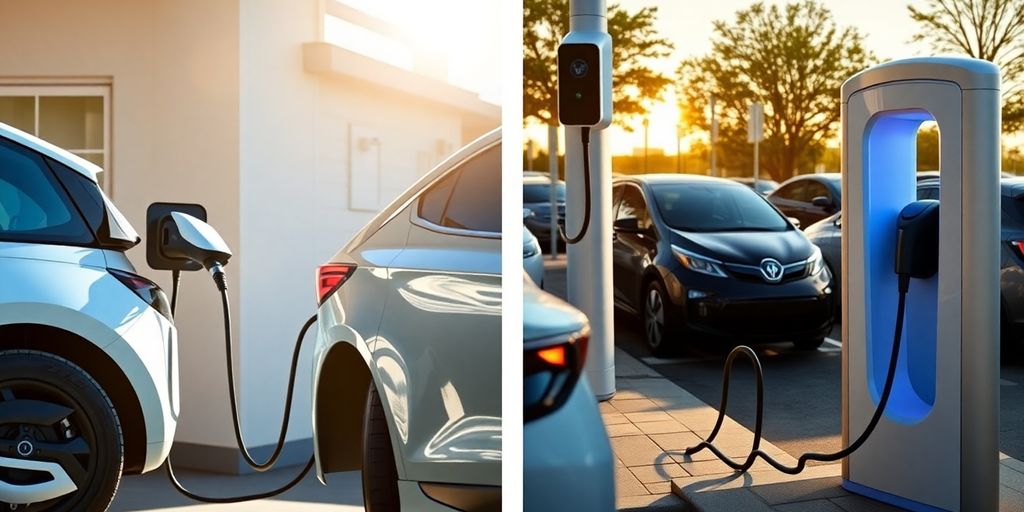
Most of the power that comes from the grid is AC. Think of it like this: AC is the standard way electricity travels to your house. AC charging is used in Level 1 and Level 2 charging. The car itself has an on-board charger that converts the AC power to DC, which is what the battery needs. It’s like having a translator inside your car.
Understanding Direct Current (DC) Charging
DC charging is different because the conversion from AC to DC happens outside the car, in the charging station itself. The charging station sends DC power directly to the car’s battery. This is why DC charging is much faster. It bypasses the car’s on-board charger, allowing for a quicker and more powerful charge. DC charging is often called Level 3 or fast charging. If you’re looking to schedule EV fleet charging, understanding the difference between AC and DC is important.
Why DC Charging is Faster
The main reason DC charging is faster boils down to where the AC-to-DC conversion happens. With AC charging, the car’s on-board charger does the work, and these chargers have limitations on how much power they can handle. DC charging stations, on the other hand, have much larger and more powerful converters. This allows them to deliver a lot more power directly to the battery, significantly reducing charging time. Think of it like filling a glass of water with a tiny straw (AC) versus a fire hose (DC). When considering installation costs for EV charging stations, remember that DC fast chargers are more expensive due to their complex components and higher power output.
Wrapping Things Up: What Charging Level Is Right for You?
So, we’ve talked a lot about the different ways to charge your EV. It’s pretty clear there’s no single "best" option for everyone. What works for your neighbor might not work for you, and that’s totally fine. Think about how much you drive every day, where you can plug in, and what your budget looks like. For most folks, a Level 2 charger at home is a really good middle ground, offering a nice balance of speed and convenience. But if you’re just driving a few miles here and there, Level 1 might be enough. And for those long trips, public fast chargers are a lifesaver. The main thing is to pick a setup that fits your life, so charging your EV feels easy, not like a chore.
Frequently Asked Questions
What are EV charging levels?
EV charging levels are basically how fast your electric car can charge. Think of it like filling a water bottle: Level 1 is a slow drip, Level 2 is a steady stream, and Level 3 is like turning on the fire hose! Each level gives you different charging speeds and is used in different places.
Which charging level do most EV owners use at home?
Most folks who own an EV and charge at home usually go with Level 2. It’s a good balance of speed and convenience. Level 1 is super slow, and Level 3 is usually only found at public fast-charging stations, not in your garage.
When is Level 1 EV charging useful?
Level 1 charging is the slowest, using a regular home outlet. It’s good for topping off if you don’t drive much, or as a backup. But if you drive a lot, it’ll take ages to get a full charge.
Where can I find Level 2 EV chargers?
Level 2 charging is much faster than Level 1. You can find Level 2 chargers at home, at work, and in many public spots like stores or hotels. It’s perfect for charging overnight or while you’re at your job.
Is there a difference in energy efficiency between charging levels?
Yes, there’s a big difference! Level 1 chargers are less energy efficient, meaning some of the electricity you pay for gets wasted. Level 2 chargers are much better at turning electricity into battery power, saving you money and being kinder to the environment.
What’s the difference between AC and DC EV charging?
AC (Alternating Current) charging is what you get from your home outlet or a Level 2 charger. DC (Direct Current) charging, like Level 3, is much faster because the power conversion happens right at the charging station, not inside your car. This lets it send a lot more power to your car’s battery quickly.
