


So, you’re looking into what cable is used for EV charging? It’s not as straightforward as it might seem. There are a bunch of different types, and picking the right one can be a bit confusing. EV charging cables aren’t a one-size-fits-all deal. They vary in terms of connectors, power capacity, and even how they’re stored. Let’s break down the basics and help you figure out what you need to know.
Key Takeaways
- EV charging cables come in different types, primarily Type 1 and Type 2, each suited for specific regions and charging stations.
- Consider the cable’s length and flexibility to ensure it fits your charging setup and storage needs.
- Check the current rating and power capacity to match your vehicle’s charging requirements for efficiency.
- Durability and weather resistance are crucial for cables used outdoors to prevent wear and tear.
- New technologies in EV cables include smart features and improved materials for better performance.
Understanding EV Charging Cable Types

Electric vehicles (EVs) are becoming more common, and with them, the need for reliable charging solutions. One critical component in this is the charging cable. Choosing the right EV charging cable is essential for efficient and safe charging. Let’s break down the types of charging cables available and what makes each unique.
Type 1 SAE J1772 Standard
The Type 1 cable, also known as the SAE J1772, is predominantly used in the United States and Asia. It features a five-pin design and includes a latch to secure the plug in place. This type of cable typically supports charging up to 7.2 kW, which suits many EV models in these regions. Vehicles like the Nissan Leaf (pre-2018 models) and the Mitsubishi Outlander PHEV use this standard.
- Design: 5-pin with a latch for secure connection
- Power Capacity: Up to 7.2 kW
- Common Vehicles: Nissan Leaf (2012-2017), Mitsubishi Outlander PHEV, Ford Focus Electric
Type 2 IEC 62196 Standard
In Europe, the Type 2 cable, or IEC 62196, is the standard. This cable is known for its seven-pin design and does not require a latch, as the vehicle has a locking mechanism. Capable of delivering up to 22 kW, it’s ideal for high-capacity EVs. Many modern EVs, such as the BMW i3 and Tesla models, prefer this type.
- Design: 7-pin without a latch, relies on vehicle’s locking pin
- Power Capacity: Up to 22 kW
- Common Vehicles: BMW i3, Tesla, Audi Etron
Mode 2 and Mode 3 Charging Cables
Mode 2 and Mode 3 refer to different charging methods rather than cable types. Mode 2 cables are typically portable and used for home charging, connecting to a standard domestic socket. They are convenient but generally offer slower charging speeds. Mode 3 cables, on the other hand, are used at public or dedicated home charging stations, providing faster and more efficient charging.
- Mode 2:
- Mode 3:
Understanding these cable types helps in selecting the right one for your EV, ensuring compatibility and optimal charging performance. Whether you’re using a type 1 cable for your older Nissan Leaf or a type 2 cable for your Tesla, knowing the differences is key to a smooth EV experience.
Factors to Consider When Choosing an EV Charging Cable
Cable Length and Flexibility
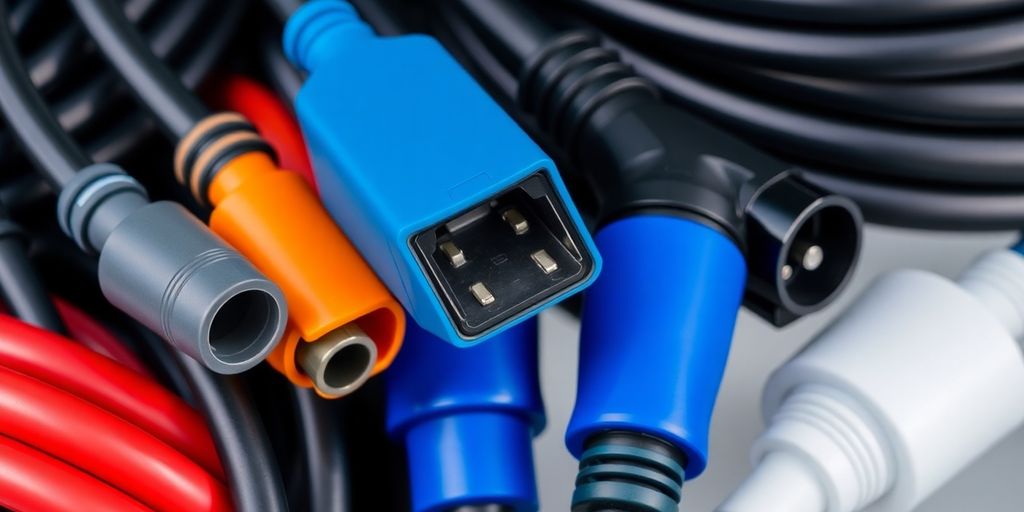
When you’re picking out an EV charging cable, length is a biggie. Five meters is often the sweet spot—not too long, not too short. But it really depends on how you park. If you’re always close to your charger, a shorter cable might be just fine. But if you need to stretch it out a bit, go longer. Just remember, longer cables can be a hassle to store, and they might get tangled easier.
Current Rating and Power Capacity
Not all cables are built the same. Some can handle more power than others. If you’re after fast charging, you’ll want a cable with a higher current rating, like 32A. These cables are thicker and heavier, but they get the job done quicker. On the other hand, a 16A cable is lighter and easier to handle but slower at charging. Always check your car’s max charging rate to pick the right one.
Durability and Weather Resistance
You don’t want a cable that falls apart after a bit of rain. Look for cables that are built to last and can handle the elements. Some cables come with extra insulation or are made from tougher materials, so they can withstand sun, rain, and maybe even a bit of snow. It’s worth spending a little more for a cable that won’t quit on you when the weather turns nasty.
The Role of Voltage in EV Charging Cables
Low Voltage Cable Applications
Low voltage cables are crucial in the setup of electric vehicle (EV) charging stations. They are typically used to distribute power from the transformer to the individual charging units. This involves running cables underground, often through conduits or concrete, to shield them from the elements and prevent accidental damage. Properly installed low voltage cables ensure safe and reliable power distribution, which is essential for the smooth operation of EV charging stations. When choosing these cables, it’s important to consider options like XLPE (cross-linked polyethylene) insulation, known for its durability and superior electrical performance.
Medium Voltage Cable Connections
Medium voltage cables play a different role. They connect the power sources, such as the grid or renewable energy systems, to substations and transformers. These cables handle higher voltage levels and are responsible for stepping down the voltage to a safer level for use in charging stations. The choice of medium voltage cables can vary depending on the specific requirements of the project, but they must be robust enough to handle significant electrical loads while maintaining safety and efficiency.
Safety Considerations for Voltage Levels
Safety is a top priority when dealing with different voltage levels in EV charging cables. Ensuring that cables are properly insulated and rated for their specific application is crucial. This includes considering the environmental conditions where the cables will be used, such as exposure to moisture or extreme temperatures. Regular maintenance checks can help identify potential issues before they become major problems. Additionally, understanding the differences between low and medium voltage applications can help in designing a charging infrastructure that is both efficient and safe for users. For more insights on DC combiner boxes and EV charging solutions, it’s vital to explore the various aspects of EV charging stations.
Installation and Maintenance of EV Charging Cables
Proper Cable Storage Solutions
Keeping your EV charging cable in top shape starts with how you store it. First off, always store your cable in a cool, dry place. Moisture and heat can degrade the materials over time. A carrying bag or a hook near your charging station works great. If you’re using a hook, make sure it’s in a shaded area to avoid prolonged sun exposure. Proper storage can significantly extend the life of your cable.
Routine Maintenance Tips
Regular checks and maintenance of your EV charging cable can prevent unexpected failures. Here are a few things to keep in mind:
- Inspect regularly: Look for any visible damage like cracks or frays.
- Clean it up: Wipe the cable and connectors with a dry cloth to remove dust and dirt.
- Test connections: Ensure the plug fits snugly into the charging port and the station.
By keeping an eye on these aspects, you’ll ensure your cable performs well over time.
Common Installation Mistakes
Installing an EV charging cable might seem straightforward, but there are some common pitfalls to avoid:
- Ignoring professional help: It’s wise to hire a certified electrician for installation, especially for Level 2 chargers.
- Wrong cable length: Measure the distance from your charger to the vehicle before buying a cable. Too short or too long can cause problems.
- Poor placement: Avoid placing cables where they can be easily damaged or tripped over.
Avoiding these mistakes can save you time and money in the long run.
Innovations in EV Charging Cable Technology
Advancements in Cable Materials
In recent years, the materials used in EV charging cables have seen significant improvements. Manufacturers are now focusing on developing cables that are not only durable but also lightweight and flexible. One of the key advancements is the use of thermoplastic elastomers, which provide excellent resistance to heat and wear. These materials ensure that the cables can withstand harsh environmental conditions without losing their integrity.
Smart Charging Cable Features
Smart charging cables are becoming increasingly popular among electric vehicle owners. These cables come equipped with features like automatic current adjustment, which optimizes the charging process based on the vehicle’s requirements. Some smart cables also offer mobile app integration, allowing users to monitor and control the charging process remotely. This level of control can help in managing energy consumption more efficiently.
Future Trends in EV Charging
Looking ahead, the future of EV charging cables is set to be shaped by several exciting trends. One such trend is the development of wireless charging technology, which could eliminate the need for physical cables altogether. Additionally, there’s a growing interest in developing ultra-fast charging cables that can significantly reduce charging times. As the demand for electric vehicles continues to rise, innovations in charging technology will play a crucial role in supporting this growth.
Comparing Tethered vs. Untethered Charging Cables

When it comes to charging your electric vehicle, you might find yourself deciding between tethered and untethered charging cables. Both have their pros and cons, and the right choice depends on your specific needs and lifestyle.
Benefits of Tethered Cables
Tethered cables are permanently attached to the charging station. This setup can be super handy because you never have to worry about forgetting your cable at home. Here are some reasons why tethered cables might be the way to go:
- Convenience: Always having the cable ready to use means one less thing to remember.
- Speed: Often, tethered cables are designed for faster charging, especially if they’re part of a DC charging station.
- Security: Since the cable is attached, there’s less risk of theft or loss.
Advantages of Untethered Cables
Untethered cables, on the other hand, are separate from the charging station. This gives you the flexibility to use the same cable at various locations, which can be a big plus. Here’s why you might lean towards an untethered option:
- Flexibility: You can easily take the cable with you, making it ideal for use at different charging points, like at home or at work.
- Compatibility: Untethered cables can often be used with multiple types of charging stations, like those offered by AMPPAL.
- Customization: You can choose the cable length and type that best suits your needs.
Choosing the Right Option for Your Needs
Deciding between tethered and untethered cables isn’t always straightforward. Consider the following when making your choice:
- Usage Frequency: How often do you charge at home vs. in other locations?
- Budget: Tethered systems might be more expensive upfront, but they offer ease of use.
- Future Needs: Think about any potential changes in your charging habits or vehicle type.
In the end, the choice between tethered and untethered cables boils down to personal preference and lifestyle. Whether you value convenience or flexibility more will guide you to the right decision. Whatever you choose, both options can effectively keep your car charged and ready to hit the road.
Understanding the Importance of Cable Insulation

Types of Insulation Materials
When it comes to EV charging cables, insulation is a big deal. The insulation material wraps around the electrical wires, keeping everything safe and sound. There are a few types of insulation materials, but the two main ones you’ll hear about are XLPE (cross-linked polyethylene) and PVC (polyvinyl chloride). XLPE is the tough one, handling higher temperatures and resisting chemicals better than PVC. It’s a bit like choosing between a heavy-duty raincoat and a light windbreaker. For EV charging, XLPE is often the go-to because it can take the heat and stress of constant use.
Benefits of XLPE Insulation
So why is XLPE insulation such a hot topic? It’s all about performance and safety. XLPE can handle higher voltage levels, which is crucial when you’re dealing with electric vehicles. It also resists leakage current and can cope with electrical spikes without breaking a sweat. Plus, it’s more durable, meaning it can withstand physical and environmental damage better than other materials. This is especially important for EV charging stations where cables might be exposed to harsh conditions.
Impact on Cable Performance
The insulation material doesn’t just protect; it also affects how well the cable performs. Good insulation like XLPE means the cable can carry more current without overheating, which is key for efficient charging. It also ensures that the cable lasts longer, reducing the need for frequent replacements. This not only saves money but also keeps the charging station running smoothly. In the end, choosing the right insulation is a smart move for anyone setting up or maintaining an EV charging station.
Wrapping It Up
So, there you have it! Picking the right cable for your EV charger isn’t rocket science, but it’s definitely something you want to get right. Whether you’re using a Type 1 or Type 2 connector, or deciding between a 16A or 32A cable, it’s all about matching your needs with what’s available. Remember, the right cable not only ensures efficient charging but also keeps your EV in top shape. And hey, if you’re ever in doubt, there’s no harm in asking a pro for advice. Happy charging!
Frequently Asked Questions
What are the different types of EV charging cables?
There are mainly two types of EV charging cables: Type 1 (SAE J1772) and Type 2 (IEC 62196). Type 1 is mostly used in the USA and Asia, while Type 2 is common in Europe.
How do I choose the right length for an EV charging cable?
The right length depends on how far your car is from the charging point. If it’s close, a shorter cable is fine. If it’s far, you’ll need a longer cable.
What is the best cable for fast charging?
For fast charging, a cable with a current rating of 32A is recommended as it charges faster than a 16A cable. However, it’s thicker and heavier.
Are all EV charging cables the same?
No, EV charging cables differ in connector types, length, and current ratings. Make sure the cable matches your car’s charging port and power needs.
What should I consider for cable insulation?
Look for cables with XLPE insulation as it offers better resistance and performance compared to other materials. It helps protect the cable from damage.
Why is cable maintenance important?
Proper maintenance, like storing the cable in a dry place and protecting it from sunlight, increases its lifespan and ensures reliable performance.
