


Thinking about adding EV charging to your shopping center? That’s a smart move! More and more people are driving electric cars these days, and they need places to plug in while they’re out and about. Putting chargers at your shopping center can bring in new customers, make your current shoppers happier, and even boost your property’s value. It might seem like a big project, but it’s totally doable. We’ll walk you through everything you need to know to get started with EV charging at your place.
Key Takeaways
- Adding EV charging can attract new shoppers and keep existing ones coming back.
- It can also make your property worth more and open up new ways to make money.
- Before you start, check your parking space, electrical system, and who owns the property.
- There’s money out there to help pay for this, like grants and tax breaks.
- Once installed, good software helps you manage the chargers and keep them running smoothly.
Understanding the Benefits of EV Charging for Your Shopping Center
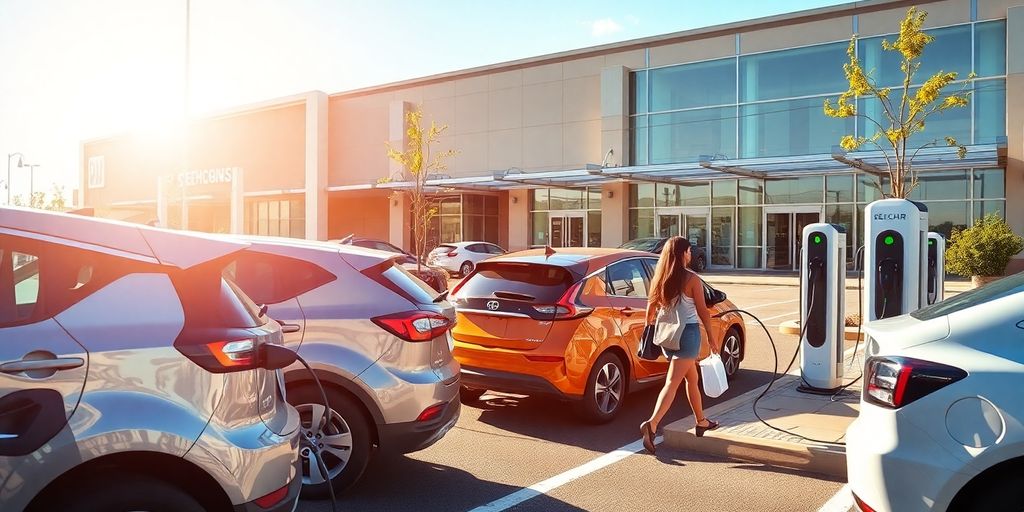
So, you’re thinking about adding EV chargers to your shopping center? Smart move! It’s not just about being green; it can seriously boost your business. Let’s break down why it’s a good idea.
Attracting New Customers and Retaining Existing Ones
Think about it: EV drivers need to charge, and they’re going to choose the places that make it easy for them. Having charging stations is like putting up a big sign that says "EV drivers welcome!" This can bring in a whole new customer base who might not have considered your shopping center before. Plus, it keeps your current customers happy. They can shop, grab a bite, and charge their car all in one go. Convenience is king!
Increasing Property Value and Revenue Potential
Adding EV charging stations isn’t just a short-term win; it can increase the overall value of your property. As EVs become more popular, having that infrastructure in place makes your shopping center more attractive to potential buyers or investors. Plus, you can generate revenue directly from the charging stations themselves. You can set a price per kilowatt-hour, or even offer free charging as a perk to attract more customers into the stores. It’s a win-win!
Enhancing Customer Experience and Convenience
Let’s face it, people love convenience. Offering EV charging is a great way to make your shopping center a one-stop shop. Customers can take care of their errands, enjoy a meal, and charge their car all in the same place. This not only makes their lives easier but also encourages them to spend more time (and money) at your shopping center. It’s all about creating a positive and convenient experience that keeps them coming back.
Assessing Your Shopping Center’s Readiness for EV Charging
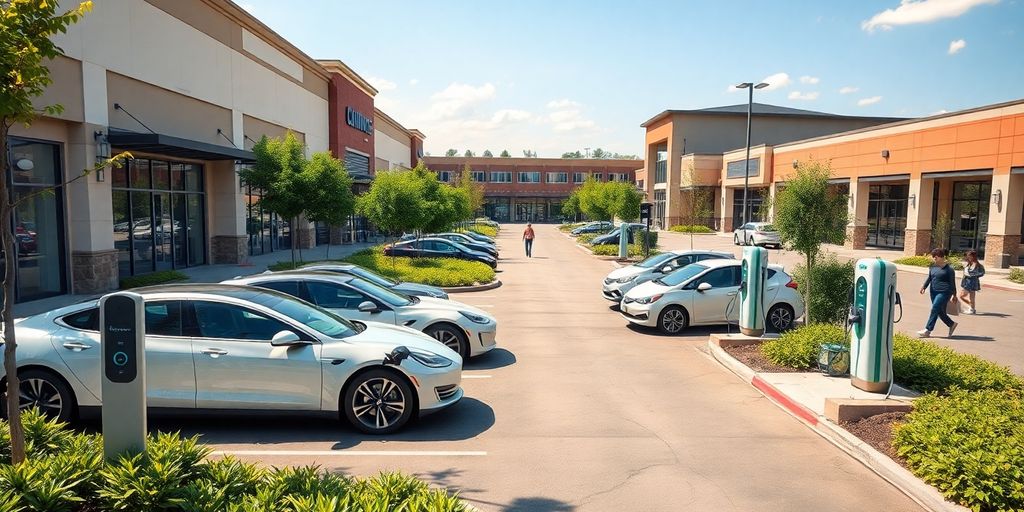
Before jumping into installing EV chargers, it’s smart to take a step back and see if your shopping center is actually ready. This isn’t just about wanting to be eco-friendly; it’s about making a sound investment. You need to look at your current setup and figure out what needs to change.
Evaluating Parking Capacity and Space Availability
First things first, let’s talk parking. Do you even have enough spaces to dedicate to EV charging? It’s not just about slapping in a charger wherever there’s room. You need to think about the impact on your regular customers. Remember, once a spot is marked for EV charging, it can’t be used by gas-powered cars. Local rules often enforce this. It’s like a gas pump – you wouldn’t park there and go shopping. Here’s a few things to consider:
- Total number of parking spots available.
- How many spots are typically full during peak hours?
- Can you afford to lose several parking spots for EV charging?
Don’t forget to think about the future. Even if demand seems low now, EV adoption rates are expected to increase. You might need more charging spots later on.
Determining Electrical Infrastructure Requirements
Okay, now for the less glamorous but super important part: electricity. You need to figure out if your current electrical system can handle the extra load. This usually means talking to your utility company or a qualified electrician. They can assess your current power source, how much power is available, and whether you can increase the supply. The higher the charging level, the more power you’ll need. Here’s a quick rundown:
| Station Power Level | Power Requirements |
|---|---|
| Level 1 | 120V, dedicated 15-20A circuit |
| Level 2 | 240V, dedicated 30-80A circuit |
| DC Fast Charge | 3-Phase DC power supply, 400-800V, 100-400A |
Figuring out what level of charger you need is key. Level 2 chargers are generally a good middle ground for shopping centers, but DC fast chargers can attract customers who need a quick top-up. Also, remember that the further the charging station is from the electrical panel, the more expensive the electrical upgrades will be!
Considering Property Ownership and Management
Who owns the property? If you’re just renting or leasing, you’ll need to get the property owner or facility manager on board. This can add a layer of complexity. You’ll need to discuss things like:
- Who pays for the installation?
- Who owns the charging stations?
- Who’s responsible for maintenance?
- What happens if someone vandalizes the equipment?
Getting these details sorted out upfront can save you a lot of headaches down the road. Make sure to have a clear agreement in place before you start any work. It’s also a good idea to check with your insurance company to see if adding EV charging stations affects your property ownership coverage.
Planning Your EV Charging Station Installation
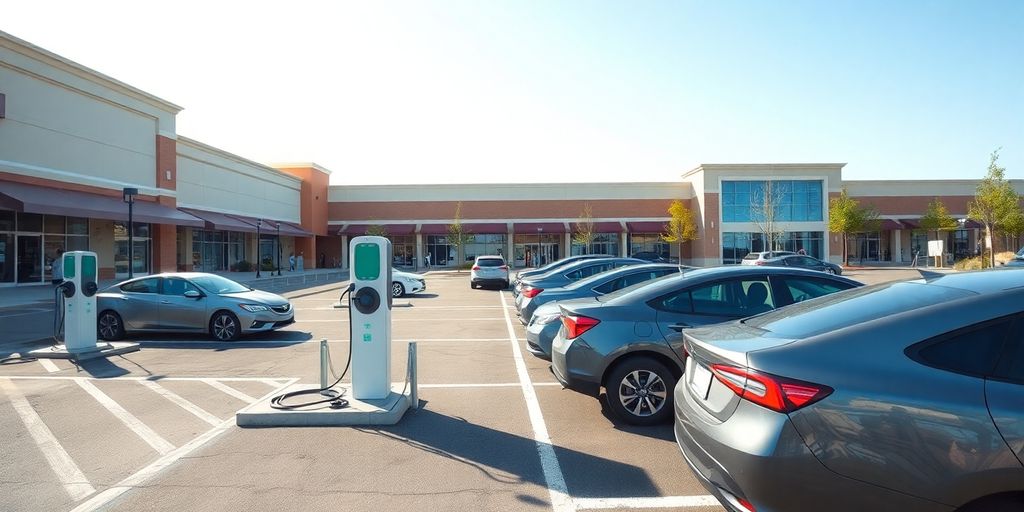
Okay, so you’re serious about putting in EV chargers. Awesome! Now comes the part where you actually figure out how to do it. It’s more than just sticking a charger in the ground. You need a plan. Let’s break it down.
Defining Your Target EV Driver Demographics
Who are you trying to attract with these chargers? Knowing your audience is key. Are you aiming for the soccer moms in minivans, or the tech bros in Teslas? Understanding your target demographic will influence the type of chargers you install and how you market them. Think about it: a high-end shopping center might want to invest in faster, more premium charging options, while a discount outlet might focus on more affordable, widely accessible chargers. It’s also worth looking into local EV adoption rates. Are EVs super popular in your area, or are you trying to get ahead of the curve? You can even do some surveys to gauge interest. It’s all about knowing your customer!
Selecting the Right Type of Charging Stations
Alright, chargers aren’t just chargers. There are different levels, and each has its pros and cons. You’ve got Level 1, Level 2, and DC Fast Charging. Level 1 is slow – like, really slow. Think overnight charging only. Level 2 is faster and more practical for shopping centers. DC Fast Charging is the speed demon, giving a decent charge in like, 30 minutes. But it’s also the most expensive to install. Most federal and provincial benefits for EV charging stations require at least a Level 2 charging speed. Here’s a quick rundown:
| Charging Level | Voltage | Amperage | Typical Use Case |
|---|---|---|---|
| Level 1 | 120V | 15-20A | Overnight charging at home |
| Level 2 | 240V | 30-80A | Shopping centers, workplaces |
| DC Fast Charge | 400-800V | 100-400A | Highway rest stops, quick top-ups |
Also, think about access. Do you want the chargers to be open to everyone, or only for members? Maybe special access for employees at certain times? And who’s gonna eat the operating cost? You can charge per session, per hour, or even a small-time fee to keep people from hogging the spots.
Estimating Project Costs and Budgeting
Okay, let’s talk money. Installing EV chargers isn’t cheap, but it can pay off in the long run. You need to factor in the cost of the equipment, labor, materials, permits, and any necessary electrical upgrades. Civil work and electrical upgrades are typically the most expensive costs. The further the charging station is from the electrical panel, the more expensive the installation will be! Get quotes from a few different contractors to get a good idea of the costs involved. Don’t forget to look into incentives and rebates – they can help offset some of the expenses. Here’s a list of potential budget items:
- EV charging equipment
- Contract labor
- Internal labor
- Materials/incidentals
- Equipment rentals
- Pavement demolition and repair
- Signage and paint
- Permits and inspection costs
Securing Funding and Incentives for EV Charging
Okay, so you’re ready to put in some EV chargers. Great! But how are you going to pay for it all? Luckily, there are a bunch of programs out there to help you out. It’s worth spending some time to see what you can get because it can really bring down the initial costs.
Exploring Federal and State Grant Programs
There are a lot of federal and state programs designed to encourage businesses to install EV charging stations. These programs often offer grants to cover a portion of the installation costs. The thing is, these programs change all the time, so you’ll need to do some digging. A good place to start is the U.S. Department of Energy’s website, and your state’s energy office. They usually have lists of available grants and how to apply. Don’t be afraid to ask for help from the program administrators; they can guide you through the process.
Identifying Local Rebates and Tax Credits
Don’t just stop at the federal and state level. Many cities and counties also offer rebates or tax credits for installing EV chargers. These local incentives can be smaller than the federal or state ones, but they can add up. Check with your local government’s environmental or sustainability office to see what’s available in your area. Sometimes, even your local utility company will have its own programs, so it pays to check everywhere.
Leveraging Utility Company Incentives
Speaking of utility companies, they often have incentives to encourage EV adoption. This might include rebates on the charging equipment itself, or reduced electricity rates for EV charging stations. Some utilities even offer to help with the installation process, like upgrading the electrical infrastructure. It’s a win-win for them: more EVs mean more electricity consumption, so they’re often willing to help you get started. Make sure to contact your utility company early in the planning process to see what they can offer. They might have specific requirements or preferred vendors, so it’s good to know that upfront.
Implementing Your EV Charging Solution
Okay, so you’ve planned everything out, got your funding sorted, and now it’s time to actually do this thing. This is where the rubber meets the road, or, you know, the charging cable meets the EV.
Hiring Qualified Electrical Contractors
Don’t even think about DIY-ing this. Seriously. You need licensed and experienced electrical contractors who know their way around EV charging station installations. Check their credentials, read reviews, and get multiple bids. Ask about their experience with similar projects and make sure they understand the specific requirements of your chosen charging stations. It’s worth spending a bit more to get someone who knows what they’re doing. Also, make sure they can handle the load requirements of multiple chargers running simultaneously. You don’t want to trip the whole shopping center’s power every time someone plugs in.
Navigating Permits and Inspection Processes
Ugh, permits. Nobody likes them, but you gotta have them. Your electrical contractor should be able to help you with this, but it’s good to have a basic understanding of what’s involved. Expect paperwork, site visits, and potential delays. Make sure all your plans are up to code and that you’re following all local regulations. It’s better to get it right the first time than to have to redo everything later. Plus, failing inspections can lead to fines and project delays, which nobody wants.
Managing Civil Work and Electrical Upgrades
This is where things can get messy, literally. Civil work might involve digging trenches for wiring, pouring concrete pads for the charging stations, and installing bollards to protect them from rogue shopping carts. Electrical upgrades could mean upgrading your main electrical panel, running new circuits, and installing transformers. The further the charging station is from the electrical panel, the more expensive the installation will be! Keep in mind that these upgrades can be costly, so it’s important to factor them into your budget. Also, try to minimize disruption to your shoppers during construction. Nobody wants to navigate a construction zone just to buy groceries.
Operating and Maintaining Your EV Charging Stations

Utilizing Intuitive Cloud-Based Charging Software
Intuitive cloud-based charging software is key to efficiently managing your EV charging stations. It lets you handle various tasks from a single platform. You can set prices, track how much energy is being used, and see details about each station. This makes it easier to stay focused on your core business while providing a reliable charging service.
Setting Pricing and Tracking Energy Usage
Deciding on a pricing strategy is important. You could charge per charging session, per minute, or per hour. A small fee, even after the car is fully charged, can encourage drivers to free up the space. Tracking energy usage helps you understand costs and optimize pricing. Here’s a simple example of how you might structure pricing:
| Charging Duration | Price |
|---|---|
| First Hour | $2.00 |
| Each Add’l Hour | $1.50 |
| Idle Fee (per min) | $0.10 |
Ensuring Reliable Station Performance
To ensure your EV charging stations are always working well, regular maintenance is a must. This includes checking the equipment, making sure all the connections are secure, and updating the software. Consider these points:
- Regular Inspections: Check stations for damage or wear.
- Software Updates: Keep the software updated for optimal performance and security.
- Prompt Repairs: Address any issues quickly to minimize downtime. You can also explore EV charging solutions to help with this.
Maximizing the Impact of Your EV Charging Investment
Okay, so you’ve installed EV chargers. Great! But now what? It’s not just about having them; it’s about making sure they actually benefit your shopping center and attract more customers. Here’s how to really make the most of your investment.
Promoting Your Charging Stations to Shoppers
Don’t assume people will just know you have EV chargers. You gotta tell them! Visibility is key. Think about it: if someone is planning a shopping trip and needs a charge, they’re going to pick the place that clearly advertises EV charging.
- Update your website: Make sure your website clearly states that you offer EV charging, including the number of stations and types of chargers (Level 2, DC fast charging, etc.).
- Use signage: Put up signs in your parking lot directing EV drivers to the charging stations. Make them big and easy to see!
- List on charging apps: Register your stations on popular EV charging apps like PlugShare or ChargePoint. This is how many EV drivers find charging locations.
Integrating Charging into Your Marketing Strategy
EV charging can be more than just an amenity; it can be a marketing tool. Get creative!
- Offer discounts: Give EV drivers a discount at certain stores while they charge. Partner with specific retailers to offer exclusive deals.
- Run promotions: Host EV-themed events or offer free charging during off-peak hours to attract more customers.
- Highlight sustainability: Emphasize your commitment to sustainability in your marketing materials. EV charging aligns perfectly with a green image.
Staying Ahead of EV Market Trends
The EV market is constantly evolving, so you need to stay informed. What’s popular today might not be tomorrow.
- Monitor EV adoption rates: Keep an eye on the number of EVs in your area and adjust your charging infrastructure accordingly. Are more people switching to EVs? You might need more charging stations.
- Research new charging technologies: New charging technologies are always emerging. Stay up-to-date on the latest advancements, like battery-integrated chargers, and consider upgrading your stations as needed.
- Gather customer feedback: Ask EV drivers for feedback on their charging experience. What do they like? What could be improved? Use their input to make your charging stations even better.
Wrapping Things Up
So, adding EV charging to your shopping center might seem like a big project, but it’s really a smart move for the future. Think about it: more and more people are getting electric cars. If you have charging spots, you’re giving them a good reason to come to your place instead of somewhere else. It’s not just about being modern; it’s about making your shopping center a go-to spot for a growing number of drivers. Plus, there are often ways to get help with the costs, which is pretty cool. It just makes sense to get ready for what’s next, and EV charging is definitely part of that.
Frequently Asked Questions
Why should a shopping center add EV charging stations?
Putting in EV chargers can bring in new shoppers and keep the ones you have coming back. It can also make your property worth more and open up new ways to make money. Plus, it makes things super easy and modern for your customers.
What should I check before installing EV charging stations?
First, check how much parking space you have and if there’s enough room for chargers. Then, figure out if your building’s electrical system can handle the extra power needed. Also, think about who owns the property and how they manage things, as this can affect the project.
How do I plan for the installation of EV charging stations?
Think about the kinds of EV drivers you want to attract. Do you want fast chargers for quick stops or slower ones for longer stays? Once you know that, pick the right type of charging stations. Don’t forget to estimate all the costs involved and set a budget.
Are there ways to get help paying for EV charging stations?
There are lots of ways to get money for EV charging. Look into grants from the government, both federal and state. Also, check for local rebates and tax breaks. Your electric company might even offer incentives to help you out.
What’s involved in actually installing the EV charging system?
You’ll need to hire electricians who know what they’re doing. Make sure you get all the necessary permits and pass inspections. There will also be some construction work and electrical upgrades, so plan for those too.
How do I run and take care of the EV charging stations once they’re installed?
You can use smart software to manage your chargers from the cloud. This lets you set prices and see how much power is being used. You’ll also want to make sure the stations are always working well for your customers.
