


Thinking about getting an electric car? One of the biggest questions people have is about charging. Specifically, how much does it actually cost to charge at home, especially if you’re just using a regular outlet? It’s not as complicated as it might seem, and understanding the basics can help you figure out if it’s the right move for you. Let’s break down what you need to know about charging your EV right in your own garage.
Key Takeaways
- Trickle charging, also known as Level 1 charging, uses a standard household outlet and adds about 10km of range per hour, which is usually enough for daily commutes under 100km.
- The average cost to charge an EV at home in the US is around $0.05 per mile, significantly less than the $0.13 per mile for gasoline cars.
- Electricity rates vary by location, with some states having much lower costs per kilowatt-hour, directly impacting your charging expenses.
- While Level 1 charging is convenient, Level 2 home chargers offer faster charging and might require professional installation costing between $750-$2,500, plus the unit price.
- Charging at home is generally more cost-effective than public charging, and taking advantage of off-peak electricity rates can further reduce expenses.
Understanding Your EV Charging Options
When you’re thinking about charging your electric vehicle (EV) at home, it’s good to know there are a few main ways to do it. Each has its own speed and how much it adds to your battery. Understanding these options helps you figure out the best way to keep your EV ready to go.
Level 1: The Basics of Trickle Charging
This is the most basic way to charge an EV, and it uses a standard 120-volt outlet, the same kind you plug your phone or toaster into. It’s often called "trickle charging" because it adds power pretty slowly. Think of it like a slow and steady drip. For most EVs, Level 1 charging adds about 3 to 5 miles of range for every hour it’s plugged in. This is usually enough for people who don’t drive very far each day or who can plug in overnight. It’s super simple because you don’t need any special equipment, just the charging cord that likely came with your car and a regular wall socket. It’s a good starting point if you’re new to EVs or don’t have a dedicated charging setup yet. You can learn more about EV charging basics.
Level 2: The Convenience of Home Wall Chargers
Level 2 charging is a step up from Level 1. These chargers typically use a 240-volt connection, similar to what an electric dryer or oven uses. You’ll need to have a Level 2 charger installed at your home to use this method. The big advantage here is speed. Level 2 chargers can add about 20 to 30 miles of range per hour, which is significantly faster than Level 1. This means you can often fully charge your EV overnight, or even get a substantial charge during a workday if you’re working from home. Many people find that installing a home EV charger is a worthwhile investment for the convenience and speed it offers. The actual charger unit can cost anywhere from $500 to $2,000, and installation expenses can add another $750 to $2,500, depending on your home’s electrical setup and wiring needs.
Level 3: Public DC Fast Charging Explained
Level 3 charging, also known as DC Fast Charging (DCFC), is what you’ll find at public charging stations. These are the fastest chargers available, capable of adding hundreds of miles of range in a relatively short amount of time, often 20 to 60 minutes for a significant charge. They work differently by converting AC power from the grid to DC power before it even reaches your car, bypassing your car’s onboard charger. While incredibly convenient for road trips or when you need a quick boost, DC fast chargers are generally not installed in homes due to their high power requirements and cost. They are primarily for public use, allowing EV drivers to quickly recharge while on the go. Understanding these different EV chargers helps you choose the best charging method for your needs.
Calculating the Cost of Home EV Charging
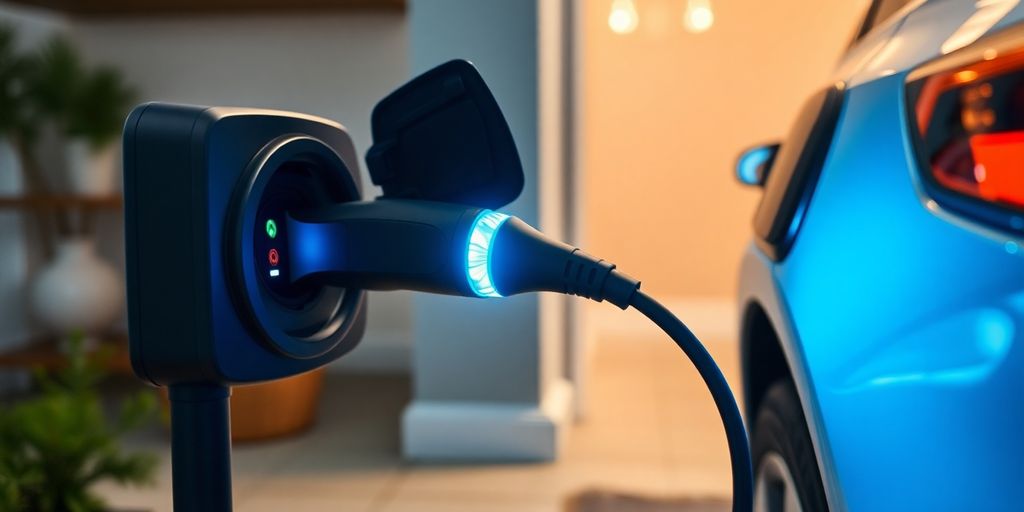
When you’re thinking about charging your electric vehicle at home, figuring out the cost is a big part of the puzzle. It’s not as simple as just plugging it in; there are a few things to consider that affect your electricity bill. Understanding these costs helps you budget and see the real savings of going electric.
Average U.S. Residential Electricity Rates
So, how much does electricity actually cost per unit? As of mid-2025, the average American pays around $0.17 per kilowatt-hour (kWh). But this number is just an average, and it can swing quite a bit depending on where you live. For instance, California residents might see rates closer to $0.32/kWh, while Hawaii can be as high as $0.41/kWh. On the flip side, states like Washington might offer rates as low as $0.12/kWh. This variation is a major factor in your overall charging expenses.
Cost Per Mile for Electric Vehicles
To get a clearer picture, let’s talk about cost per mile. Most EVs can travel about 3 to 4 miles for every kWh of electricity they use. If we take the average electricity rate of $0.17/kWh and assume your EV uses 1 kWh for every 3 miles, that works out to about $0.057 per mile. This cost can go down if your car is more energy-efficient or if you live in an area with cheaper electricity. For comparison, driving a gasoline car often costs between $0.12 and $0.16 per mile, depending on gas prices and your car’s MPG. So, even at the higher end of home charging costs, EVs usually come out ahead.
Annual Charging Expenses for EV Owners
Let’s put it all together for a full year. The average American drives about 13,489 miles annually. If you’re charging at home using the average electricity rate and getting around 3 miles per kWh, your yearly charging cost could range from $506 to $720. This is a significant saving compared to the $1,600 to $2,100 you might spend on gasoline for a comparable gas-powered car. Of course, these numbers can change based on your specific driving habits and local electricity prices, but the trend clearly shows that home charging is a very cost-effective way to keep your EV running. You can learn more about how long charging takes to better estimate your electricity usage.
Factors Influencing Home Charging Expenses
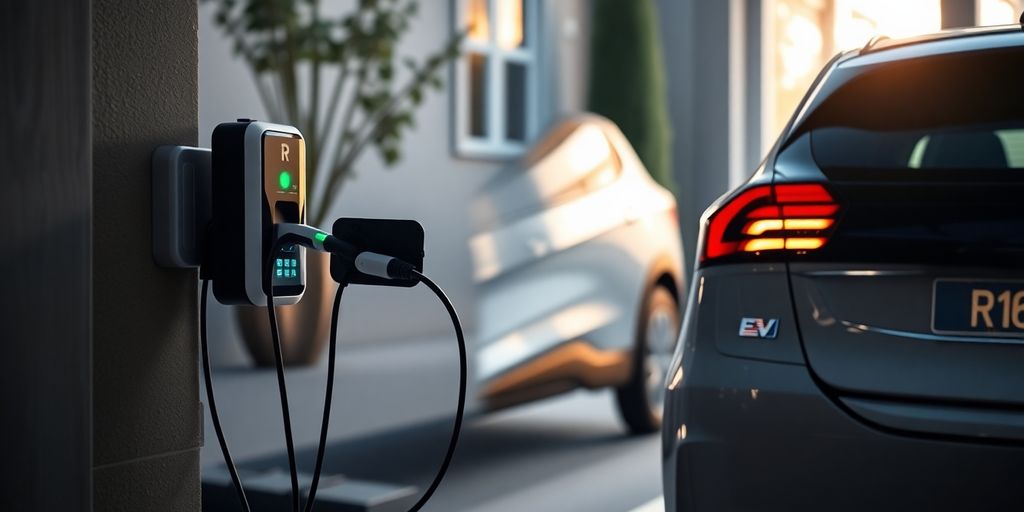
So, you’ve got an electric car and you’re thinking about charging it at home. That’s pretty smart, usually the cheapest way to go. But the actual cost isn’t just a flat number; a few things can really change how much you pay each month. It’s not super complicated, but knowing these details can help you budget better.
Electricity Rates Vary by Location
This is a big one. Where you live matters a lot when it comes to electricity prices. Some states, like Washington or West Virginia, have really low rates, maybe around $0.12 per kilowatt-hour (kWh). Then you have places like Hawaii or California where it can be much higher, sometimes $0.30 to $0.40 per kWh. So, if you live in a pricier state, charging your EV will naturally cost more. It’s like the difference between buying gas in a big city versus a rural town.
Impact of EV Battery Size on Charging Costs
Think of your EV’s battery like a gas tank. Bigger tank, more fuel needed, more money spent. Most EVs today have batteries ranging from about 40 kWh to over 100 kWh. A smaller battery, like in a Nissan Leaf, will cost less to charge fully than a larger one, like in a Tesla Model S. For example, charging a 40 kWh battery at $0.17/kWh costs about $6.80. But charging a 100 kWh battery at the same rate would be around $17. So, the size of your car’s battery directly affects how much you pay for a full charge.
Benefits of Off-Peak Charging
This is where you can really save some cash. Most utility companies have what they call "time-of-use" rates. Basically, electricity is cheaper when demand is low, usually late at night or very early in the morning. If you can plug in your car during these off-peak hours, you’re paying less per kWh. Some people even set their chargers to start automatically overnight. It’s a simple way to cut down on your charging expenses, especially if you’re driving a lot and need to charge frequently. You can often find out your utility’s off-peak hours on their website. This is a great way to lower your cost of charging an electric vehicle.
Installation Costs for Home EV Chargers
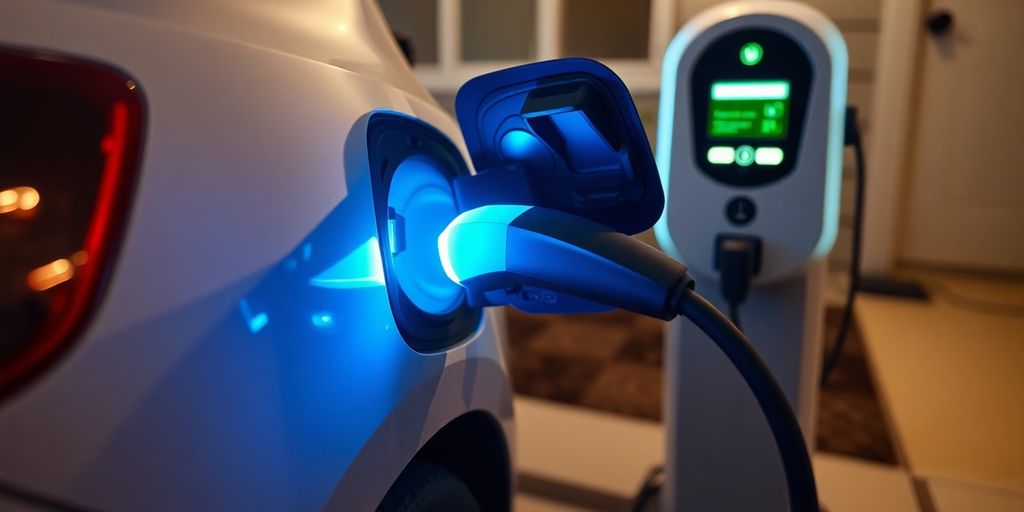
Thinking about putting in a charger at your place? It’s a good idea, but you’ll want to know what you’re getting into cost-wise. The price tag for getting an EV charger set up at home isn’t just about the box itself; it involves a few different pieces.
Charger Unit Prices
The actual charging unit, often called an EVSE (Electric Vehicle Supply Equipment), can vary quite a bit. You’re looking at a range, generally from around $500 for a basic model up to $2,000 or more for fancier ones with smart features. Some car manufacturers might even throw one in as part of a deal when you buy an EV, so it’s worth asking your dealer about that.
Professional Installation Expenses
This is where costs can really start to add up. Most people opt for a Level 2 charger, and these need to be installed by a qualified electrician. The installation itself can run anywhere from $750 to $2,500, sometimes even more. The final cost really depends on your home’s setup.
Several things affect how much an electrician will charge:
- Your home’s electrical system: If your house has an older electrical panel or needs an upgrade to handle the extra load, that’s an added expense.
- Distance from the panel: The farther the charger needs to be from your main electrical panel, the more wiring is needed, and that increases the labor cost.
- Complexity of the job: If the electrician has to do things like run wires through walls, dig trenches for underground wiring, or install a new circuit breaker, expect the price to go up.
Potential Additional Wiring Needs
Sometimes, your existing electrical setup just won’t cut it for a Level 2 charger. You might need a panel upgrade, which could add several hundred dollars to the bill. If the charger is going to be installed a good distance from your main electrical panel, you’ll need longer, thicker wires, which also costs more. It’s always a good idea to get a few quotes from different electricians to compare prices and make sure you understand exactly what’s included in their estimate. You might also be able to find EV charging rebates and tax credits that can help offset these initial setup costs.
Comparing Home Charging to Public Charging
When you own an electric vehicle, figuring out the best way to keep it charged is a big part of the equation. While charging at home is super convenient, especially overnight, sometimes you need a boost when you’re out and about. Comparing the costs and convenience of home charging versus public charging stations is pretty important for managing your EV expenses.
Cost-Effectiveness of At-Home Charging
For most EV owners, charging at home is the clear winner when it comes to saving money. You’re typically paying your standard residential electricity rate, which is usually much lower than what public charging networks charge. Think about it: you plug in your car while you sleep, and wake up to a full battery without even thinking about it. This is especially true if you can take advantage of off-peak electricity rates, making it even cheaper. Most people find that charging at home costs significantly less per mile than using public chargers. It’s a simple way to keep your running costs down.
When Public Charging Might Be Necessary
Public charging stations really shine when you’re on a road trip or just need a quick top-up away from home. They’re designed for speed, especially the DC fast chargers that can add a lot of range in a short amount of time. If you’re not at home and your battery is getting low, a public station is your lifeline. Some places even offer free charging, though these spots can get busy. For longer trips, relying solely on home charging isn’t practical, so public options become a necessity to extend your travel range. Understanding EV charging types helps you pick the right station for your needs.
Comparing Per-Mile Costs: EV vs. Gas
Let’s break down the numbers. Charging an EV at home, using average residential electricity rates, often works out to be much cheaper per mile than filling up a gasoline car. While gas prices fluctuate, electricity rates tend to be more stable. For example, if your EV gets about 3-4 miles per kilowatt-hour (kWh) and your home electricity costs $0.17 per kWh, that’s roughly $0.04 to $0.06 per mile. Compare that to a gasoline car that gets 25 miles per gallon and costs $3.50 per gallon, that’s about $0.14 per mile. Public charging, especially DC fast charging, can narrow that gap, but home charging usually remains the most economical choice for daily driving. This comparison highlights the efficiency of EV charging methods.
Maximizing Savings with Home EV Charging
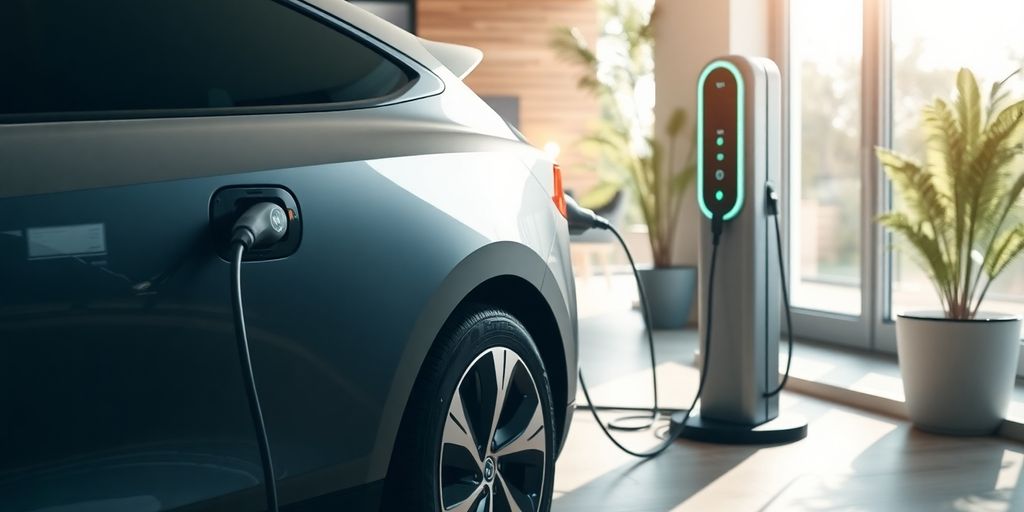
When you own an electric vehicle, charging at home is usually the most wallet-friendly option. It’s not just about the convenience of waking up to a full battery every morning; it’s also about tapping into lower electricity rates compared to public stations. By being smart about how and when you charge, you can significantly cut down on your overall EV expenses.
Leveraging Time-of-Use Electricity Rates
Many utility companies now offer
So, What’s the Verdict on Trickle Charging?
When it comes down to it, trickle charging your EV at home, often using a Level 1 charger, is a pretty straightforward and budget-friendly way to keep your battery topped up. It’s not the fastest method, adding only about 10km of range per hour, so it’s best if you don’t drive a ton of miles daily or if you just need a little boost overnight. While a Level 2 charger offers quicker charging and might be worth the upfront cost for many, Level 1 is a perfectly fine starting point, especially if you’re just getting into EVs or have a shorter commute. It’s definitely cheaper than relying on public chargers, and the convenience of plugging in at home is hard to beat. Just remember to check your electricity rates, as that’s the biggest factor in how much you’ll actually pay per mile.
Frequently Asked Questions
What exactly is trickle charging for EVs?
Trickle charging, also known as Level 1 charging, uses a regular wall outlet and adds about 5 miles of range per hour. It’s best for drivers who don’t travel far each day or as a backup charging method.
Is charging an EV at home cheaper than buying gas?
Charging your electric car at home usually costs much less per mile than filling up a gas car. For example, it might cost around 5 cents per mile to charge an EV at home, while a gas car could cost about 13 cents per mile.
How much does it generally cost to install a home EV charger?
The cost to install a home EV charger can range from $500 to $2,000 for the unit itself, plus $750 to $2,500 for installation. Costs can go up if your home’s electrical system needs upgrades or if the charger is far from your electrical panel.
Do electricity prices for charging vary by where I live?
The price of electricity varies a lot by location. While the average in the U.S. might be around 17 cents per kilowatt-hour, some places like Hawaii can be as high as 41 cents, and others like Washington might be as low as 12 cents.
Can charging my EV at certain times save me money?
Yes, charging during off-peak hours, often at night, can significantly lower your electricity bill. Many utility companies offer special rates for EV owners who charge during these times.
Is it better to charge my EV at home or at public charging stations?
While public charging stations are convenient for long trips, charging at home is typically more cost-effective. Most EV owners charge at home because it’s usually cheaper and more convenient than relying on public stations.
