


Thinking about getting an electric car? One of the big questions people have is, “how much is EV charging at home?” It’s a fair question, since most EV owners do the bulk of their charging right in their own garage. We’ll break down what you can expect to pay, how it stacks up against public charging, and what kind of initial setup costs you might run into. Let’s figure out the real cost of keeping your electric ride powered up at home.
Key Takeaways
- Charging your EV at home is usually way cheaper than using public charging stations.
- Your home electricity rates and how much you drive really change your charging costs.
- There’s an upfront cost for installing a home charger, but incentives can help a lot.
- Over time, home EV charging can save you a bunch of money compared to gas cars.
- Using special EV electricity plans and charging during off-peak hours can lower your costs even more.
Understanding The Cost Of EV Charging At Home
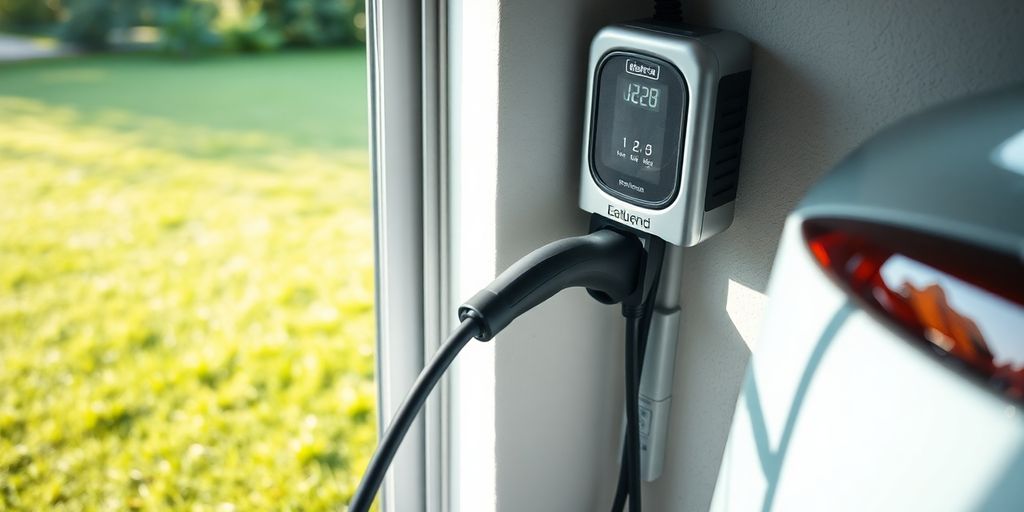
Okay, so you’re thinking about getting an EV and charging it at home? Smart move! But let’s break down what it’s actually going to cost you. It’s not as simple as just plugging it in and hoping for the best. There are a few things that go into figuring out your home charging expenses.
Average Residential Electricity Rates
First things first, you gotta know how much your electricity costs. The average residential electricity rate in the US is around $0.17 per kilowatt-hour (kWh), but this can vary wildly depending on where you live. For example, you might pay $0.12/kWh in Washington state, but a whopping $0.41/kWh in Hawaii. That’s a huge difference! Check your electricity bill to find your exact rate. Knowing this is the first step to understanding your EV charging costs.
Calculating Your Home Charging Costs
Alright, now for the math. Let’s say you have an EV with a 40 kWh battery. To fully charge it at the average rate of $0.17/kWh, it would cost you about $6.80. Not bad, right? But here’s the formula to keep in mind:
Charging Cost ($) = Electric Vehicle Battery Size (kWh) x Electricity Rate ($ per kWh)
Keep in mind that this is just an estimate. Your actual costs might be a bit higher or lower depending on how efficiently your car charges and whether you have any vampire drain (where the car uses energy even when it’s not being driven). Also, consider the EV charger installation cost if you plan to upgrade to a Level 2 charger.
Miles Per Kilowatt-Hour Efficiency
Another important factor is how many miles you get per kWh. Most EV owners can expect to get around 3 to 4 miles per kWh. So, if you drive 40 miles a day, you’ll need about 10-13 kWh of electricity. Using the $0.17/kWh average, that’s about $1.70 to $2.21 per day. Over a year, that adds up! But it’s still way cheaper than filling up a gas tank, especially with gas prices these days. Plus, if you can charge during off-peak hours, you might even save more money. It’s all about understanding your usage and taking advantage of lower rates.
Comparing Home Versus Public EV Charging Costs
Public Charging Station Fees
Okay, so you’re out and about, and your EV needs a jolt. Public charging stations are popping up everywhere, which is great! But, be warned, they come with a cost. It’s not like filling up at the gas station, where prices are (relatively) consistent. Public charging fees can vary wildly. You’ll see different rates depending on the network (ChargePoint, EVgo, etc.), the location (city vs. rural), and the charging speed (Level 2 vs. DC Fast Charging).
Generally, Level 2 chargers will cost you less per kilowatt-hour (kWh) than DC Fast Chargers. Think of Level 2 as a slow, steady trickle, good for topping off while you shop. DC Fast Charging is like slamming down an energy drink – quick, but pricey. Some stations charge by the minute, others by the kWh, and some even have subscription models. It’s a bit of a jungle out there, so always check the app or screen before you plug in. Businesses need to consider these commercial EV charging stations costs when deciding to install them.
Cost Savings Of At-Home Charging
Let’s be real, one of the biggest perks of owning an EV is the potential to save money on fuel. And where do those savings really add up? At home! Charging at home is almost always cheaper than using public charging stations. You’re tapping into your residential electricity rate, which is usually lower than the rates public charging networks charge.
Think about it this way: you’re essentially buying electricity in bulk. Plus, you can take advantage of off-peak hours, when electricity rates are even lower (more on that later). Over time, those savings can really add up, offsetting the initial cost of installing a home charger. It’s like getting a discount on every ‘fill-up’.
Here’s a quick comparison:
| Charging Location | Average Cost per kWh |
|---|---|
| Home | $0.17 |
| Public Level 2 | $0.25 – $0.40 |
| Public DC Fast Charging | $0.40 – $0.80 |
Convenience Versus Cost Considerations
Okay, so home charging is cheaper, no question. But what about convenience? That’s where public charging has an edge. Imagine you’re on a road trip, or you live in an apartment without charging access. Public charging stations become a lifesaver. DC Fast Chargers can give you a significant charge in under an hour, which is way faster than plugging into a Level 1 or Level 2 charger at home.
However, that convenience comes at a price. You’re paying a premium for the speed and accessibility. Plus, you might have to wait in line, especially at popular stations. Home charging, on the other hand, is all about convenience on your terms. You plug in overnight, and wake up to a full battery. No lines, no waiting, just pure electric goodness. It’s a trade-off: pay less and wait longer at home, or pay more and charge faster in public. Understanding the efficiency of different EV charging types can help you make the best choice.
Initial Investment For Home EV Charging
Okay, so you’re thinking about getting an EV and charging it at home? Awesome! But let’s talk about the upfront costs. It’s not just plugging into a regular outlet (though you can do that, it’s just super slow). There’s a bit more to it, especially if you want decent charging speeds.
Level 2 Charger Installation Expenses
Most EV owners opt for a Level 2 charger for home use. These chargers give you a much faster charge than a standard Level 1 outlet. The cost of the charger itself can range from around $400 to $1000 or more, depending on the features and brand. But that’s just the beginning. You’ll also need to factor in installation costs. This is where things can vary quite a bit. You’ll need a qualified electrician to install the charger, and that can run you anywhere from $400 to $1500, or even higher, depending on the complexity of the installation. Factors that influence the price include:
- The distance between your electrical panel and the charging location.
- Whether you need a new circuit breaker.
- Permitting fees in your area.
To get a better idea of what you might pay, it’s a good idea to get quotes from a few different electricians. Qmerit is a trusted EV charger installation partner that can help you find certified installers.
Potential Electrical Panel Upgrades
This is the big one that can really impact your initial investment. If your electrical panel is old or doesn’t have enough capacity, you might need to upgrade it before you can install a Level 2 charger. This can add a significant chunk of change to the overall cost, potentially pushing the total installation expense up by $1,000 to $3,000 or more. It really depends on the age of your house and the existing electrical infrastructure. It’s worth having an electrician assess your panel early in the process to avoid any surprises. You can even search for EV charging questions online to get a better understanding of what’s involved.
Available Incentives And Rebates
Don’t despair! There’s good news too. Many states, municipalities, and utility companies offer incentives and rebates to help offset the cost of installing a home EV charger. The federal government also offers a tax credit that can cover a percentage of the installation costs. These incentives can significantly reduce your out-of-pocket expenses. Here’s what to look for:
- Federal Tax Credit: Check the current federal tax credit for EV chargers and installation. It can be a substantial savings.
- State Rebates: Many states offer rebates for purchasing and installing EV chargers. Check your state’s energy office website.
- Utility Company Programs: Your local utility company might have its own programs to encourage EV adoption, including rebates for home charging equipment.
It’s definitely worth doing your research to see what incentives are available in your area. These [EV charging rebates and tax credits] can make a big difference in the overall cost.
Long-Term Financial Benefits Of Home EV Charging
Annual Fuel Cost Savings
Okay, so let’s talk about the real reason you’re probably reading this: saving money. Switching to an EV and charging at home can seriously cut down on your fuel costs. Think about it – no more trips to the gas station! The savings can be pretty significant, potentially thousands of dollars each year, depending on how much you drive and what gas prices are like in your area. It’s like giving yourself a raise, except instead of getting more money, you’re just spending less. Plus, you can use that extra cash for, you know, fun stuff.
Overall Lifetime Savings
Now, let’s zoom out and look at the big picture. Over the entire lifespan of your EV, those annual fuel savings really start to add up. We’re talking about potentially tens of thousands of dollars saved compared to sticking with a gas-guzzler. And it’s not just fuel. EVs typically have lower maintenance costs too, since they have fewer moving parts. Less maintenance plus lower fuel costs equals a whole lot of extra money in your pocket over the years. It’s a win-win!
Impact Of Daily Usage Patterns
Your daily driving habits play a huge role in how much you’ll actually save. If you’re only driving a few miles each day, the savings might not be as dramatic as someone who’s racking up hundreds of miles a week. But even for shorter commutes, the savings are still there. And if you can take advantage of off-peak electricity rates, you can save even more. Think about when you’re driving, how far you’re going, and how often you need to charge. All of that impacts your overall savings. For example, if you drive roughly 36 miles per day, prioritizing at-home charging makes a lot of sense. Also, consider how maximizing EV charging for your needs can impact your savings. It’s all about finding the right balance for your lifestyle.
Total Cost Of EV Ownership With Home Charging
Okay, so you’re thinking about getting an EV and charging it at home. That’s awesome! But what’s the real cost, like, really real? It’s more than just the price of the car. Let’s break it down.
Maintenance And Repair Cost Differences
One of the coolest things about EVs is that they usually need less maintenance than gas cars. Since EVs have fewer moving parts, you’re not dealing with oil changes, spark plugs, or exhaust systems. Think about it: you’re mainly looking at things like wiper blades, tire rotations, and maybe brake pads. Some studies say that over five years, you might spend around $4,200 on maintenance and $1,700 on repairs for an EV. A gas car? Could be closer to $4,500 just for maintenance in the same time. That difference adds up!
Battery Degradation And Charging Habits
Okay, let’s talk about the elephant in the room: the battery. Over time, EV batteries lose some of their capacity. How much depends on a few things. Living in a hot place or using DC Fast Charging a lot can speed things up. Some studies suggest you could see a 3-9% capacity loss after 50,000 miles if you’re not careful. Replacing a battery is a big expense, so it’s worth thinking about how you charge. Level 2 charging at home is generally easier on the battery than always hitting up those fast chargers. It’s a marathon, not a sprint, right?
Federal And Local EV Adoption Programs
Don’t forget about the sweet, sweet incentives! The government wants people to switch to EVs, so there are often tax credits and rebates to take advantage of. For example, there’s a federal tax credit that can knock up to $7,500 off the price of a new EV for some models. Plus, a lot of states, cities, and even utility companies offer EV charging rebates and tax credits to make things even more affordable. Do your homework and see what’s out there – it could save you a bunch of money. These programs can really lower the total cost of ownership and make that EV dream a reality. Also, remember that DC Fast Chargers can degrade your battery faster.
Optimizing Your Home EV Charging Experience

Leveraging Time-Of-Use Rates
Okay, so you’ve got your EV and you’re charging at home. Great! But are you doing it smart? One of the easiest ways to save money is to compare long-term cost by taking advantage of time-of-use (TOU) rates. Basically, electricity costs different amounts depending on the time of day. Usually, it’s cheaper overnight when demand is lower. Check with your local utility company to see if they offer TOU rates. You might be surprised how much you can save just by shifting your charging schedule. I know I was!
Benefits Of EV Rate Plans
Many utility companies now offer special EV rate plans designed specifically for EV owners. These plans often provide even deeper discounts during off-peak hours than standard TOU rates. Some plans might even offer a flat rate for unlimited charging during certain times. It’s worth doing some research to see what’s available in your area. I found that switching to an EV rate plan cut my charging costs by almost half! Plus, some plans offer incentives for signing up for an EV Rate Plan, so it’s a win-win.
Choosing The Right Charging Level
Not all charging is created equal. You’ve got Level 1, Level 2, and DC fast charging (though DC fast charging isn’t really for home use). Level 1 is your standard wall outlet – super slow, but it works in a pinch. Level 2 is faster and requires a dedicated 240V circuit. Choosing the right charging level depends on your driving habits and how quickly you need to recharge. If you only drive a few miles a day, Level 1 might be fine. But if you’re a heavy commuter, Level 2 is definitely the way to go. Consider your daily mileage, budget, and electrical panel capacity when making your decision. You can learn more about choosing the right charging level online.
Factors Influencing Your Home Charging Expenses
Okay, so you’re thinking about getting an EV and charging it at home? Smart move! But before you jump in, let’s talk about what can make your home charging costs go up or down. It’s not just a simple plug-and-play situation; a few things can really affect your monthly bill.
Geographic Location And Electricity Prices
Where you live plays a HUGE role in how much you’ll pay to charge your EV. Electricity prices vary wildly across the country. For example, if you’re in Washington, you might pay around $0.12 per kilowatt-hour, but in Hawaii, it could be as high as $0.41! That’s a massive difference. Check out the average residential electricity rates in your state to get a better idea.
Electric Vehicle Battery Size
The bigger the battery, the more electricity it takes to fill it up. Think of it like filling up a gas tank – a bigger tank costs more. Most EVs have battery sizes around 40 kWh, but some go way bigger. So, a larger battery means more EV charging at home, and a higher electricity bill. Here’s a simple breakdown:
- Small Battery (40 kWh): Cheaper to charge
- Medium Battery (60 kWh): Moderate charging cost
- Large Battery (80+ kWh): Most expensive to charge
Driving Habits And Annual Mileage
How much you drive directly impacts how often you need to charge. If you’re just zipping around town for short trips, you won’t need to charge as often as someone who’s commuting long distances every day. The average American drives about 36 miles a day, but your mileage might be way different. Consider these points:
- Daily Commute: Longer commutes mean more frequent charging.
- Weekend Trips: Road trips will definitely increase your charging needs.
- Driving Style: Aggressive driving can reduce your car’s miles per kWh efficiency, meaning you’ll need to charge more often. Public EV charging costs can add up if you drive a lot and don’t charge at home often enough.
Wrapping Up: Your EV Charging Choices
So, when it comes to charging your electric car, you’ve got options. Charging at home is usually the cheapest way to go, especially if you can charge during off-peak hours when electricity is less expensive. It’s super convenient too, just plug in overnight and you’re good to go. Public chargers are there when you need them, like on longer trips or if you’re in a hurry. They might cost a bit more, especially the really fast ones, but they get the job done quickly. The main thing is to figure out what works best for your daily driving and how much you want to spend. Either way, owning an EV can save you money in the long run compared to a gas car, and that’s a pretty good deal.
Frequently Asked Questions
How much does it typically cost to charge an EV at home?
The cost to charge an electric vehicle (EV) at home changes based on where you live and how much your local electricity company charges per kilowatt-hour (kWh). On average, it costs about $0.17 per kWh in the U.S. So, for a typical EV with a 40 kWh battery, a full charge would be around $6.80.
Is home EV charging more affordable than public charging?
Yes, charging your EV at home is usually much cheaper than using public charging stations. Public Level 2 chargers can cost $0.20 to $0.25 per kWh, and fast DC chargers can be $0.40 to $0.60 per kWh. This means home charging can be one-third to one-half the price of public options.
What’s the initial cost to set up home EV charging?
You’ll need to buy a Level 2 charger, which usually costs a few hundred dollars. Then, you’ll pay for installation by an electrician, which can range from $400 to $1,500. If your home’s electrical panel needs an upgrade, that could add more to the cost, potentially bringing the total up to $3,000 or more.
Are there any programs to help with the cost of installing a home EV charger?
Many government and local programs offer money back or tax breaks for buying and installing EV chargers. For example, there’s a federal tax credit that can cover 30% of the cost. Check with your state, city, and electric company for other helpful programs.
How much money can I save over time by charging my EV at home?
On average, EV owners can save about $950 each year on ‘fuel’ costs compared to gasoline cars. Over the entire life of the EV, these savings can add up to $6,000 to $10,000. How much you save depends on how much you drive and your charging habits.
What’s the best way to save money when charging my EV at home?
To save the most, try to charge your EV during ‘off-peak’ hours, which are times when electricity demand is lower and rates are cheaper. Some electric companies even have special EV rate plans that give you lower prices for charging at certain times. Also, using a Level 2 charger at home is generally better for your battery’s long-term health than always using fast public chargers.
