


Thinking about getting an electric vehicle (EV) or installing a charging station? One big question pops up: how much will it cost? The answer can vary a lot based on where you live, what type of charger you want, and how you plan to use it. In this article, we’ll break down the costs involved in EV charging, from home installations to public charging stations, so you can get a clearer picture of what to expect.
Key Takeaways
- The average cost to install an EV charging point ranges from $1,000 to $2,500, depending on various factors.
- Public charging costs can range from free to a few dollars per session, influenced by location and charger type.
- Home charging installations may require permits, and labor costs can add to the overall expense.
- Charging your EV can cost about $10 to $30 for a full charge at commercial stations, but home charging is generally cheaper.
- Ongoing costs for EV ownership include maintenance, subscription fees for charging services, and fluctuating electricity rates.
Understanding EV Charging Costs
Factors Influencing Charging Costs
Okay, so you’re thinking about getting an EV, or maybe you already have one. Either way, understanding the costs involved in charging is pretty important. It’s not as simple as just plugging in and paying a flat fee. Several things can affect how much you end up spending. For example, the price of electricity varies a lot depending on where you live. Some states have way higher rates than others. Also, the time of day matters. Some utility companies offer time-of-use rates, which means you pay less during off-peak hours, like overnight. And of course, the type of charger you use makes a big difference. A fast charger will cost more than plugging into a regular wall outlet. Basically, it’s a bit of a puzzle, but once you get the hang of it, it’s not too bad.
Types of EV Chargers
There are basically three main types of EV chargers you’ll run into. Level 1 chargers are the slowest – these are your standard household outlets (120V). They’re fine for topping off, but not great for a full charge. Level 2 chargers (240V) are much faster and what most people install at home. Then there are DC fast chargers, also known as Level 3. These are the speed demons, and you’ll usually find them at public charging stations. They can add a significant amount of range in a short amount of time, but they also cost more to use. Knowing the difference is key to choosing the right charger for your needs and budget.
Average Installation Costs
If you’re planning to charge at home, you’ll probably want to install a Level 2 charger. The cost of installation can vary quite a bit. It depends on things like whether you need to upgrade your electrical panel, how far the charger is from the panel, and local labor rates. On average, you’re looking at somewhere between $500 and $2000 for the whole shebang. It might seem like a lot upfront, but it can save you money in the long run compared to relying solely on public charging stations. Plus, it’s just way more convenient to wake up to a fully charged car every morning. Don’t forget to factor in potential rebates or incentives from your utility company or government, which can help offset the cost.
Public Charging Station Expenses
Cost Variability by Location
Public charging station costs? They’re all over the place. What you pay in one city might be wildly different from another, even within the same state. This is because electricity prices, demand, and the charging network’s pricing policies vary significantly. You’ll find that urban areas or places with high EV adoption often have more competitive pricing, while rural or less-traveled areas might have higher rates due to lower usage and fewer charging options. Also, premium locations like highway rest stops or shopping malls might charge more for the convenience.
Free Charging Options
Believe it or not, free EV charging does exist, though it’s becoming less common. Here’s where you might find it:
- Dealerships: Some dealerships offer free charging as a perk for customers, especially those who bought their EVs there. It’s a way to attract people and showcase their electric models.
- Hotels and Shopping Centers: A few hotels and shopping centers provide free charging to attract visitors. It’s a nice bonus while you shop or stay overnight.
- Workplaces: Some companies are installing chargers for employees as a benefit, often offering free or subsidized charging. This is a great way to encourage EV adoption.
Keep in mind that free charging is often slower (Level 2) and might have time limits. It’s great for topping off, but not ideal for a full charge.
Payment Structures
When you’re not getting free juice, public charging stations use a few different payment models. Understanding these can help you budget and choose the best option for your needs. Here’s the breakdown:
- Per-kWh: This is the most common model. You pay for the amount of electricity you use, just like at home. Prices can vary based on time of day, demand, and the charging network. It’s usually the fairest way to pay, as you only pay for what you use.
- Per-Minute: Some chargers, especially faster DC fast chargers, charge by the minute. This can be tricky because the charging rate slows down as your battery fills up. You might end up paying more per kWh in the later stages of charging. It’s good to keep an eye on the charging speed to make sure you’re not overpaying.
- Subscription: Some charging networks offer monthly subscriptions that give you discounted rates or free charging up to a certain amount. If you charge frequently with a particular network, a subscription can save you money. Just make sure you’ll use it enough to justify the monthly fee. Consider EV charging accessibility when choosing a subscription.
It’s always a good idea to check the payment structure and rates before you plug in, so you’re not surprised by the bill. Also, some networks require you to have their app or card to start charging, so plan ahead!
Home Charging Installation Considerations
Permits and Labor Costs
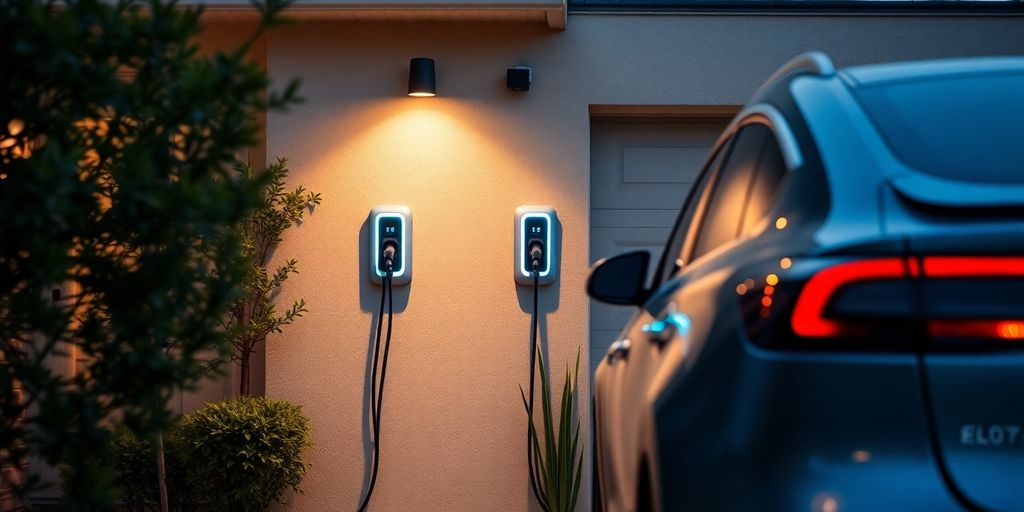
Okay, so you’re thinking about getting an EV charger installed at home? Awesome! But before you jump in, let’s talk about the less glamorous side: permits and labor. Depending on where you live, you might need a permit to install a home EV charger. Seriously, check with your local government. The cost can vary a lot, adding potentially hundreds to your project.
Then there’s the labor. Electricians usually charge by the hour, or sometimes a flat rate. It’s always a good idea to get a few estimates from licensed electricians before you commit. This way, you can make sure you’re getting a fair price and avoid any surprises down the road. Getting a professional to do the install is usually the best bet for safety and compliance.
Choosing the Right Charger
Choosing the right charger is important. You’ve got Level 1 and Level 2 chargers. Level 1 is the basic one that comes with most EVs – you just plug it into a regular 120V outlet. It’s slow, but it works. Level 2 chargers need a 240V outlet (like your dryer uses) and charge much faster.
Now, do you want a plug-in or a hardwired Level 2 charger? Plug-in is easier to install, but hardwired might be necessary depending on your electrical system. Also, think about the amperage. A higher amperage charger will charge faster, but you need to make sure your electrical panel can handle it. Don’t forget to check the plug-in unit warranty too!
Installation Challenges
Alright, let’s talk about potential headaches. One big one is your electrical panel. If it’s old or doesn’t have enough capacity, you might need to upgrade it, which can be expensive. Also, the distance between your panel and where you want the charger matters. The farther it is, the more wiring is needed, and the higher the cost.
Another thing to consider is whether you need to run new circuits or upgrade existing ones. This can involve drilling through walls, running wires through attics or basements, and generally making a mess. And if you live in an older home, you might run into unexpected issues like asbestos or outdated wiring. Here’s a few things to keep in mind:
- Electrical Panel Capacity: Ensure your panel can handle the extra load.
- Wiring Distance: Shorter distances mean lower costs.
- Accessibility: Make sure the installation location is easily accessible for both the electrician and for charging your car.
Calculating Charging Costs for EVs
Key Data Points for Calculation
Okay, so you wanna figure out how much it really costs to keep your EV juiced up? It’s not as simple as just plugging in and hoping for the best. You gotta know a few things first. The two biggies are how much electricity your EV’s battery can hold and what your electricity company charges per kilowatt-hour (kWh).
Think of it like this:
- Battery Capacity: This is like your gas tank size, but for electricity. It’s measured in kWh.
- Electricity Rate: This is the price you pay for each kWh of electricity you use. Check your bill!
But here’s a little secret: not all the electricity that goes into your car actually ends up in the battery. Some gets lost as heat. So, you’ll need a bit more electricity than the battery size suggests.
Average Costs per Charge
Alright, let’s talk numbers. The cost to charge your EV can swing wildly. I mean, really wildly. It depends on a bunch of stuff, like where you live, what kind of charger you’re using, and even the time of day. But, on average, you might be looking at something like $0.05 per mile. That’s a ballpark, though. To get a better idea, let’s look at a quick example:
| EV Model | Battery Capacity (kWh) | Avg. Electricity Cost (per kWh) | Estimated Full Charge Cost |
|---|---|---|---|
| Chevy Bolt | 65 | $0.16 | $10.40 |
| Tesla Model 3 | 75 | $0.16 | $12.00 |
| Ford Mach-E | 91 | $0.16 | $14.56 |
Keep in mind that these are just estimates. Your actual costs could be higher or lower. Also, the EV charging costs at commercial chargers can be double or triple the residential rates.
Factors Affecting Total Costs
So, what makes the price jump around so much? Here’s the lowdown:
- Location, Location, Location: Electricity prices vary a lot from state to state. Some places have cheap hydro power, others rely on more expensive sources.
- Charger Type: Level 1 chargers (the ones that plug into a regular outlet) are slow and cheap. Level 2 chargers are faster but cost more to install. DC fast chargers are the speed demons, but they’re also the most expensive to use. The installation of EV charging points can vary in cost.
- Time of Day: Some electricity companies offer cheaper rates during off-peak hours (like overnight). If you can charge then, you’ll save money.
- Charging Network: Public charging networks have different pricing structures. Some charge by the minute, others by the kWh. And some even have subscription fees.
- Driving Habits: Obviously, the more you drive, the more you’ll need to charge. Aggressive driving also drains the battery faster.
- Battery Health: As your battery gets older, it might not hold as much charge, meaning you’ll need to charge more often.
Ongoing Costs of EV Ownership
Okay, so you’ve bought your EV and maybe even installed a home charger. You’re not done thinking about costs just yet! Let’s talk about the ongoing expenses that come with owning an electric vehicle. It’s not just about the initial purchase price or the cost of electricity. There are a few other things to keep in mind.
Maintenance and Repair Expenses
One of the biggest selling points of EVs is that they generally require less maintenance than gasoline cars. Since EVs don’t have an internal combustion engine, you skip oil changes, spark plug replacements, and a bunch of other things. However, that doesn’t mean they’re maintenance-free. You’ll still need to think about tire rotations, brake pad replacements, windshield wiper fluid, and keeping the car clean. Also, the battery will eventually degrade and might need replacing, which is a significant expense. The good news is that many EV components last longer than their gasoline counterparts.
Subscription Fees for Charging Services
If you plan on using public charging stations a lot, you might want to consider subscribing to a charging network. Some networks, like the Ionna charging network, offer monthly subscriptions that give you discounted charging rates or other perks. It’s worth looking into if you regularly use public chargers, but do the math to make sure the subscription actually saves you money. Otherwise, you might be better off just paying as you go. Some manufacturers charge a small monthly fee to use their cloud-based systems, while others levy fees if you want to share your charger with the public.
Electricity Rate Variations
Electricity prices can vary a lot depending on where you live and the time of day. Some utility companies offer time-of-use rates, where electricity is cheaper during off-peak hours (like overnight) and more expensive during peak hours (like during the day). If you can charge your EV during off-peak hours, you can save a significant amount of money. Also, keep an eye on your electricity bill. Rates can change, and you want to make sure you’re not getting any surprises. The reinforcement of guardrails might be needed due to the increased use of electricity for EVs, indirectly affecting electricity rates in the long run.
Comparing Charging Costs to Gasoline
It’s a question on everyone’s mind: is going electric really cheaper? Let’s break down the costs of charging an EV versus filling up a gas-powered car. It’s not always a straightforward comparison, but understanding the key factors can help you make an informed decision.
Cost Per Mile Analysis
Generally, you’ll find that the cost per mile is lower with an EV compared to a gasoline car. This is because electricity is often cheaper than gasoline, and EVs are more efficient at using energy. However, the exact savings depend on several things, like your local electricity rates, gas prices, and the efficiency of both your EV and your gasoline car. For example, the cost to charge an EV is around $0.05 per mile compared to about $0.13 to fuel your gas-powered car. Here’s a quick comparison:
| Vehicle Category | EV Charging Cost Per Mile | Gas Fueling Cost Per Mile |
|---|---|---|
| Compact hatchback | Nissan Leaf: 4.9 cents | Toyota Corolla Hatchback: 9.4 cents |
| Compact sedan | Tesla Model 3: 4.2 cents | Honda Civic LX: 9.4 cents |
| Mid-size SUV | Hyundai IONIQ 5: 5.7 cents | Kia Telluride AWD: 14.9 cents |
| Luxury crossover SUV | Audi Q4 e-tron: 5.3 cents | Porsche Macan: 19.3 cents |
Long-Term Savings with EVs
While the initial purchase price of an EV might be higher, the long-term savings can be significant. Consider these points:
- Lower fuel costs: As mentioned above, electricity is typically cheaper than gasoline. This difference adds up over time, especially if you drive a lot.
- Reduced maintenance: EVs have fewer moving parts than gasoline cars, which means less maintenance and fewer repairs. No more oil changes!
- Tax incentives and rebates: Many governments offer incentives to encourage EV adoption, which can further reduce the overall cost. Check for local and federal government incentives.
Environmental Impact Considerations
Beyond the financial aspects, there’s the environmental impact to consider. EVs produce zero tailpipe emissions, which helps to improve air quality and reduce greenhouse gas emissions. While the production of EVs and the generation of electricity do have environmental impacts, they are generally lower than those associated with gasoline cars. Plus, if you power your EV with renewable energy, like solar, you can further reduce your carbon footprint. Consider the benefits of solar-powered charging stations for your EV.
Future Trends in EV Charging Pricing
Impact of Renewable Energy
The integration of renewable energy sources like solar and wind is poised to significantly influence EV charging costs. As renewable energy becomes more prevalent and efficient, the cost of electricity generation will likely decrease. This could translate to lower prices for EV charging, especially at stations powered directly by renewable sources. Imagine a future where charging your EV is not only environmentally friendly but also cheaper thanks to the sun or wind!
Technological Advancements
Technological advancements are constantly reshaping the EV landscape, and charging is no exception. Expect to see faster charging speeds, more efficient energy transfer, and smarter charging management systems. These innovations will not only reduce the time it takes to charge but also optimize energy usage, potentially lowering costs. For example, solid-state batteries and advanced charging algorithms could minimize energy loss during charging, making each kilowatt-hour go further. Here’s a quick look at potential advancements:
- Wireless Charging: More convenient and potentially cheaper in the long run.
- Vehicle-to-Grid (V2G) Technology: Allows EVs to feed energy back into the grid, potentially earning owners credits.
- Smart Grid Integration: Optimizes charging based on grid load and energy prices.
Government Incentives and Subsidies
Government policies play a crucial role in shaping the EV market, and incentives and subsidies can directly impact charging prices. Many governments offer tax credits, rebates, and other financial incentives to encourage EV adoption and the development of charging infrastructure. These government incentives can help offset the initial costs of installing home chargers or using public charging stations, making EV ownership more affordable. It’s worth keeping an eye on these policies, as they can change over time and vary by location. For example, some regions might offer:
- Subsidies for home charger installation.
- Reduced electricity rates for EV owners.
- Tax credits for purchasing EVs.
Wrapping It Up
So, there you have it. The cost of installing an EV charging point can really vary based on a bunch of factors. You might be looking at anywhere from $1,000 to $2,500, depending on where you live and what kind of charger you want. Plus, don’t forget about the ongoing costs after installation. Charging at home is usually cheaper than using public stations, but it all adds up. If you’re thinking about going electric, it’s worth doing your homework on these costs. In the end, having your own charger can save you time and money, making it a smart choice for many.
Frequently Asked Questions
What are the main factors that affect EV charging costs?
The cost to charge an electric vehicle (EV) can change based on where you live, the type of charger you use, and the time of day you charge. Different electricity rates can also play a big role.
How much does it typically cost to install an EV charging station at home?
Installing an EV charging station at home usually costs between $1,000 and $2,500. The price can vary based on the type of charger and local installation costs.
Are there free options for charging my EV?
Yes, some public places like shopping centers or workplaces offer free charging stations. You can also find apps that show where these free chargers are located.
How do I calculate the cost of charging my EV?
To figure out how much it costs to charge your EV, you need to know the size of your battery and the price of electricity per kilowatt-hour. Multiply the battery size by the electricity cost.
What ongoing costs should I expect after installing an EV charger?
After you install an EV charger, you might have monthly fees for using certain services or costs for repairs if something goes wrong. Regular maintenance is usually low.
How do EV charging costs compare to gasoline prices?
Charging an EV is often cheaper than buying gasoline for a traditional car. On average, you can expect to pay about $0.05 per mile for electricity, while gasoline costs can be higher.
