


If you’re looking into how much EV charging points cost, you’re not alone. Many people are curious about the expenses associated with charging their electric vehicles, whether at home or in public. This article will break down the various costs involved, from installation to ongoing fees, and help you understand what to expect when it comes to powering your EV.
Key Takeaways
- Charging costs vary based on location and charger type.
- Home charging is typically cheaper than public charging.
- Installation expenses can range from $1,000 to $3,000 depending on the charger and local permits.
- Utilizing time-of-use rates can lower your charging costs significantly.
- Incentives and rebates can help offset installation expenses.
Understanding EV Charging Costs
Factors Influencing Charging Costs
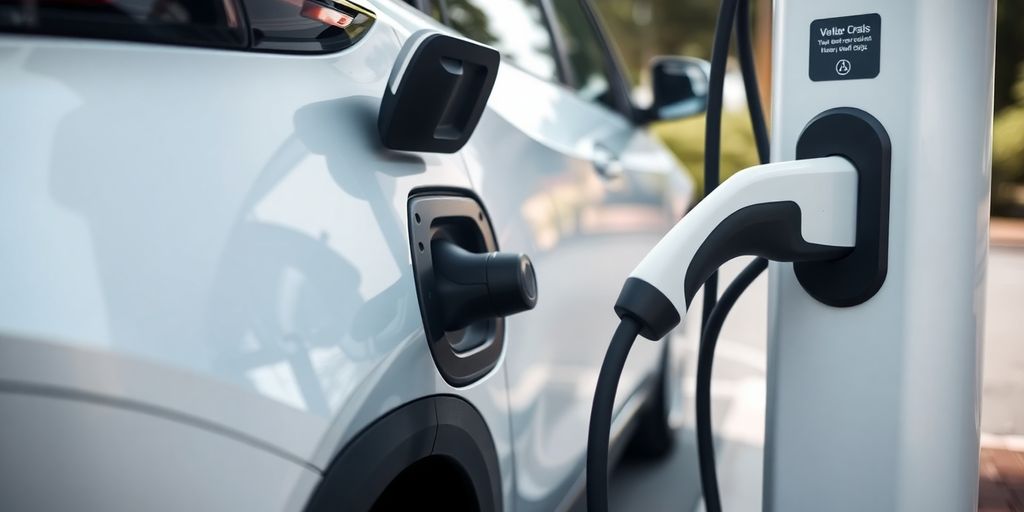
When you start looking into EV charging, you quickly realize that many things affect the final bill. The cost isn’t just about plugging in your car; it involves a mix of electricity rates, charger efficiency, and even installation fees. Here are a few things that often tilt the scale:
- Local electricity rates and tariffs
- Type and efficiency of the charging station
- Installation fees and any necessary permits
For those considering different types of EV contracts, exploring options like lease EV options can be really helpful.
Comparing Home and Public Charging
The debate between charging at home versus using public stations is more than about convenience. At home, you’re likely looking at a steadier, more predictable cost structure. Public charging, on the other hand, might offer quicker service but with price premiums, especially during peak hours.
Below is a simple comparison:
| Charging Setting | Typical Cost Range (per full charge) | Key Considerations |
|---|---|---|
| Home Charging | $5 – $15 | Stable rates, long-term investment |
| Public Charging | $10 – $30 | Convenience vs. higher rates |
The table above gives a quick glance at what you might expect. Also, if you’re curious about how different installation settings impact these costs, checking out EV charger installation details can shed some light.
Long-Term Savings with EV Charging
Beyond the basic cost per charge, looking at the long haul is key. Investing in a home setup might mean higher upfront costs, but over time, you can see those lower energy bills add up. Investing in a home charging system can lower long-term energy bills.
Some potential long-term benefits include:
- Steadily lower electricity bills compared to gasoline prices
- Reduced maintenance and operational expenses over time
- Chances to integrate renewable energy sources, further cutting costs
This mix of factors means that while the start might sting a bit financially, the journey ahead could be much easier on your wallet.
EV Charging Installation Expenses
Cost of Permits and Labor
When setting up an EV charger at home or at a business, one of the first details to sort out is the expense of permits and the work involved. Electricians’ charges can vary, and local rules may mean you need a permit—this could add a few extra hundred dollars to your bill. Here are some points to consider:
- Check your local regulations to see if permits are required.
- Contact a licensed electrician to get clear pricing information.
- Factor in both the permit fees and the labor, which might be charged by the hour or as a flat rate.
Don’t forget the importance of safety, kind of like ensuring sturdy guardrails are in place when they’re needed.
Level 1 vs. Level 2 Chargers
Deciding between a Level 1 and a Level 2 charger involves balancing initial costs with installation ease. Level 1 chargers plug into a standard outlet and need less setup, but they take a lot longer to charge your vehicle. Level 2 chargers, on the other hand, require a connection to a 240-volt outlet, often needing more professional work, but they deliver faster charging speeds.
Below is a brief comparison:
| Feature | Level 1 | Level 2 |
|---|---|---|
| Installation Complexity | Simple, uses standard outlet | Needs dedicated circuit |
| Charging Speed | Slow (extended charging time) | Faster (reduced waiting time) |
| Cost | Lower initial cost | Higher upfront, more efficient |
For those wondering about the specifics, it’s wise to compare these options in light of advancements like advanced batteries that can affect overall EV performance.
Ongoing Costs To Anticipate
After the charger is installed, there are a few regular expenses that you should plan for. Not every unit has an ongoing fee, but sometimes manufacturer support or system upgrades can require extra payment.
- Some chargers demand a small monthly fee for connecting to cloud services.
- Repairs or occasional upgrades may not be covered by the warranty and can add to the costs down the road.
- Electricity usage for the charger is an ongoing expense, and it may vary with the unit and your driving habits.
Keep in mind that a well-planned EV charging installation can save money over time, even with these extra expenses.
Cost Analysis of EV Public Charging
Public EV charging has become more common, but it often comes with higher fees compared to home charging. There are many factors to consider when looking at these costs, and the numbers can vary. In this section, we break it down into three parts.
Public EV Charging Station Fees
Public charging stations can charge fees in different ways. Some stations bill per minute, some per kilowatt-hour, and others have session fees. This means paying for public charging might cost more overall. Here’s a quick look at the numbers:
| Charger Type | Estimated Cost Range |
|---|---|
| Level 2 | $8 – $10 per session or about $0.20 – $0.25 per kWh |
| DC Fast | $16 – $24 per session or roughly $0.40 – $0.60 per kWh |
Some important points to keep in mind:
- Prices vary by provider and location.
- Billing methods are not standard across all networks.
- Additional fees, such as idle fees, can add up.
It’s interesting to compare these fees with the overall expense of setting up a private charging point, as discussed in home charging setups.
Charging Costs by Location
Costs for public EV charging can change a lot depending on where you are. Urban areas often have higher rates due to higher energy prices and demand, while rural areas might charge less. Consider these factors when budgeting:
- Local electricity rates
- The density of charging network providers
- Local taxes and fees
In some regions, you might see costs creeping up quickly because of peak-time surcharges or special fees. Sometimes, even slight differences in energy policy can lead to significant cost differences. For those who want to see numbers and details in a more technical format, check out the discussion on charging tech specs.
Incentives for Public Charging
Even if public charging seems expensive, there are often incentives to help ease the burden. Some programs offer rebates or tax incentives that lower the cost of using public chargers. Here are some common types of incentives:
- Utility discounts for EV drivers
- Local government rebates
- Membership deals with charging networks
Remember, incentives can sometimes turn a higher initial cost into long-term savings.
When planning your EV charging budget, it’s smart to keep these incentives in mind along with the actual fees being charged. By looking at all the available options, you can make a smarter financial decision about using public charging stations.
Cost Analysis of EV Home Charging
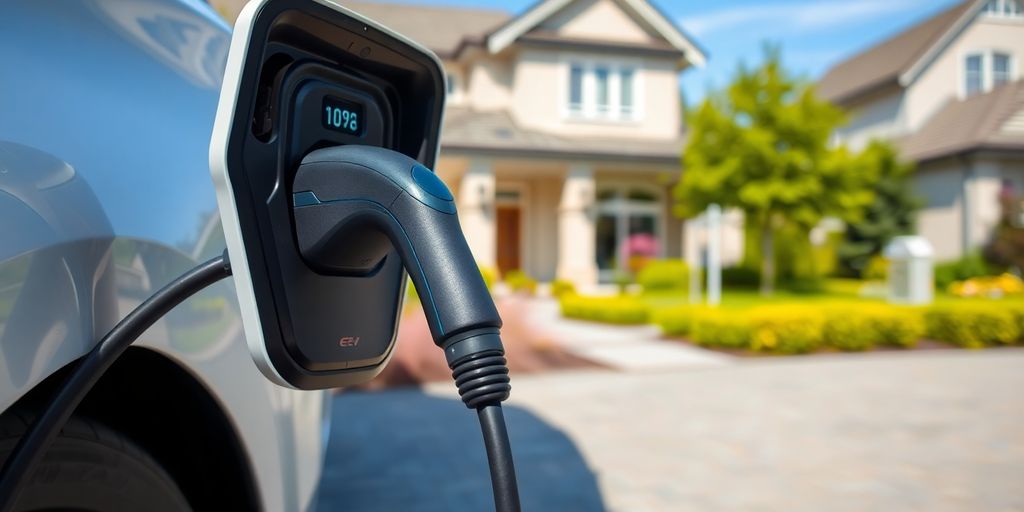
EV home charging is a topic many EV owners look into when assessing their overall cost of ownership. Charging your EV at home means paying residential electricity rates, which can vary from one place to another. It’s a simple process: plug in, wait a few hours, and you’re ready to go. In this section, we’ll break down some key points.
U.S. Residential Electricity Rates
Electricity prices in the U.S. are not the same everywhere. For instance, most people see rates around $0.16 per kilowatt-hour, but they can drop as low as $0.11 or climb up to $0.41 in some states. Here’s a small table to show you the typical range:
| Location | Cost per kWh (USD) |
|---|---|
| National Average | $0.16 |
| Lower Rates | ~$0.11 |
| Higher Rates | ~$0.41 |
For a detailed look at how these numbers can save you money in the long run, check out EV cost savings.
Average Charging Costs at Home
When it comes to charging at home, the math is pretty straightforward. A full charge depends on your battery size – a small battery might need around 20 kWh, and a larger one might need 40 kWh or more. At average rates, you’re looking at a few dollars for each full charge.
For example:
- If your battery takes 40 kWh, and the rate is $0.16 per kWh, a full charge could cost around $6.40.
- In states with lower rates, it might be closer to $4.40.
- In places with higher rates, it could exceed $16.40 for a full battery.
Remember, these numbers can change with your actual numbers and energy needs. Residents in colder climates might see variations during winter, and that’s covered more in urban charging winter.
Benefits of Home Charging
Charging at home has its perks. It’s a hassle-free way to keep your EV ready for daily use. Here are some practical advantages:
- It lets you avoid the waiting lines you see at public chargers.
- It often costs less compared to paying at a public charging station.
- It gives you control over when and how you charge, which means you can take advantage of lower rates at off-peak times.
- You get the convenience of charging overnight, so your car is ready every morning.
With these points in mind, home charging might be the simple, cost-effective solution you need. Experience how setting up your own charging station changes your daily routine and overall expenses.
Types of EV Chargers and Their Costs
When it comes to charging your electric vehicle, the type of charger you pick can really change your daily routine and overall costs. In this section, we break down the three types of chargers: Level 1, Level 2, and Level 3.
Level 1 Chargers
Level 1 chargers use standard household outlets and are the most basic option available. They might not seem impressive because charging can take anywhere from 10 to 24 hours, but they are a good fit if your driving needs are light or if you have plenty of time overnight. Here are some key points:
- Uses a typical 120V outlet
- Minimal installation cost
- Ideal for overnight or emergency charging
Level 1 chargers offer a low-cost upgrade for occasional use, especially if you’re not in a hurry. Also, for those interested in new tech trends like the Kia EV6 plug, Level 1 chargers can be a natural starting point.
Level 2 Chargers
Stepping up, Level 2 chargers provide a faster charge using a 240V supply, similar to what you might use for heavy-duty appliances at home. Charging times generally drop to about 4 to 8 hours, making them a common choice for homeowners and businesses looking for a quicker turnaround. Here’s what to consider:
- Requires a dedicated 240V outlet or professional installation
- Typically found at homes, workplaces, and some public settings
- Speeds up daily charging needs considerably
Many drivers appreciate Level 2 chargers for cutting down charging time without breaking the bank. For those digging into installation details and charging station fees, these chargers strike a fine balance between speed and cost.
Level 3 Chargers
Level 3 chargers, often called fast chargers or DC fast chargers, stand out for their ability to juice your EV in just 20 to 60 minutes. They are mostly found in commercial locations and along major highways. Although they come at a higher price point per charge, they are invaluable when you need to quickly top up your battery on a long trip. Key details include:
- Uses direct current (DC) to deliver high power
- Can charge a vehicle up to 80% in under an hour
- Often located at commercial charging hubs
To put it in perspective, check out the table below:
| Charger Type | Typical Charging Time | Cost Range |
|---|---|---|
| Level 1 | 10-24 Hours | Minimal |
| Level 2 | 4-8 Hours | Moderate |
| Level 3 | 20-60 Minutes | On the higher end |
In short, the right charger depends on your lifestyle and driving habits. Whether you’re opting for a Level 1 solution for slow, steady power or relying on a Level 3 charger for rapid stops, each one comes with its own set of advantages and caveats. Enjoy weighing your options as you move closer to your EV journey!
Maximizing Savings on EV Charging
Utilizing Time-of-Use Rates
Charging your EV during off-peak hours can really help keep your monthly bills in check. Instead of charging at random times, it helps to plan your charging sessions when rates are lower. Here are some simple ways to get started:
- Check with your local electricity provider for off-peak hours.
- Set your smart charger to begin charging during low-rate windows.
- Keep an eye on seasonal rate changes; sometimes extra savings are available via programs like EV fleet integration.
You can even see a rough breakdown of typical rates below:
| Time Slot | Average Rate (cents/kWh) |
|---|---|
| Off-Peak (Night) | 10 |
| Midday | 18 |
| Peak (Evening) | 25 |
Finding Free Charging Stations
Sometimes, saving money means not paying anything at all. Free charging spots are more common than you might think, especially in urban areas and along major commutes. A few tips include:
- Look for public facilities like community centers or shopping areas that offer free charging.
- Use apps to locate free stations quickly, making it easier to plan your route.
- Pair your errands with a charging stop when you spot complimentary options like those highlighted in charging system specs.
Planning your trips to include these stations can help keep your charging expenses down without any extra hassle.
Government Incentives and Rebates
Many local and federal programs help reduce the cost of EV charging. These incentives can take many forms, from cash rebates to tax credits on your home charging setup. Consider these steps:
- Research state-level programs to see if you qualify for a rebate.
- Look into federal credits that may apply when you install a charger at home.
- Ask your local utility provider about additional incentives or special low-rate plans.
These incentives can significantly reduce your overall EV charging expense when planned correctly.
Future Trends in EV Charging Costs
Impact of Renewable Energy
The move to cleaner power sources is changing the way we look at EV charging costs. As wind and solar become more popular, the grid is getting a makeover that could benefit EV drivers in the long run. For instance, the added blend of renewables may reduce reliance on fossil fuels, which can stabilize or even lower energy prices over time. Many industry experts now point to a future where renewable sources play a big role in charging stations, sometimes even offering lower rates. In fact, rising interest in green energy is boosting EV market insights, which further supports this shift.
Technological Advancements
New tech in EV charging is not just about faster plugs—it’s changing the whole package. Developments in battery management systems, advanced power electronics, and smarter grid integration are all leading to more efficient charging processes. Here’s a quick look at some shifts in technology and their benefits:
| Technology | Benefit |
|---|---|
| Enhanced Battery Systems | Improved charge cycles |
| Smart Charge Controllers | Better load management |
| Integrated IoT Sensors | Real-time performance monitoring |
These innovations could shrink wait times and trim overall energy costs, making charging more accessible. Many experts believe that these tech leaps will redefine energy use in the coming years.
Market Competition and Pricing
Competition among charging network providers, auto makers, and tech innovators is heating up. This scramble is expected to put downward pressure on prices overall. Here are a few trends that could shape costs:
- More entrants in the charging market might offer lower installation and usage fees.
- Pricing models could get dynamic, giving customers more options based on time, location, and speed.
- Policy changes and shifts in partnerships could lead to more incentives for users, including lower rates for non-premium services like non-Tesla fee changes.
In sum, the future of EV charging costs looks to be increasingly influenced by how fast renewable energy is adopted, the pace of technological change, and the competitive landscape of the market. This evolving scene promises more choices and potentially lower costs for drivers.
Wrapping It Up
In the end, figuring out how much it costs to charge an EV really depends on a few things. If you’re charging at home, you might be looking at around $6 to $10 for a full charge, depending on where you live and your electricity rates. Public charging can hit you harder, sometimes costing between $10 and $30 for a full charge. But hey, those costs can vary a lot based on the type of charger you use and where you are. So, if you’re thinking about getting an EV, it’s smart to do a bit of homework on charging options. Overall, while the upfront costs can seem high, many find that the long-term savings on fuel and maintenance make it worth it.
Frequently Asked Questions
What factors affect the cost of charging an electric vehicle (EV)?
The cost to charge an EV depends on where you charge it, the type of charger you use, and local electricity prices.
Is charging at home cheaper than charging in public?
Yes, generally, charging at home is cheaper than using public chargers. Public charging can cost up to three times more.
What is the average cost to install an EV charger at home?
Installing a home EV charger can cost between $1,000 and $2,500, depending on the type of charger and installation needs.
How much does it cost to charge an EV at a public station?
Charging at a public station can cost between $10 and $30 for a full charge, depending on the type of charger.
Are there any incentives for installing a home EV charger?
Yes, many states offer rebates and tax credits to help cover the cost of installing a home EV charger.
What are the different types of EV chargers?
There are three main types of EV chargers: Level 1 (slow), Level 2 (faster), and Level 3 (fastest). Each has different costs and charging speeds.
