


If you’re curious about how much it costs to charge an electric vehicle (EV), you’re not alone. Many people are making the switch to EVs and want to know what to expect in terms of charging expenses. The costs can vary widely based on several factors, including where you charge and the type of charger you use. In this article, we’ll break down everything you need to know about EV charging costs, from home charging to public stations, and give you tips on how to save money along the way.
Key Takeaways
- Charging costs can range from $10 to $30 for a full charge at commercial stations.
- Home charging is usually cheaper than using public chargers.
- Level 2 chargers are faster and more efficient compared to Level 1 chargers.
- Using off-peak rates can significantly lower your charging expenses.
- Location plays a big role in charging costs, with urban areas often being more expensive.
Understanding Charging Costs
Factors Influencing Charging Costs
Okay, so you wanna know how much it costs to charge an EV? It’s not as straightforward as filling up a gas tank. Several things play a role. First off, electricity prices vary wildly depending on where you live. What you pay per kilowatt-hour (kWh) in California is probably different from what someone in Texas pays.
Then there’s the time of day. Some utility companies offer cheaper rates during off-peak hours, like late at night or early in the morning. If you can charge your car then, you’ll save some money. The type of charger you use also matters. A Level 1 charger (the kind that plugs into a regular wall outlet) is the slowest and cheapest, while a DC fast charger is the quickest but also the most expensive. Finally, your car’s battery size and how much charge it needs will affect the total cost. A bigger battery that’s nearly empty will cost more to fill than a smaller battery that’s already half full. Don’t forget that commercial EV charging stations have different pricing structures, too.
Comparing Home and Commercial Rates
Charging at home is almost always cheaper than using a commercial charging station. Think of it like making coffee at home versus buying it at a coffee shop. You’re paying for the convenience and speed when you use a commercial charger. Home charging rates are usually the same as your regular electricity rate, which, as I mentioned, can vary. Commercial chargers, on the other hand, often have higher rates to cover the cost of the equipment, maintenance, and location. Plus, some commercial chargers charge by the minute, which can add up if your car charges slowly. Here’s a quick comparison:
- Home Charging: Lower cost, slower charging, convenient overnight option.
- Commercial Charging: Higher cost, faster charging, good for road trips or when you need a quick boost.
- Free Charging: Some businesses offer free charging to attract customers.
Average Costs for Different EV Models
It’s tough to give an exact number for how much it costs to charge different EV models because, well, it depends! But we can look at some averages. Let’s say the average electricity rate is $0.15 per kWh. A smaller EV with a 40 kWh battery might cost around $6 to fully charge from empty. A larger EV with a 75 kWh battery could cost around $11.25. Keep in mind that these are just estimates. The actual cost will depend on the factors I mentioned earlier, like electricity rates and charging speed. Also, some EVs are more efficient than others, meaning they can travel farther on the same amount of electricity. So, an efficient EV will cost less to "fuel" than a less efficient one, even if they have the same battery size. Here’s a table showing estimated charging costs for different EV models, assuming an electricity rate of $0.15/kWh:
| EV Model | Battery Size (kWh) | Estimated Full Charge Cost | Estimated Range (miles) |
|---|---|---|---|
| Nissan LEAF | 40 | $6.00 | 150 |
| Tesla Model 3 | 60 | $9.00 | 260 |
| Chevy Bolt | 65 | $9.75 | 259 |
| Ford Mustang Mach-E | 75 | $11.25 | 300 |
Types of EV Charging Stations
Level 1 Charging Overview
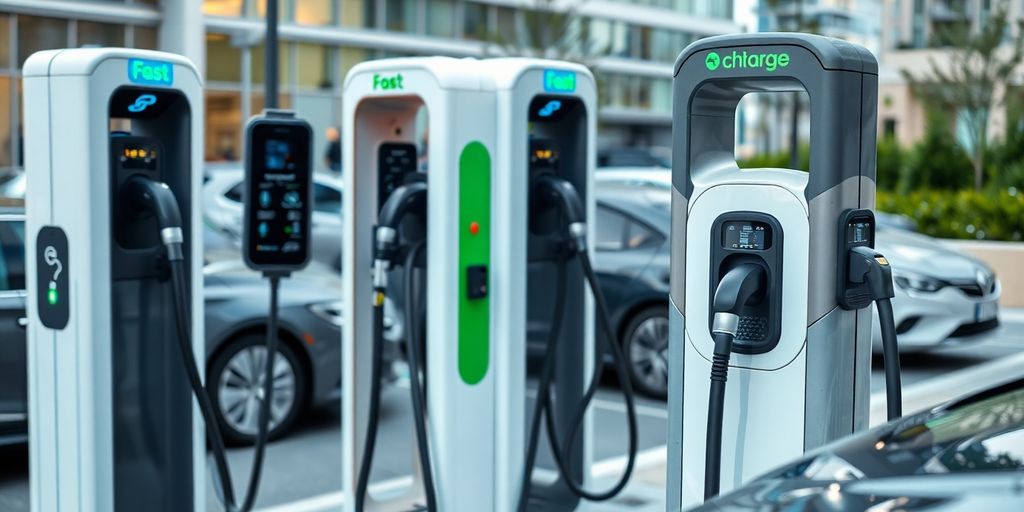
Level 1 charging is the most basic type of EV charging, and honestly, it’s pretty slow. It uses a standard 120V household outlet, so you don’t need any special equipment. Think of it like plugging your phone in – only it takes way longer to charge your car. You’ll get only about 3-5 miles of range per hour of charging. It’s best suited for plug-in hybrids or EVs that don’t need a full charge every day. It’s convenient because you can do it anywhere there’s a standard outlet, but it’s not ideal if you need to quickly add a lot of range. For example, New Zealand is embracing the electric vehicle (EV) revolution with the introduction of Tesla Superchargers, enhancing the charging infrastructure for EV users.
Level 2 Charging Benefits
Level 2 charging is a significant step up from Level 1. It uses a 240V outlet, similar to what your dryer or oven uses. This means it can charge your EV much faster – typically adding 13-25 miles of range per hour. Most EV owners install a Level 2 charger at home for overnight charging. It’s also common at public charging stations, workplaces, and apartment complexes. While you’ll need to have an electrician install a Level 2 charger, the faster charging time makes it well worth the investment for most EV owners. Hyundai is making significant strides in the electric vehicle (EV) market by setting new standards for EV charging infrastructure. Here’s a quick comparison:
| Charging Level | Voltage | Miles of Range per Hour |
|---|---|---|
| Level 1 | 120V | 3-5 |
| Level 2 | 240V | 13-25 |
DC Fast Charging Explained
DC Fast Charging (also known as Level 3 charging) is the fastest way to charge an EV. It uses direct current (DC) instead of alternating current (AC), and it can add 60-80 miles of range in just 20-30 minutes. These chargers are typically found at public charging stations along major highways, making them ideal for long road trips. However, DC fast chargers are more expensive to install and operate than Level 2 chargers, so they’re not as common. Also, not all EVs are compatible with DC fast charging, so check your car’s specifications. While super convenient, frequent DC fast charging can degrade your battery faster than Level 2 charging, so it’s best to use it when you really need a quick charge.
Charging Time Considerations
Battery Capacity Impact
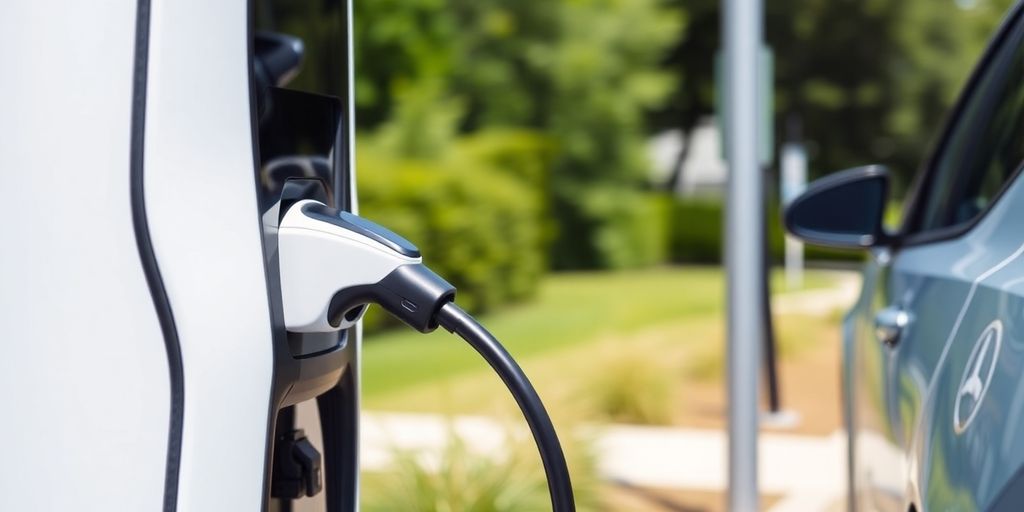
Okay, so picture this: you’ve got two EVs. One has a small battery, like maybe 40 kWh, and the other is packing a huge 100 kWh battery. Obviously, the bigger battery is going to take longer to fill up. It’s just like filling up a small glass of water versus a giant pitcher. The larger the battery capacity, the more time it will take to reach a full charge.
Think of it this way:
- Small battery (40 kWh): Fills up relatively quickly.
- Medium battery (60-75 kWh): Takes a moderate amount of time.
- Large battery (90+ kWh): Requires a significant charging session.
Charger Power Output
Not all chargers are created equal. You’ve got your Level 1, Level 2, and DC Fast Chargers. Level 1 is like using a tiny straw to fill a swimming pool – painfully slow. Level 2 is better, more like a garden hose. But DC Fast Charging? That’s like a fire hose! The higher the power output of the charger (measured in kW), the faster your EV will charge. If you have longer commutes, consider choosing a Level 2 charging station.
Here’s a quick comparison:
| Charger Type | Power Output (kW) | Miles Added Per Hour (approx.) |
|---|---|---|
| Level 1 | 1.2 – 1.8 | 3-5 |
| Level 2 | 3.7 – 19.2 | 13-25 |
| DC Fast Charger | 50 – 350+ | 100+ |
Real-World Charging Times
Alright, let’s get real. Charging times aren’t always what the manufacturers advertise. A bunch of things can affect how long it actually takes to charge your EV. The AMPPAL focuses on electric vehicle charging solutions. Temperature plays a big role – cold weather can slow things down. The battery’s current charge level matters too; charging from 20% to 80% is way faster than going from 80% to 100%. Plus, the charger itself might not always be working at its peak performance. So, always factor in some extra time, just in case.
Here are some factors that can impact charging times:
- Temperature: Cold weather slows down charging.
- Battery State of Charge: Charging is slower at higher percentages.
- Charger Condition: A faulty charger will take longer.
Cost-Saving Strategies for EV Charging
Okay, so you’ve got an EV and you’re loving the smooth rides and the planet-saving vibes. But let’s be real, those charging costs can add up. Here’s the lowdown on keeping those expenses in check.
Utilizing Off-Peak Rates
This is probably the easiest win. Electricity companies often charge way less during off-peak hours. Think late nights and early mornings. Check with your provider to see when those sweet, discounted rates kick in. Set your car to charge overnight, and you’ll wake up to a full battery and a happy wallet. It’s like magic, but with electrons.
Finding Free Charging Stations
Yep, they exist! You just have to know where to look. Some businesses offer free charging as a perk to attract customers. Think shopping malls, grocery stores, and even some hotels. Apps like PlugShare are your best friend here. They’ll show you all the public charging stations near you, including the free ones. It’s like a treasure hunt, but the treasure is free electricity. Keep in mind that these are often Level 2 chargers, so they might take a bit longer to fill up your battery. But hey, free is free!
Using Charging Apps Effectively
Speaking of apps, they’re not just for finding free chargers. Many apps let you compare prices at different charging stations, see real-time availability, and even start and pay for charging sessions right from your phone. A Better Route Planner EV charging is great for planning road trips and finding the most cost-effective charging stops along the way. PlugShare Alaska EV infrastructure is another solid option. These apps can save you time, money, and a whole lot of frustration. Plus, some apps offer rewards programs or discounts, so you can earn points or save money every time you charge. It’s like getting paid to charge your car!
Impact of Location on Charging Costs
Urban vs. Rural Charging Rates
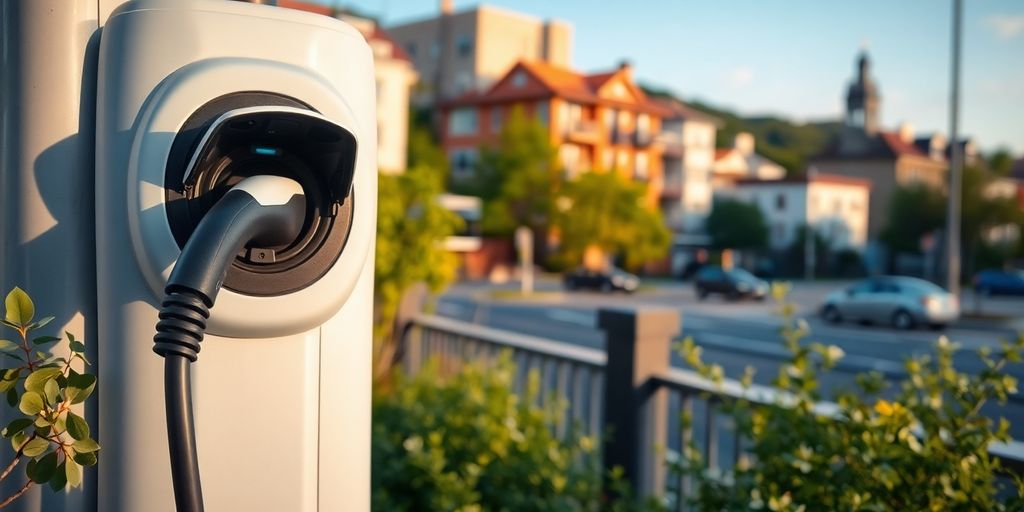
Okay, so where you live seriously affects how much you’ll pay to charge your EV. In cities, you’ll often find more charging stations, which sounds great, but it also means higher demand and potentially higher prices. Think of it like parking – the more crowded the area, the more you pay. Rural areas, on the other hand, might have fewer options, but the prices could be lower due to less demand. It’s a trade-off. Plus, the type of charging available can differ. Cities might have more fast chargers, while rural areas rely more on Level 2 chargers.
State-Specific Variations
Electricity prices aren’t the same everywhere. Some states have way cheaper electricity than others, and that directly impacts how much it costs to charge your EV. For example, if you’re in a state with lots of renewable energy EV charging and lower electricity rates, you’re going to save money compared to someone in a state that relies on fossil fuels and has higher rates. State incentives and policies also play a big role. Some states offer rebates or tax credits for EV owners, which can offset charging costs. It really pays to do your homework and see what your state offers.
Availability of Charging Infrastructure
The number of charging stations in your area is a huge factor. If you live in an area with tons of charging stations, you have more choices and can shop around for the best prices. But if you’re in a charging desert, you’re stuck with whatever’s available, and they know it. This can lead to higher prices and longer wait times. Also, consider the types of chargers available. Having access to DC fast chargers can be a lifesaver on road trips, but they usually cost more than Level 2 chargers. The convenience comes at a price. Cold weather can also impact EV ownership and charging efficiency.
Future Trends in EV Charging Costs
Predicted Cost Reductions
Okay, so where are we headed with EV charging points costs? The good news is, most experts think they’re going down. A big reason is just plain old economies of scale. As more EVs hit the road, and more charging stations pop up, the cost to build and maintain them should decrease. Think about it – mass production always brings prices down eventually. Also, battery tech is getting better all the time, meaning cars will go farther on a single charge, reducing the need to juice up as often. That’s a win-win.
Technological Advancements
Tech is a huge driver here. We’re not just talking about better batteries. Wireless charging is on the horizon, which could make topping up your battery as easy as parking your car. Imagine that! Plus, there’s a lot of research into faster charging tech. The faster you can charge, the less time you spend at a station, and the more efficiently the infrastructure can be used. That efficiency translates to lower costs for everyone. Smart charging systems are also becoming more common. These systems optimize charging based on grid load and electricity prices, meaning you could automatically charge your car when rates are lowest.
Government Incentives and Subsidies
Don’t forget about Uncle Sam (and state governments, too!). Governments around the world are pushing for EV adoption, and that often means throwing money at the problem. Subsidies for charging electric vehicles infrastructure can lower the upfront costs of building stations, and tax credits for consumers can make charging more affordable. Plus, governments are investing in research and development of new charging technologies. All this government action can have a big impact on bringing down the overall cost of EV ownership.
Here’s a quick rundown of potential government actions:
- Direct subsidies for charging station construction
- Tax credits for EV owners to offset charging costs
- Funding for research into advanced charging technologies
Environmental Considerations of EV Charging

Renewable Energy Sources
Okay, so EVs are supposed to be better for the environment, right? But where does the electricity actually come from? If it’s all coal-fired power plants, are we really making a difference? The ideal scenario is, of course, to power EVs with renewable energy. Think solar, wind, hydro – the clean stuff. The more EVs are charged using these sources, the smaller their carbon footprint becomes.
- Government incentives can help promote renewable energy adoption.
- Homeowners can install solar panels to directly power their EVs.
- Utilities are increasingly offering green energy plans.
Carbon Footprint of Charging
Even with EVs, there’s still a carbon footprint. It’s not zero. It’s all about how much lower it is compared to gasoline cars. The carbon footprint depends on a bunch of things, like the electricity source, the efficiency of the EV, and even the manufacturing process of the battery. It’s a complex calculation, but generally, EVs come out ahead, especially in regions with cleaner energy grids. You can look into EV charging solutions to learn more about reducing your carbon footprint.
Sustainability of Charging Infrastructure
Think about all those charging stations popping up everywhere. What are they made of? How long will they last? What happens when they break? The sustainability of the charging infrastructure itself is something we need to consider. We need to think about using recycled materials, designing for durability, and having responsible end-of-life plans for these chargers. Plus, the environmental impact of precharge and inrush current in these systems needs to be addressed for long-term sustainability.
- Using recycled materials in charger construction.
- Designing chargers for longevity and easy repair.
- Developing recycling programs for old or damaged chargers.
Wrapping It Up
So, when it comes to charging your electric vehicle, costs can really vary. If you’re hitting the road, expect to spend anywhere from $10 to $30 at a charging station. But don’t forget, charging at home is usually way cheaper. Plus, apps can help you find the best spots to charge, which can save you some cash. Overall, while road trip charging might feel pricey, owning an EV can actually save you money in the long run. Maintenance and fuel costs are generally lower, so it balances out. Just keep an eye on your charging habits, and you’ll be good to go!
Frequently Asked Questions
How much does it cost to charge an electric vehicle?
Charging an electric vehicle (EV) usually costs between $10 and $30 when using a public charging station, depending on how much power you need.
What factors affect the cost of charging my EV?
The cost can change based on where you charge, the type of charger you use, and the rates from your electricity provider.
Is charging at home cheaper than at public stations?
Yes, charging at home is generally cheaper than using public chargers, which can charge higher rates.
What are the different types of EV chargers?
There are three main types: Level 1 chargers (slow), Level 2 chargers (faster), and DC fast chargers (very fast). Each type has different speeds and costs.
How long does it take to charge an electric car?
Charging time varies based on the charger type and your car’s battery size. It can take anywhere from a few hours to less than an hour.
Can I find free charging stations?
Yes, many places like malls, hotels, and some workplaces offer free charging stations for EVs.
