


As electric vehicles (EVs) become more popular, many people are curious about the costs associated with charging stations. If you’re wondering how much an EV charging point costs, you’re not alone. This article will break down the various expenses involved, from installation to long-term savings, helping you understand what to expect when considering an EV charging solution.
Key Takeaways
- Charging costs can vary widely based on location and type of charger.
- Installing a charging station involves equipment, labor, and possibly permits.
- Different types of chargers offer varying speeds and costs.
- Long-term savings on fuel and potential tax incentives can offset initial costs.
- Businesses can attract customers and enhance their reputation by providing charging stations.
Understanding EV Charging Costs
Factors Influencing Charging Costs
Okay, so you’re thinking about getting an EV, or maybe you already have one. One of the big questions is, how much does it actually cost to charge these things? It’s not as straightforward as filling up a gas tank. Several things can change the price.
- First, electricity rates vary wildly depending on where you live. Some states have super cheap power, others, not so much.
- Then there’s the time of day. Some utilities charge more during peak hours.
- And of course, the type of charger you use makes a huge difference. A fast charger will cost more than plugging into a regular outlet at home.
Comparing Home and Commercial Rates
Charging at home is almost always cheaper than using a commercial charging station. Think of it like this: you’re paying retail when you use a public charger. At home, you’re just paying your regular electricity rate. Commercial chargers have to cover their own costs, like maintenance and location fees, so they mark up the price. Plus, some commercial chargers have different pricing models – some charge by the kilowatt-hour (kWh), others by the minute. It can get confusing fast. Here’s a quick comparison:
| Feature | Home Charging | Commercial Charging |
|---|---|---|
| Cost | Lower (residential electricity rates) | Higher (includes overhead and profit) |
| Convenience | Very convenient (charge overnight) | Requires travel to charging station |
| Speed | Slower (Level 1 or Level 2) | Faster (Level 2 or DC Fast Charging) |
| Accessibility | Always available | Dependent on station availability and location |
Average Charging Costs by Location
So, what are we actually talking about in terms of dollars and cents? It’s tough to give an exact number, but let’s look at some averages. At home, you might be paying anywhere from $0.10 to $0.30 per kWh, depending on your location. Public chargers can range from $0.30 to $0.60 per kWh, or even more for those super-fast DC chargers. A full charge might cost you $5-$15 at home, but $10-$30 (or more) at a public station. Keep in mind that these are just averages, and the actual cost can vary quite a bit. It really pays to do your research and compare prices before you plug in.
Installation Expenses for Charging Stations
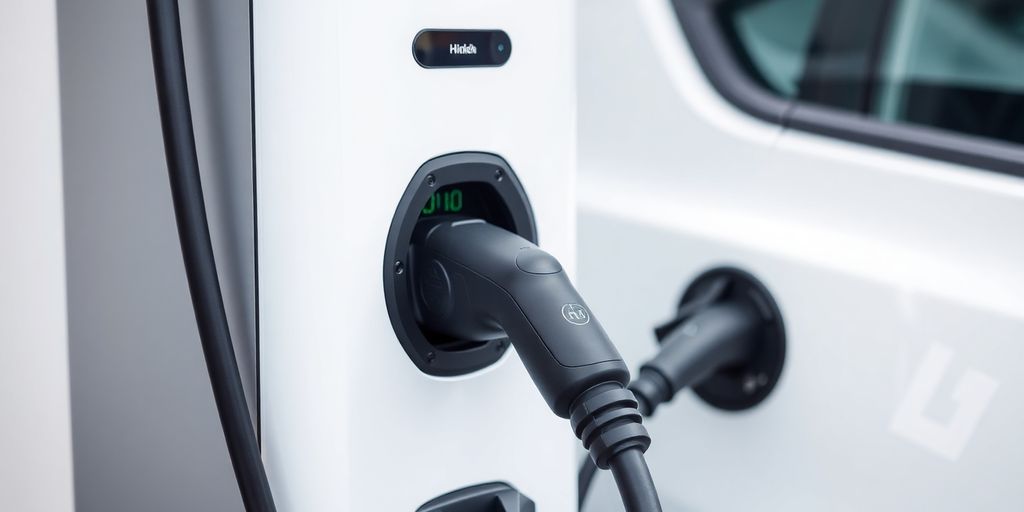
Alright, so you’re thinking about getting an EV charging station installed. That’s great! But before you jump in, let’s talk about the costs involved. It’s not just about the price of the charger itself; there’s a whole bunch of other stuff to consider. I remember when my neighbor got one installed, he was surprised by some of the extra fees. Let’s break it down so you know what to expect.
Cost of Equipment and Materials
Okay, first things first, you’ve got the charging station itself. Level 2 chargers, which are pretty common for home and business use, can start around $400. But that’s just the beginning. You might need extra wiring, a new circuit breaker, or even an upgrade to your electrical panel. The type of charger you choose (Level 2 or DC Fast Charger) will significantly impact the overall cost.
Here’s a rough idea of what you might be looking at:
| Item | Estimated Cost |
|---|---|
| Level 2 Charger | $400 – $1,000+ |
| Wiring & Conduit | $50 – $200 |
| Circuit Breaker | $20 – $100 |
| Electrical Panel Upgrade | $500 – $2,000+ |
Labor Costs for Installation
Unless you’re a qualified electrician, you’re going to need to hire someone to install the charging station. And trust me, you want a pro doing this. Messing with electrical stuff is not a good idea. Labor costs can vary depending on where you live and the complexity of the installation. Expect to pay anywhere from $400 to $1500, or even more if your electrical system needs major work. I remember reading somewhere that some installations can be more expensive than the charger itself!
Factors that affect labor costs:
- Distance from the electrical panel to the charging location.
- Whether you need to run new wiring through walls or underground.
- The electrician’s hourly rate.
Permitting and Inspection Fees
Don’t forget about permits! Most cities and towns require you to get a permit before installing electrical equipment. This is to make sure everything is up to code and safe. Permit fees can range from $50 to $300, depending on your location. After the installation, you’ll also need an inspection to make sure everything was done correctly. It’s a bit of a hassle, but it’s important for safety and to avoid any problems down the road. I know, more fees, but it’s better to be safe than sorry!
Types of EV Charging Stations
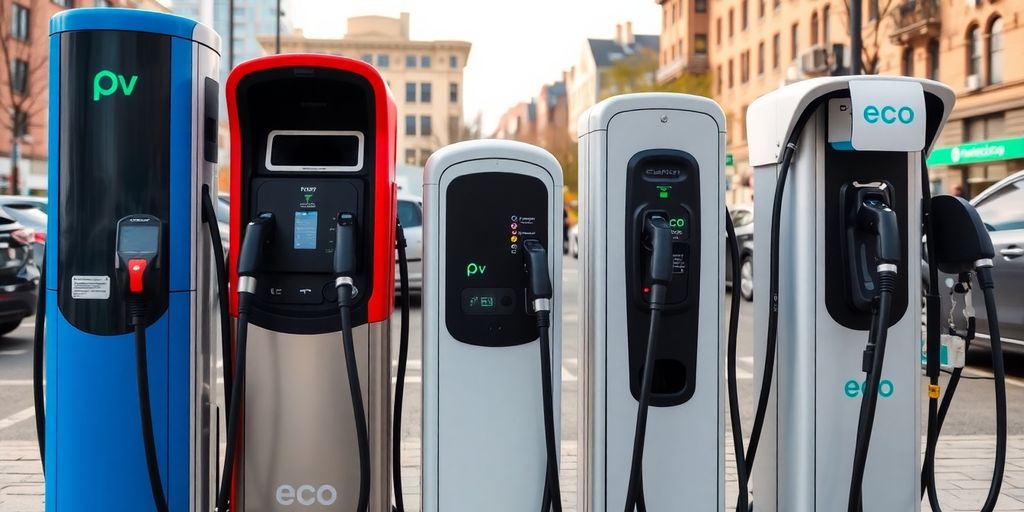
So, you’re thinking about getting an EV charger? Cool! But before you jump in, it’s good to know there are different kinds. They’re usually talked about as Level 1, Level 2, and DC Fast Charging. Each one has its own speed and use case, which impacts how much they cost and where you’ll find them.
Level 1 Charging Stations
Level 1 is the most basic type. It uses a standard 120V household outlet, so you don’t need any special equipment. Think of it like plugging your phone in. The downside? It’s slow. Really slow. You’ll only get a few miles of range per hour of charging. It’s fine for topping off a battery overnight if you don’t drive much, but not great if you need a quick charge.
- Plugs into a standard household outlet (120V).
- Adds about 3-5 miles of range per hour.
- Best for overnight charging or plug-in hybrids with small batteries.
Level 2 Charging Stations
Level 2 is the step up. These chargers use a 240V outlet, similar to what your dryer or oven uses. Because of the higher voltage, they charge much faster than Level 1. You’ll typically find these at homes, workplaces, and public charging stations. You will need to have a professional install a Level 2 charger, which adds to the cost, but the faster charging is usually worth it.
- Requires a 240V outlet and professional installation.
- Adds about 12-30 miles of range per hour.
- Commonly found at homes, workplaces, and public charging locations.
DC Fast Charging Stations
DC Fast Charging (also known as Level 3) is the fastest way to charge an EV. These chargers use direct current (DC) instead of alternating current (AC), which allows them to deliver a lot of power directly to the car’s battery. You’ll mostly find these at public charging stations along highways, as they’re designed for quick top-ups during long trips. They are expensive to install and operate, so you’ll usually pay more to use them.
- Uses direct current (DC) for rapid charging.
- Can add 60-80 miles of range in about 20 minutes.
- Primarily located at public charging stations along major routes.
Long-Term Savings with EV Charging
Cost Savings on Fuel
Okay, so you shelled out some cash for the EV and maybe even a home charger. But let’s talk about the long game. The biggest win? Kissing those gas station visits goodbye. I used to spend a small fortune every month filling up my old gas guzzler. Now? My electricity bill barely flinches. It’s not just about the money, either. It’s the time saved, the convenience, and not having to deal with that weird gas station smell. Plus, electric motors are just way more efficient than combustion engines. Less energy wasted, more miles gained. It really adds up over the years.
Tax Incentives and Rebates
Don’t forget about the sweet, sweet government incentives! When I bought my EV, I got a nice chunk of change back in the form of a federal tax credit. States and even some local utility companies offer rebates too. It’s like they’re paying you to go green. Make sure you do your homework and see what’s available in your area. These incentives can significantly lower the initial cost of buying an EV and installing a home charger. It’s basically free money, so don’t leave it on the table!
Increased Property Value
This one’s a bit of a sleeper, but hear me out. Having an EV charger installed at your home can actually boost your property value. As EVs become more popular, having that charging infrastructure already in place is a major selling point. Think about it: future homebuyers who are considering an EV will see your place as move-in ready. It’s a small investment that can pay off big time when you decide to sell. Plus, it just makes your home look more modern and tech-savvy. It’s a win-win!
Impact of Charging Infrastructure on Businesses
Attracting Customers with Charging Stations
Think about it: people with EVs need to charge them somewhere. If your business offers charging, you’re automatically more attractive than the one down the street that doesn’t. It’s a simple way to bring in more foot traffic and potentially increase sales.
- Convenience for EV owners is a big deal.
- It can set you apart from competitors.
- It shows you’re forward-thinking.
Employee Benefits of On-Site Charging
Offering EV charging as an employee perk is a smart move. More and more people are switching to electric cars, and having a place to charge at work is a huge plus. It can boost morale and help you attract and retain talent. Plus, it’s just a nice thing to do.
- Attracts environmentally conscious employees.
- Reduces employee stress about finding charging stations.
- Can be a selling point during recruitment.
Enhancing Brand Image with Sustainability
Let’s be real, everyone’s talking about sustainability these days. By installing EV charging stations, you’re showing that your business cares about the environment. It’s a great way to improve your brand image and appeal to customers who value eco-friendly practices. It’s not just good for the planet; it’s good for business.
- Demonstrates a commitment to environmental responsibility.
- Appeals to a growing segment of eco-conscious consumers.
- Can improve public perception of your brand.
Future Trends in EV Charging Costs
Predicted Changes in Charging Rates
Okay, so what’s the deal with future charging costs? Well, a bunch of things are pointing to some shifts. For one, as more people switch to EVs, the demand on the grid is only going to increase. This could mean higher prices during peak hours, kind of like surge pricing you see with ride-sharing apps. But, on the flip side, increased competition among charging networks might drive prices down. It’s a bit of a push and pull, really. Also, don’t forget about time-of-use rates from your electricity provider; charging overnight could save you a bundle.
Advancements in Charging Technology
Technology is moving fast, and that includes EV charging. We’re talking about things like:
- Faster Charging: New battery tech and charging stations are aiming to drastically cut down charging times. Imagine topping off your battery in the time it takes to grab a coffee!
- Wireless Charging: Yep, just like your phone. Park over a pad, and you’re charging. Super convenient.
- Bidirectional Charging: This is a cool one. Your EV could actually send power back to the grid or your home during peak demand, potentially earning you credits or savings. It’s like your car becomes a backup generator.
Government Regulations and Incentives
What the government does plays a big role. Tax credits, rebates, and other incentives can make a huge difference in how much you pay to charge. Plus, regulations about electricity pricing and grid infrastructure can impact costs too. Keep an eye on what’s happening at the local, state, and federal levels – it could save you some serious cash. For example, some states are pushing for standardized charging rates, which could make things more predictable. Also, there’s talk about mandating more charging stations in new construction, which would increase availability and potentially lower prices due to competition.
Comparative Analysis of Charging Solutions
Home Charging vs. Public Charging
Okay, so you’re trying to figure out where to charge your EV, right? You’ve got two main choices: plugging in at home or using public charging stations. Home charging is super convenient – you just plug in overnight and wake up to a full battery. It’s generally cheaper per kWh than public charging, but you need to factor in the cost of installing a Level 2 charger if you want decent charging speeds. Public charging, on the other hand, is great for road trips or when you need a quick top-up. But, it can get pricey, especially at those DC fast chargers. Plus, you’re relying on the availability and condition of the public chargers, which can be a gamble sometimes.
Cost-Effectiveness of Different Charging Levels
Let’s break down the charging levels and their cost-effectiveness. Level 1 charging (the kind you get from a standard wall outlet) is the cheapest to set up since you don’t need any new equipment. But, it’s painfully slow. Like, really slow. Level 2 charging is a sweet spot for many people. It’s faster than Level 1, and the installation cost isn’t too crazy. DC fast charging is the speed demon of the group, adding a bunch of miles in a short amount of time. However, it’s the most expensive to use, and not all cars can even take advantage of it. So, it really depends on your needs and how much you’re willing to spend.
Evaluating Charging Networks
Choosing a charging network can feel like picking a cell phone provider – they all have their pros and cons. Some networks have better coverage in certain areas, while others offer lower prices or better perks. It’s worth doing a little research to see which networks have stations near you and which ones fit your budget. Also, keep an eye out for membership fees or subscription plans that could save you money in the long run. And don’t forget to check user reviews – nobody wants to be stuck at a broken charger in the middle of nowhere!
Wrapping It Up
So, when it comes to figuring out how much an EV charging point costs, it really depends on a bunch of things. You’ve got the type of charger, where it’s going, and even local electricity rates to think about. On average, you might be looking at anywhere from a few hundred to a few thousand dollars. But don’t forget, the cost of not having one could be even higher in the long run. With more folks driving electric cars, having charging stations can really help attract customers and keep your business competitive. In the end, investing in EV charging is not just about the upfront cost; it’s about being ready for the future.
Frequently Asked Questions
What factors affect the cost of charging an electric vehicle (EV)?
The cost of charging an EV can change based on where you charge, your local electricity rates, and the type of charger you use.
How much does it cost to charge an EV at home?
Charging at home is usually cheaper, costing around $5 to $15 to fully charge your EV, depending on your electricity rates.
What are the different types of EV chargers?
There are three main types: Level 1 chargers, which are slow and use a regular outlet; Level 2 chargers, which are faster and require special installation; and DC Fast chargers, which charge very quickly.
Are there any financial benefits to installing EV chargers at my business?
Yes! Installing chargers can attract more customers, provide employee benefits, and may even increase your property value.
What are the installation costs for an EV charging station?
Installation costs can vary, but you should budget for equipment, labor, and any necessary permits, which can add up to a few thousand dollars.
How do charging costs compare between home and public charging stations?
Public charging stations can be more expensive than home charging, sometimes costing double or triple the rate, especially at commercial locations.
