


As electric vehicles (EVs) become more common, many people are asking, “how much does it cost to charge an EV?” The answer isn’t straightforward since it depends on various factors. Whether you charge at home or use public charging stations, understanding the costs involved can help you make better decisions about your EV ownership. Let’s break down the costs associated with charging your electric vehicle and explore how to manage them effectively.
Key Takeaways
- Charging costs vary based on location and type of charger.
- Home charging is usually cheaper than public charging.
- Installation of home chargers can range from under $1,000 to over $3,000.
- Public charging can be significantly more expensive, especially for fast chargers.
- Incentives like tax credits can help reduce the cost of home charging installations.
Understanding EV Charging Costs
Factors Influencing Charging Costs
Okay, so you’re thinking about getting an EV, or maybe you already have one. Either way, understanding the costs involved in charging is pretty important. It’s not as simple as just plugging in and paying a flat fee. Several things can affect how much you end up spending.
- Electricity Rates: This is a big one. What your local utility charges per kilowatt-hour (kWh) makes a huge difference. Rates vary wildly depending on where you live. Some states have much cheaper electricity than others.
- Charging Location: Are you charging at home, at a public charging station, or maybe even at work? Each of these will have different pricing structures.
- Charging Speed: Faster charging (like DC fast charging) usually costs more than slower charging (like Level 2).
- Time of Day: Some utilities offer time-of-use rates, meaning electricity is cheaper during off-peak hours (like overnight) and more expensive during peak hours (like late afternoon).
- EV Model and Battery Size: Obviously, a bigger battery takes more electricity to fill up. And some EVs are more efficient than others, meaning they can go further on the same amount of charge.
Comparing Home and Public Charging
One of the first things you’ll realize is that charging at home is usually cheaper than using public charging stations. Most EV owners do the bulk of their charging at home for this reason. Think of it like this: charging at home is like brewing your own coffee, while using a public charger is like buying a latte at a coffee shop. The convenience of public charging comes at a premium.
Here’s a quick comparison:
| Feature | Home Charging | Public Charging |
|---|---|---|
| Cost | Generally cheaper (residential electricity rates) | Generally more expensive |
| Convenience | Very convenient (charge overnight) | Convenient when traveling or away from home |
| Speed | Can be slower (Level 1 or Level 2) | Can be faster (Level 2 or DC fast charging) |
| Accessibility | Requires home charger installation | Requires finding a public charging station |
Long-Term Cost Benefits of EV Charging
While the initial cost of installing a home charger or the per-session cost of public charging might seem high, it’s important to look at the long-term picture. Over the lifespan of your EV, you’ll likely save money on fuel compared to a gasoline car. Here’s why:
- Lower Fuel Costs: Electricity is typically cheaper than gasoline on a per-mile basis.
- Reduced Maintenance: EVs have fewer moving parts than gasoline cars, which means less maintenance and fewer repairs.
- Incentives and Rebates: Many governments and utilities offer incentives for buying EVs and installing home chargers, which can help offset the initial costs.
- Increased Resale Value: As EVs become more popular, they’re likely to hold their value better than gasoline cars.
Of course, the exact amount you save will depend on your driving habits, electricity rates, and the specific EV you own. But overall, switching to an EV can be a smart financial decision in the long run.
Evaluating Home Charging Expenses
Installation Costs for Home Chargers
Okay, so you’re thinking about getting an EV charger installed at home? Smart move! But first, let’s talk about the upfront costs. The price to install a home charger can vary quite a bit, mostly depending on the type of charger you choose and the electrical work needed. A basic Level 1 charger is super simple – you just plug it into a regular outlet, so no installation cost there. But, it’s also super slow. Most people opt for a Level 2 charger, which needs professional installation. This usually involves hiring an electrician to run a dedicated 240V circuit to your garage or wherever you plan to charge.
Here’s a rough breakdown:
- Charger Unit: $500 – $1200 (depending on features and brand)
- Installation: $400 – $2000 (this is where it can really vary!)
Factors that affect installation costs:
- Distance from your electrical panel to the charging location.
- Whether your panel needs an upgrade to handle the extra load.
- Permits and inspection fees.
Electricity Rates and Their Impact
Alright, let’s get into the nitty-gritty of electricity rates. This is where things can get interesting, and where you can potentially save some serious cash. The price you pay per kilowatt-hour (kWh) has a HUGE impact on how much it costs to charge your EV at home. Electricity rates vary wildly depending on where you live. Some states have super cheap electricity, while others are… not so cheap.
But here’s the kicker: many utility companies offer time-of-use (TOU) rates. This means that the price of electricity changes depending on the time of day. Usually, it’s cheaper during off-peak hours, like overnight when everyone’s asleep and not using much electricity. If you can charge your EV during these off-peak hours, you can save a bundle!
Here’s an example:
| Time of Day | Rate per kWh |
|---|---|
| Peak (2 PM – 8 PM) | $0.30 |
| Off-Peak (10 PM – 6 AM) | $0.10 |
As you can see, charging during off-peak hours can save you a lot of money.
Potential Savings with Home Charging
Okay, so let’s talk about the good stuff: how much money can you actually save by charging at home? The savings can be pretty significant compared to filling up a gas car.
Here’s a quick rundown of potential savings:
- Lower Fuel Costs: Electricity is generally cheaper than gasoline, so you’ll save money every time you "fill up" your EV at home.
- Reduced Maintenance: EVs typically require less maintenance than gas cars, which can save you money on oil changes, tune-ups, and other repairs.
- Tax Credits and Rebates: You might be eligible for federal, state, or local tax credits or rebates for purchasing an EV charger and having it installed. This can help offset the initial cost.
To really maximize your savings, consider these tips:
- Take advantage of time-of-use rates: Charge your EV during off-peak hours to save money on electricity.
- Shop around for the best electricity rates: See if there are other electricity providers in your area that offer better rates.
- Consider solar panels: If you really want to go green and save money, consider installing solar panels on your roof. This can significantly reduce your electricity bill and make charging your EV even cheaper.
Analyzing Public Charging Fees
Types of Public Charging Stations
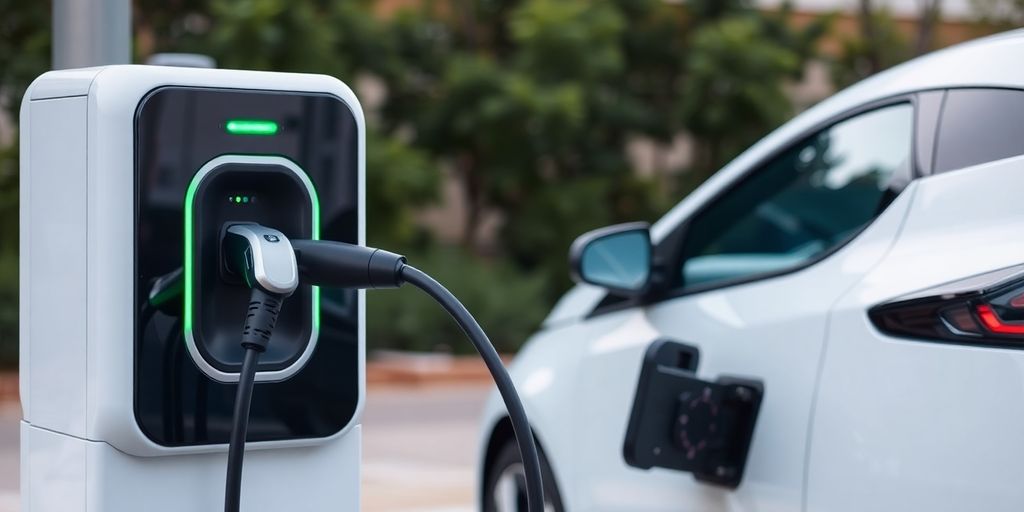
Okay, so you’re out and about and need a charge. Public charging stations come in a few flavors, and it’s good to know the difference. You’ve got Level 2 chargers, which are like souped-up versions of what you might have at home. Then there are DC fast chargers (also called Level 3), which are the speed demons of the charging world. Knowing which one you’re plugging into can seriously affect how much you pay and how long you wait.
Cost Variations by Location
Ever notice how gas prices change from one town to the next? Same deal with EV charging. The cost can swing wildly depending on where you are. Big cities? Expect to pay more. Rural areas might have cheaper options, or even free ones (though those can be unreliable). It really pays to shop around using apps or websites that show charging prices in real-time. I once drove an extra 10 minutes to save like, five bucks. Worth it!
Membership and Subscription Models
Charging networks love to offer memberships, and it can be a mixed bag. Some subscriptions give you discounts that make charging way cheaper, especially if you’re a frequent user. Others? Not so much. You really gotta do the math and figure out if the monthly fee is worth the savings. Also, watch out for those networks that charge you extra if you don’t have a membership. Sneaky! Here’s a quick rundown:
- Membership Benefits: Lower per-kWh rates, free charging sessions, reservation privileges.
- Things to Consider: Monthly fees, network coverage, charging speed at member stations.
- Do the Math: Calculate your potential savings based on your charging habits before signing up.
Calculating Charging Costs Effectively
When it comes to planning your EV budget, being able to calculate your charging expenses helps a lot. In this section, we break down the basics of charging cost calculation in three parts.
Key Metrics for Cost Calculation
Every EV owner should know a few numbers to work out how much charging costs you. Here are some points to consider:
- Your mileage per month and how many kilowatt-hours (kWh) your vehicle needs per mile.
- The efficiency rating, like how many miles you get per kWh.
- The price you pay for electricity per kWh.
- How often you charge, whether it’s a full recharge or topping off the battery.
Knowing these numbers makes it easier to manage your EV expenses.
Using Apps for Cost Management
The good news is that there are plenty of apps out there that can help track and manage your charging costs. These apps let you
- Record your driving habits and charging sessions.
- Keep tabs on changes in your electricity rates over time.
- Compare charging costs from different providers or locations.
By entering some basic information about your EV and local energy prices, these tools can provide you with a pretty clear picture of what to expect on your bill. It’s a hands-on way to keep your spending in check.
Understanding Kilowatt-Hour Pricing
Breaking down the kWh rate is key to understanding why costs might differ from one charging station to another. A table can help illustrate this:
| Factor | Description | Example Value |
|---|---|---|
| kWh Price | Rate per unit of energy | $0.25 per kWh |
| Charging Efficiency | Loss percentage during charging | 5-10% loss estimated |
| Monthly Consumption | kWh used based on driving habits | 400 kWh for 1,200 miles |
Understanding these elements helps you see how even small changes in your rate can have a noticeable impact on your monthly expenses. Depending on where you charge, a few cents more per kWh might add up over time.
By staying on top of these calculations, you put yourself in a better position to manage your EV charging budget day to day. Feel free to experiment with different numbers to see what rate works best for your driving habits.
Exploring Incentives for EV Charging
Federal Tax Credits and Rebates
Okay, so you’re thinking about getting an EV, or maybe you already have one. Either way, you should know about the federal incentives that can save you some serious cash. The federal government offers tax credits for purchasing new EVs, and sometimes even used ones. These credits can knock a significant chunk off the price, making that electric dream a little more attainable. The exact amount of the credit depends on a bunch of factors, like the battery capacity and the vehicle’s manufacturing location, so it’s worth doing your homework. Keep in mind that these credits often have income limitations, so check the fine print to see if you qualify.
State and Local Incentives
Don’t stop at federal! Many states and even local governments are throwing their hats in the ring with their own EV incentives. These can come in the form of rebates, tax credits, or even grants. For example, California has the Clean Vehicle Rebate Project (CVRP), which offers rebates to eligible residents who purchase or lease new electric vehicles. Some states also offer incentives for installing home charging stations. To find out what’s available in your area, check your state’s energy office website or search for local EV advocacy groups. You might be surprised at what you find!
Utility Company Programs
Your local utility company might also have some sweet deals for EV owners. Many utilities offer special time-of-use rates that can save you money if you charge your EV during off-peak hours. Some even offer rebates for purchasing and installing home charging stations. These programs are designed to encourage EV adoption and help manage the grid load. To see what your utility offers, check their website or give them a call. It’s a simple step that could lead to some serious savings. Plus, some utilities are starting to offer programs where they’ll pay you to let them manage your charging schedule, helping to balance the grid and keep costs down for everyone.
Comparing Charging Options
Level 2 vs. Fast Charging
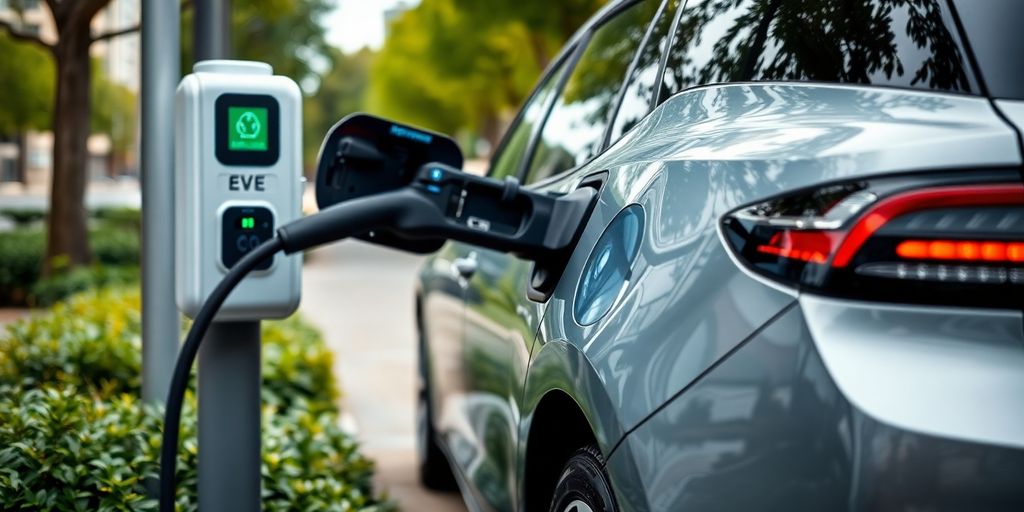
Okay, so you’ve got a couple of main ways to charge your EV: Level 2 chargers and fast chargers (also known as DC fast chargers). Level 2 is what you’ll often find at homes, workplaces, and some public spots. They’re okay, but not super speedy. Fast chargers, on the other hand, are designed to give you a quick boost when you’re on the go. The big difference comes down to speed and, of course, cost.
Cost Efficiency of Different Chargers
Let’s talk money. Level 2 charging is usually cheaper per kilowatt-hour (kWh) than fast charging. This is because fast chargers need more powerful equipment and infrastructure, and that cost gets passed on to you. Think of it like this: slow and steady wins the race (and saves you money), but sometimes you just need that quick jolt. Here’s a quick comparison:
- Level 2: Slower charging, lower cost per kWh, ideal for overnight or workplace charging.
- Fast Charging: Much faster, higher cost per kWh, best for road trips or when you’re in a hurry.
- Home Charging: Usually the cheapest option, especially if you have off-peak electricity rates.
Charging at Work vs. Home
Now, where you charge also plays a big role in the overall cost. Charging at home is often the most convenient and budget-friendly option, especially if you can take advantage of off-peak electricity rates. But what about charging at work? Some companies offer free or discounted EV charging as an employee perk, which can be a sweet deal. However, it really depends on your employer’s policy and how much they charge (if anything). Plus, you have to factor in whether you can actually get a spot at the charger – those things can be popular!
Here’s a quick rundown:
- Home Charging: Convenient, potentially cheapest, good for overnight charging.
- Work Charging: Can be free or discounted, depends on employer, may have limited availability.
- Public Charging: Most expensive, but necessary for long trips or when you can’t charge at home or work.
Future Trends in EV Charging Costs
Impact of Renewable Energy
As renewable energy sources like solar and wind become more prevalent, their impact on EV charging costs will be significant. The integration of these sources can lead to lower and more stable electricity prices, especially during peak renewable energy production times. Imagine charging your car primarily with solar energy generated during the day – that’s a future we’re heading towards. This could also mean time-of-use rates become even more advantageous for EV owners, allowing them to charge when renewable energy is abundant and cheap. Plus, with advancements in battery storage technology, excess renewable energy can be stored and used for EV charging during off-peak hours, further reducing costs.
Technological Advancements in Charging
Technology is constantly evolving, and EV charging is no exception. We’re already seeing faster charging speeds and more efficient charging systems. Expect to see even more innovation in the coming years, such as:
- Wireless Charging: Imagine just parking your car over a charging pad and it starts charging automatically. No more cables!
- Ultra-Fast Charging: Reducing charging times to just a few minutes, making EV ownership even more convenient.
- Smart Charging Systems: Optimizing charging schedules based on grid load and energy prices, saving you money and helping the grid.
These advancements will not only make charging faster and easier but also potentially cheaper as the technology becomes more widespread and efficient.
Predictions for Charging Infrastructure
The charging infrastructure is expanding rapidly, but what does the future hold? I think we’ll see a few key trends:
- More Public Charging Stations: Especially in rural areas and apartment complexes, making EV ownership viable for everyone.
- Standardization of Charging Protocols: Ensuring all EVs can use any charging station, regardless of the manufacturer.
- Integration with Smart Grids: Allowing EVs to not only draw power from the grid but also supply power back to it during peak demand, potentially earning EV owners money.
These developments will make EV charging more accessible, convenient, and affordable for everyone. The cost of public charging might even decrease as competition increases and infrastructure becomes more efficient. It’s an exciting time to be an EV owner!
Wrapping It Up
So, when it comes to charging your electric vehicle, the costs can really vary. If you’re charging at home, it’s usually cheaper, especially if you can take advantage of lower rates at night. But if you’re out and about, public charging can hit your wallet a bit harder. You might pay a lot more, especially for fast chargers. Plus, don’t forget about installation costs if you’re setting up a home charger. It can start under a grand but might go up if you need extra work done. Overall, it’s all about how and where you charge. Just keep an eye on those costs, and you’ll be in good shape.
Frequently Asked Questions
What are the main factors that affect the cost of charging an electric vehicle?
The cost to charge an electric vehicle (EV) depends on several things, like the type of charger you use, where you charge, your local electricity prices, and how big your EV’s battery is.
Is it cheaper to charge an EV at home or at public stations?
Generally, charging at home is cheaper than using public charging stations. Public charging can sometimes cost two to three times more than charging at home.
How much does it cost to install a home charging station?
Installing a home charging station usually costs between $1,000 and $3,000. This can vary based on the type of charger and any electrical upgrades needed.
What are some ways to save money on EV charging?
You can save money by charging your EV at night when electricity rates are lower, using home chargers, and taking advantage of government incentives.
Are there any incentives for installing EV chargers?
Yes, there are federal and state incentives, including tax credits and rebates, that can help reduce the cost of installing EV chargers.
What are the different types of public charging stations?
Public charging stations come in different levels, like Level 2 and DC Fast Charging. Level 2 chargers are slower and usually cheaper, while DC Fast Chargers can charge your EV much faster but may cost more.
