


As electric vehicles (EVs) become more popular, many new owners are curious about the costs associated with charging them. Understanding how much it costs to charge an EV per kilowatt-hour (kWh) is essential for budgeting and making informed decisions. This article will break down the various factors that influence charging costs, both at home and at public stations, and provide insights into how to optimize your charging expenses.
Key Takeaways
- Home charging is usually cheaper than using public stations, with average rates around $0.16 per kWh.
- Charging costs can vary widely based on location, with some public chargers charging up to $0.60 per kWh.
- Factors like battery size and charging speed significantly affect overall charging costs.
- Taking advantage of off-peak electricity rates can help reduce your charging expenses.
- EVs typically cost less to charge annually compared to fueling a gasoline car, leading to long-term savings.
Understanding Home Charging Costs
Average Cost Per kWh
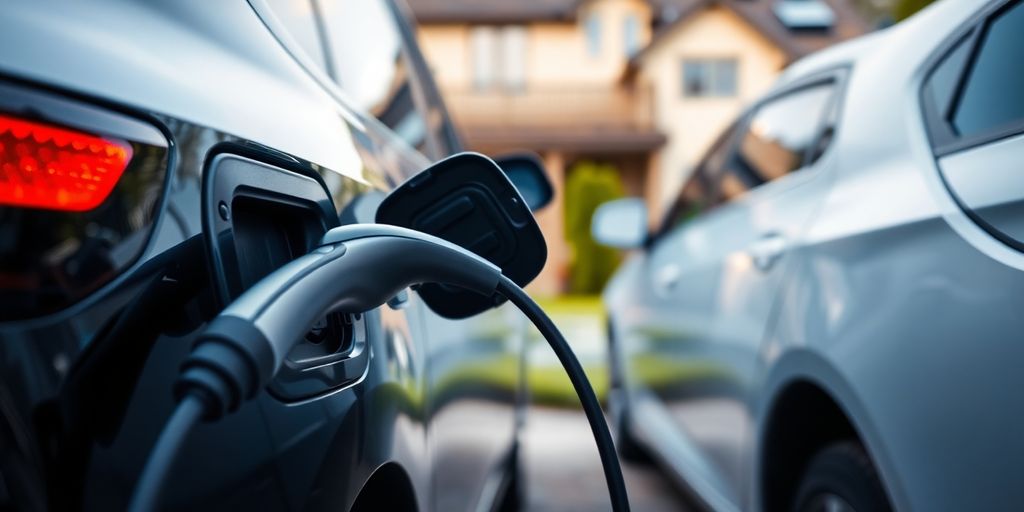
Okay, so you’re thinking about getting an EV, and one of the first things that pops into your head is probably, "How much is this gonna cost me to charge at home?" Well, the good news is that home charging is usually the cheapest way to keep your EV juiced up. Public charging stations are convenient when you’re out and about, but they often charge way more per kWh than what you’re paying at home. I mean, we’re talking maybe $0.30 to $0.60 per kWh at public stations versus an average of around $0.16 at home. Most EV owners actually do the bulk of their charging overnight at home, where those cheaper rates kick in. So, plugging in at home whenever you can is the way to go if you want to save some cash. It’s worth checking out your local utility’s rates to get a better idea of what you’ll be paying. Also, keep in mind that electricity rates can vary depending on the time of day, so charging during off-peak hours can save you even more.
Benefits of Home Charging
Charging your EV at home is super convenient. Think about it: you come home from work, plug in your car, and wake up to a full battery. No more detours to gas stations or waiting around at charging stations. Plus, it’s generally cheaper than using public chargers. You can also take advantage of off-peak electricity rates, which can save you a ton of money over time. And let’s not forget the peace of mind that comes with knowing you always have a full charge ready to go. Here’s a quick rundown of the benefits:
- Convenience: Charge overnight and wake up to a full battery.
- Cost Savings: Lower per-kWh rates compared to public charging.
- Time Savings: No need to stop at charging stations.
- Control: Manage your charging schedule and costs.
Installation Expenses
Alright, so you’re sold on the idea of home charging, but what about the cost of setting everything up? Well, you’ve got a couple of options. You can use a standard Level 1 charger, which plugs into a regular 120-volt outlet. These are super easy to use, but they’re also pretty slow, giving you only about 2 to 5 miles of range per hour of charging. If you want something faster, you’ll need a Level 2 charger, which requires a 240-volt outlet. These can give you anywhere from 10 to 60 miles of range per hour, depending on the charger and your car. The downside is that you’ll probably need to hire an electrician to install a 240-volt outlet, which can cost anywhere from $250 to $800. But hey, think of it as an investment in your EV future. Plus, there might be some state investment or even discounts available to help cover the costs. Don’t forget to check if there are any home charging discounts available in your area, as that can really bring down the initial investment.
Public Charging Station Rates
Public charging stations offer a convenient way to juice up your EV when you’re away from home. But, unlike the predictable rates you might find at home, public charging costs can vary quite a bit. Let’s break down what to expect.
Cost Variability by Location
One of the first things you’ll notice is that public charging rates aren’t uniform. They change depending on where you are. For example, charging in a bustling city might cost more than in a rural area. This is often due to factors like real estate costs, local electricity prices, and the demand for charging services. Keep an eye on the prices displayed on the charging station itself or within the charging network’s app.
Types of Public Chargers
There are primarily three types of public chargers, each with different charging speeds and associated costs:
- Level 2 Chargers: These are more common and offer a moderate charging speed, suitable for topping off your battery while you shop or dine. They’re generally cheaper than faster options.
- DC Fast Chargers (Level 3): These chargers provide a rapid charge, ideal for long trips when you need to get back on the road quickly. However, they come with a higher price tag due to the powerful equipment and higher electricity demand. You can find more information on EV charging here.
- Tesla Superchargers: Exclusively for Tesla vehicles, these chargers offer fast charging and are strategically located along major travel routes. Pricing can vary, and Tesla sometimes offers different rates for peak and off-peak hours.
Average National Rates
Pinpointing an exact national average for public charging is tricky because rates fluctuate. However, as of today, the national average hovers around $0.36 per kWh. But, this is just an average. You might see rates as low as $0.30 per kWh or as high as $0.60 per kWh, or even higher in some premium locations. Here’s a quick look at sample state averages:
| State | Chargers | Cost/kWh |
|---|---|---|
| Alaska | 52 | $0.510 |
| Alabama | 545 | $0.409 |
| Arkansas | 362 | $0.426 |
| Arizona | 1464 | $0.407 |
| California | 17293 | $0.361 |
| Colorado | 2190 | $0.334 |
Keep in mind that these are just averages, and actual prices can vary. Businesses should also consider the cost of installing commercial EV charging stations.
Factors Influencing Charging Costs
It’s not just plugging in and hoping for the best! Several things affect how much you’ll actually pay to charge your EV. Understanding these factors can help you make smarter choices and keep your charging costs down.
Electricity Rates
Your local electricity rates are a HUGE factor. The price you pay per kWh directly impacts how much each charge costs. These rates can vary wildly depending on where you live, the time of year, and even the time of day. Some utilities offer different rate structures, like:
- Fixed rates: You pay the same amount no matter when you charge.
- Time-of-use (TOU) rates: Cheaper during off-peak hours (usually at night) and more expensive during peak hours (daytime).
- Demand charges: Based on your highest electricity usage during a billing cycle. This can really add up if you charge multiple EVs at once or use a lot of power at the same time.
It’s worth checking with your utility company to see what rate options are available and which one makes the most sense for your charging habits. You might even be able to get discounts for charging during off-peak hours.
Battery Size Impact
Think of your EV’s battery like a gas tank. The bigger the tank, the more it costs to fill up. A car with a larger battery capacity will naturally require more electricity to reach a full charge compared to a car with a smaller battery. So, if you’re comparing two EVs, keep in mind that the one with the bigger battery might cost more to charge each time, even if they both have great mileage. This is why it’s important to consider your daily driving needs when choosing an EV. Do you really need that huge battery, or would a smaller one be sufficient and save you money in the long run?
Charging Speed Considerations
The speed at which you charge also plays a role in the overall cost. There are generally three levels of EV chargers:
- Level 1: Standard household outlet (slowest).
- Level 2: Requires a 240V outlet (faster).
- DC Fast Charging: Public charging stations (fastest).
While DC fast charging is super convenient for road trips, it’s also usually the most expensive option. Level 2 chargers are a good balance of speed and cost for home charging. Level 1 is the slowest, but it can work if you don’t drive much each day. Also, consider that faster charging can sometimes be less efficient, leading to slightly higher energy consumption. You might want to look into the 180/200/240kW Integrated DC Charging Station for more information.
Optimizing Charging Expenses
Okay, so you’ve got an EV, and you’re charging it at home or at public stations. Now, how do you keep those costs down? It’s not just about finding the cheapest kWh; it’s about being smart about when and how you charge. Let’s get into it.
Utilizing Off-Peak Rates
One of the easiest ways to save money is to charge during off-peak hours. Utility companies often charge less for electricity during times when demand is low, typically late at night or early in the morning. Check with your provider to see if they offer time-of-use (TOU) rates. If they do, shift your charging schedule to take advantage of those lower prices. I know, setting a schedule sounds annoying, but it’s worth it.
Smart Charging Solutions
Smart chargers and apps can be a game-changer. These tools let you monitor your energy usage, schedule charging sessions, and even optimize charging based on real-time electricity prices. Some chargers can even communicate with your utility company to automatically charge during the cheapest times. It’s like having a personal energy manager for your car. Plus, you can often control everything from your phone. For example, you can use a charge card to track expenses.
Monitoring Your Usage
Keep an eye on how much electricity you’re using to charge your EV. Most smart chargers and some EVs themselves provide detailed data on energy consumption. By tracking your usage, you can identify areas where you might be wasting energy and make adjustments to your charging habits. Maybe you don’t need to charge to 100% every time, or perhaps you’re using a less efficient charging method. Little tweaks can add up to big savings over time. Also, consider the impact of electric school buses on overall energy demand and how that might affect rates in the future.
Here’s a simple table to illustrate potential savings:
| Scenario | kWh Used per Month | Rate per kWh | Monthly Cost |
|---|---|---|---|
| Peak Charging | 200 | $0.25 | $50 |
| Off-Peak Charging | 200 | $0.10 | $20 |
| Smart Charging (Avg) | 200 | $0.15 | $30 |
As you can see, switching to off-peak or smart charging can significantly reduce your monthly charging expenses. It’s all about being informed and proactive.
Comparing EV Charging to Gasoline Costs
Annual Cost Comparisons
Okay, let’s get real about the money. The big question is: does switching to an EV actually save you cash? It’s not always a straightforward answer, but let’s break it down. We need to look at the upfront cost of the vehicle, the cost of fuel (electricity vs. gasoline), and maintenance expenses. EVs typically have lower maintenance costs because they have fewer moving parts. But what about the yearly fuel bill? Let’s compare.
| Expense | Gasoline Car (Annual) | Electric Vehicle (Annual) |
|---|---|---|
| Fuel Costs | $1,744 | $672 |
| Maintenance | $792 | $400 |
| Total | $2,536 | $1,072 |
These are estimates, of course. Your mileage may vary.
Environmental Impact
Beyond the dollars and cents, there’s the whole planet thing. EVs produce zero tailpipe emissions, which is a huge win for air quality, especially in cities. Now, it’s true that electricity generation can produce emissions, depending on the source. But even when you factor that in, EVs generally have a smaller carbon footprint than gasoline cars. Plus, as the grid gets cleaner with more renewable energy sources, the environmental benefits of EVs will only increase. It’s not a perfect solution, but it’s a step in the right direction. You can also look into fuel saving tips to reduce your carbon footprint even further.
Long-Term Savings
Alright, so you might be thinking, "EVs are expensive!" And yeah, the initial price tag can be higher. But think long-term. Over the lifespan of a vehicle, EVs can save you a significant amount of money. We’re talking lower fuel costs, reduced maintenance, and potential government incentives like tax credits. Plus, EVs tend to hold their value pretty well. Here’s a quick rundown:
- Reduced Fuel Costs: Electricity is generally cheaper than gasoline, especially if you utilize off-peak charging. You can calculate the cost of charging your EV.
- Lower Maintenance: EVs have fewer moving parts, meaning less maintenance and fewer repairs.
- Government Incentives: Tax credits and rebates can significantly reduce the upfront cost of an EV.
- Resale Value: EVs are becoming increasingly popular, which can translate to better resale value down the road.
So, while the initial investment might be higher, the long-term savings and environmental benefits can make EVs a smart choice. Plus, you get to drive a cool, futuristic car. Win-win!
Regional Variations in Charging Costs
State-by-State Analysis
Okay, so you’re thinking about getting an EV, right? One thing that’s super important to keep in mind is that the cost to charge your EV can change a lot depending on where you live. It’s not a one-size-fits-all kind of deal. For example, states with cheaper electricity, like those in the Pacific Northwest that have a lot of hydroelectric power, will generally have lower charging costs. On the flip side, states with higher electricity rates, like Hawaii or some parts of New England, will see higher EV charging costs. It really pays to do your homework and check out the average electricity rates in your state. You can often find this info on your local utility company’s website or through state energy offices. Also, keep an eye out for state-specific incentives or rebates that can help lower the cost of EV charging.
Urban vs. Rural Rates
Another thing to consider is whether you live in a city or out in the sticks. Generally, urban areas tend to have more public charging stations available, which can be convenient, but these stations can also be pricier than charging at home. Rural areas might have fewer public options, meaning you’ll probably be relying more on home charging. This could be good or bad, depending on your home electricity rates. Plus, the availability of different charging levels (Level 1, Level 2, DC fast charging) can vary between urban and rural areas, impacting how quickly you can charge and how much it costs. It’s worth checking out the electric vehicle (EV) charging infrastructure in your area to get a sense of what’s available and how it might affect your wallet.
Impact of Local Policies
Local policies can also play a big role in how much you pay to charge your EV. Some cities or counties might offer incentives for installing home charging stations, or they might have programs to encourage the development of public charging infrastructure. For example, some cities are installing charging stations in public parking lots and offering discounted rates to residents. Other areas might have regulations that affect electricity pricing or the types of charging stations that can be installed. Keep an eye on local news and government websites to stay informed about any policies that could impact your EV charging costs. These policies can really make a difference in the overall cost of owning and operating an electric vehicle.
Future Trends in EV Charging Costs
It’s interesting to think about where EV charging is headed. A lot is changing fast, and it’s not just about the cars themselves. The whole infrastructure around charging is evolving, and that’s going to affect how much we pay and how convenient it is. I’m excited to see what happens next!
Technological Advancements
Wireless charging is one area that could really shake things up. Imagine just parking over a pad in your garage and your car starts charging automatically. No more fumbling with cords! Battery tech is also improving, meaning faster charging times and longer ranges. Plus, vehicle-to-grid (V2G) technology could let your EV send power back to the grid, potentially earning you money.
Potential Rate Changes
How much we pay for electricity is always in flux. As more people switch to EVs, demand will increase, and that could push prices up. However, understanding home charging costs and new rate structures, like time-of-use pricing, could help offset those increases. Utilities might also offer special EV plans to encourage off-peak charging. It’s all about finding the best deal for your situation.
Government Incentives
Don’t forget about the government! Tax credits and rebates can make a big difference in the upfront cost of buying an EV and installing a home charger. Plus, governments are investing in EV infrastructure, like public charging stations, which could drive down prices and make charging more accessible. These incentives can change, so it’s worth keeping an eye on what’s available in your area.
Wrapping It Up: The Cost of Charging Your EV
So, there you have it. Charging an electric vehicle at home is usually cheaper than filling up a gas tank. With average rates around $0.16 per kWh at home compared to $0.30 to $0.60 at public stations, it’s clear that plugging in at home is the way to go. Sure, you’ll need to think about the cost of the charger and installation, but those expenses can often be offset by tax credits. Plus, if you charge overnight, you can take advantage of lower rates. Just keep an eye on your driving habits and battery size to manage costs effectively. Overall, making the switch to an EV can save you money in the long run, and it’s a step towards a greener future.
Frequently Asked Questions
What is the average cost to charge an EV at home?
Charging an electric vehicle (EV) at home usually costs about $0.16 per kWh. This is much cheaper than using public charging stations, which can cost between $0.30 to $0.60 per kWh.
How much does it cost to install a home charging station?
Installing a home charging station can cost between $250 to $800, depending on the type of charger and installation needs.
How does the size of my EV’s battery affect charging costs?
A larger battery will need more electricity to charge fully, which can increase your charging costs. Smaller batteries will cost less to charge.
Can I save money by charging my EV at night?
Yes! Many electric companies offer lower rates during off-peak hours at night, so charging your EV then can save you money.
How do public charging costs compare to home charging?
Public charging stations are generally more expensive than home charging. While home charging averages $0.16 per kWh, public stations can charge between $0.30 and $0.60 per kWh.
What factors can change my electricity rates?
Electricity rates can vary based on where you live, the time of year, and how much energy you use, so your charging costs may change month to month.
