


As electric vehicles (EVs) become more popular, figuring out how many EV charging spots you should plan for your business is essential. With millions of EVs already on the road, it’s crucial to anticipate future demand. This article will help you understand local adoption rates, customer needs, and the right types of chargers to install, so you can make informed decisions about your EV charging infrastructure.
Key Takeaways
- Assess local EV adoption rates to gauge demand for charging stations.
- Plan for at least one DC fast charger for every 10-20 parking spots.
- Consider employee and customer charging needs when determining the number of chargers.
- Stay updated on local regulations and incentives for installing EV chargers.
- Choose the right type of charger based on expected usage and charging speed.
Understanding Local EV Adoption Rates
It’s important to get a handle on how many electric vehicles are actually in your area before you start planning for charging stations. You don’t want to overbuild and waste money, but you also don’t want to be caught short if EV adoption takes off faster than expected. Understanding the local landscape is key to making smart decisions about EV charging infrastructure.
Assessing EV Ownership in Your Area
First things first, you need to figure out how many EVs are already on the road near you. This isn’t always as simple as looking out the window. Here are a few ways to get a better picture:
- Check local government data: Many cities and states track EV registrations. A quick search on your local government’s website might give you some solid numbers.
- Look at charging station usage: If there are already public charging stations nearby, see how busy they are. Are they always full, or are there plenty of open spots? This can give you a sense of the current demand.
- Talk to local dealerships: Car dealerships will have a good sense of how many EVs they’re selling. They can provide insights into the popularity of different EV models in your area.
Analyzing Trends in EV Sales
It’s not enough to know how many EVs are currently in your area; you also need to understand the direction things are heading. Are EV sales increasing, decreasing, or staying about the same? This will help you predict future demand.
- Track EV sales data: Look at national and local EV sales reports. Websites like Kelley Blue Book and Edmunds often publish data on car sales, including EVs.
- Pay attention to government incentives: Are there any tax credits or rebates for buying EVs in your area? These incentives can significantly impact sales.
- Consider manufacturer announcements: Keep an eye on what car companies are saying about their EV plans. Are they ramping up production, or are they scaling back? This can give you clues about future availability and pricing.
Surveying Customers and Employees
Sometimes, the best way to get information is to ask directly. If you’re planning to install charging stations for your business, consider surveying your customers and employees to gauge their interest in EVs.
- Create a simple online survey: Use a tool like SurveyMonkey or Google Forms to create a quick survey asking people if they own an EV, if they’re considering buying one, and if they would use a charging station at your location.
- Offer an incentive for participation: People are more likely to respond to a survey if there’s something in it for them. Consider offering a small gift card or a discount on your products or services.
- Analyze the results carefully: Pay attention to both the quantitative data (e.g., the percentage of people who own EVs) and the qualitative data (e.g., the comments people leave about their charging needs).
Determining Charging Demand for Your Business
It’s important to figure out how many EV charging spots your business needs. You don’t want to overspend, but you also don’t want customers or employees fighting over the chargers. Here’s how to get a handle on the demand.
Estimating Customer EV Usage
First, think about your customers. How many of them are already driving EVs, and how many might switch in the next few years? You can’t know for sure, but you can make some educated guesses. Here are some things to consider:
- What kind of business are you running? A tech company is likely to have more EV drivers than, say, a construction firm.
- Where are you located? Areas with more charging infrastructure and EV incentives will probably have higher adoption rates.
- What’s the average dwell time? If customers are only there for a few minutes, fast chargers might be needed. If they stay longer, slower Level 2 chargers could be enough.
Evaluating Employee Charging Needs
Don’t forget about your employees! If you want to encourage them to switch to EVs, providing workplace charging is a great perk. Here’s how to figure out how many chargers you need:
- Survey your employees to see how many already drive EVs or are considering it.
- Consider offering different charging options based on employee needs. Some might only need a top-up during the day, while others might want a full charge.
- Think about implementing a charging schedule or reservation system to make sure everyone gets a fair chance to charge.
Consulting External Data Sources
Don’t rely solely on your own guesses. There’s a lot of data out there that can help you estimate EV charging demand. Here are some sources to check out:
- Local government websites often have data on EV registrations and charging infrastructure.
- Industry associations like the Edison Electric Institute or the Alliance for Automotive Innovation publish reports on EV trends.
- Charging network operators like ChargePoint or EVgo may have data on charging patterns in your area.
By combining your own observations with external data, you can get a pretty good idea of how many EV charging spots your business needs now and in the future.
Planning for Future Growth in EV Usage
It’s not enough to just think about today’s EV numbers. You need to be looking ahead. What’s the expected growth in your area? How will that impact your charging needs? Getting this right means you won’t be scrambling later to add more chargers when demand suddenly spikes.
Anticipating Increases in EV Ownership
EV adoption is only going to go up. It’s not a matter of if, but when, everyone starts driving electric. The rate of increase might vary depending on location, incentives, and the availability of different EV models. To get a handle on this, look at:
- National EV sales forecasts from reliable sources.
- Local government initiatives promoting EV adoption.
- Planned developments in your area that might attract more EV owners.
Infrastructure Readiness for Expansion
Think about your current setup. Can it handle more chargers down the road? Is your electrical panel up to the task? Do you have space to easily add more charging stations without a major overhaul? Planning for expansion from the start will save you money and headaches later. Consider:
- Installing conduit for future wiring during the initial installation.
- Choosing a location that can accommodate additional chargers.
- Working with an electrician to ensure your electrical system has enough capacity.
Gradual Installation Strategies
You don’t have to install all the chargers you’ll ever need right away. A gradual approach can be more manageable. Start with a reasonable number of chargers based on current demand, and then add more as needed. This lets you:
- Monitor usage patterns and adjust your plans accordingly.
- Spread out the costs over time.
- Take advantage of new charging technologies as they become available.
Choosing the Right Charger Types
Overview of Level 1, Level 2, and Level 3 Chargers
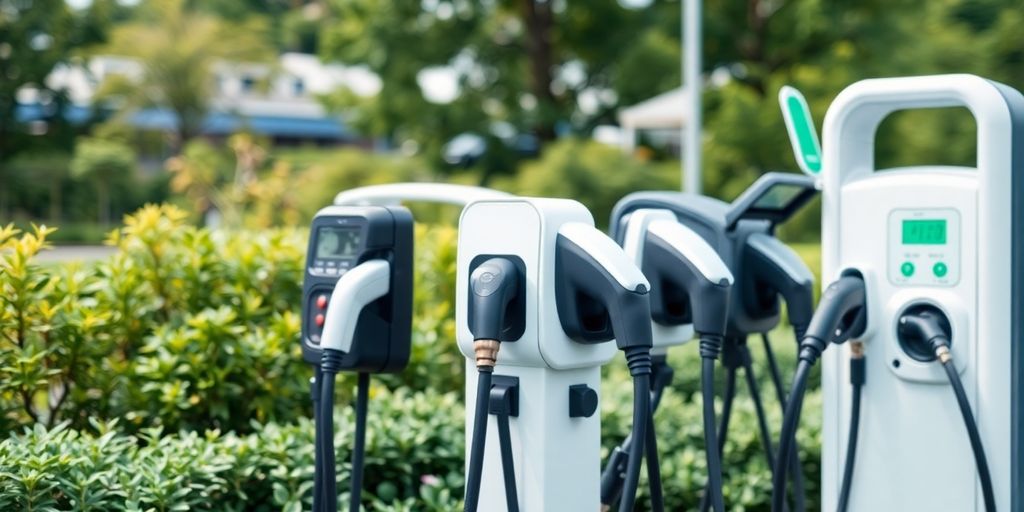
Okay, so you’re thinking about getting some EV chargers installed. Cool! But before you just go out and buy a bunch, you gotta figure out what kind you actually need. There are three main types: Level 1, Level 2, and Level 3 (also known as DC fast chargers). Level 1 is your basic, plug-into-a-regular-wall-outlet kind of charger. It’s slow, like really slow, but it’s cheap and doesn’t require any special installation. Level 2 is faster; you’ll need a 240V outlet installed, similar to what you’d use for a dryer. Level 2 chargers are a good middle ground for many businesses. Then there’s Level 3, the speed demons. These things can juice up an EV in like, an hour, but they’re expensive to install and require a lot of power.
Selecting Chargers Based on Usage Patterns
Think about how long people are going to be parked at your place. Are they popping in for a quick coffee, or are they staying for eight hours at work? That makes a huge difference in what kind of charger you need. For example:
- Shopping Centers: People are usually there for 30-40 minutes. Level 2 chargers are perfect for a quick top-up.
- Hotels/Apartments: People park overnight. Level 2 chargers are ideal for fully charging overnight.
- Gas Stations/Rest Stops: People need a quick charge. Level 3 chargers are the way to go.
It’s all about matching the charger speed to how long people will be parked. Don’t overspend on a Level 3 charger if everyone’s just gonna be there for an hour or two. Similarly, don’t put in Level 1 chargers if people need a quick turnaround.
Balancing Cost and Charging Speed
Alright, let’s talk money. Level 1 chargers are cheap, Level 2 are moderately priced, and Level 3 chargers can cost a small fortune. But it’s not just the initial cost you need to think about. You also need to consider the cost of installation, electricity, and maintenance. A Level 3 charger might seem awesome, but if your building’s electrical system can’t handle it, you’re looking at a major upgrade. Here’s a quick breakdown:
| Charger Level | Speed | Cost | Best For |
|---|---|---|---|
| Level 1 | Slow | Low | Overnight charging at apartments |
| Level 2 | Medium | Medium | Workplaces, shopping centers |
| Level 3 | Very Fast | High | Highway rest stops, quick charging needs |
Think about your budget, your electrical capacity, and how quickly people need to charge. It’s a balancing act, but if you do your homework, you can find the right chargers without breaking the bank.
Regulatory Considerations for EV Charging Stations
Understanding Local Regulations
Navigating the regulatory landscape for EV charging stations can feel like a maze, but it’s a necessary step. Different cities, counties, and states often have their own specific rules about installation, permitting, and safety standards. You’ll want to check with your local authorities early in the planning process to make sure you’re meeting all requirements. This might involve things like electrical inspections, accessibility guidelines (ADA compliance is key!), and zoning regulations. Don’t skip this step – it can save you headaches (and money!) down the road.
Incentives for EV Charger Installations
Good news! Many places offer incentives to encourage the installation of EV chargers. These can come in the form of tax credits, rebates, or grants. The federal government has programs, and many states and utility companies have their own as well. For example:
- Federal Tax Credit: Can cover a percentage of the installation costs.
- State Rebates: Often offered to businesses and homeowners.
- Utility Company Programs: May include reduced electricity rates for EV charging.
It’s worth doing some digging to see what’s available in your area. These incentives can significantly lower the upfront costs of installing charging stations.
Compliance with Future Legislation
EV adoption is only going to increase, and with it, the regulations surrounding EV charging infrastructure are likely to evolve. Staying ahead of the curve is a smart move. Here are a few things to keep in mind:
- Monitor upcoming legislation at the local, state, and federal levels.
- Design your charging infrastructure with future expansion in mind. This might mean choosing a location that can accommodate more chargers later or selecting equipment that’s easily upgradable.
- Consider the potential impact of new building codes that may require a certain percentage of parking spaces to have EV charging capabilities. Some states are already implementing these types of mandates.
Planning for the future will help you avoid costly retrofits and ensure your charging stations remain compliant and useful for years to come.
Strategic Placement of EV Charging Stations
Identifying High-Traffic Areas
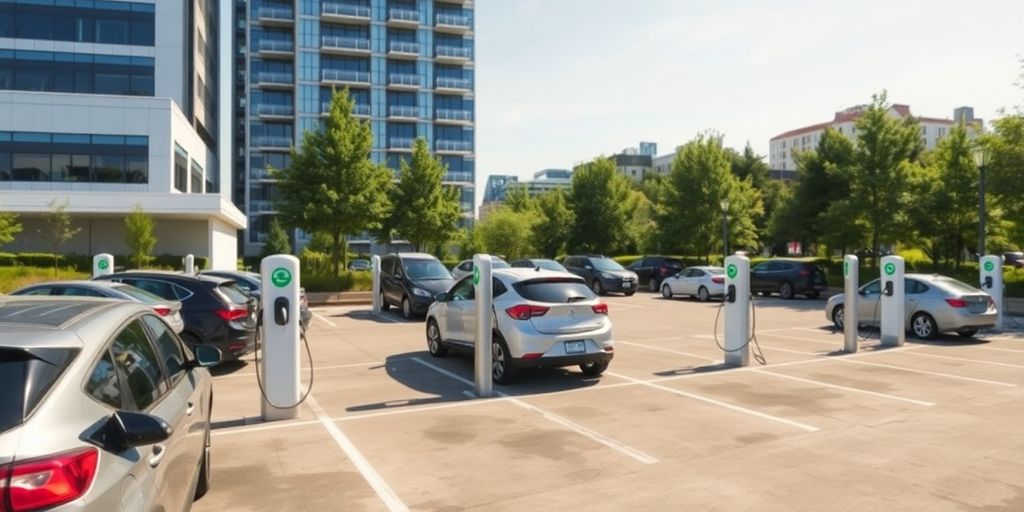
Okay, so you’re thinking about where to put these chargers, right? Obvious, but super important. You want to put them where people actually are. Think about it: near the entrance of a shopping center, close to the main doors of an office building, or even right by the restrooms at a rest stop. Basically, anywhere people are already walking. It’s not rocket science, but it makes a huge difference. You want to make it as easy as possible for people to charge while they’re doing other stuff. Also, consider visibility. A charger tucked away in the back of the parking lot isn’t going to get as much use as one that’s easy to spot from the road.
Integrating Chargers into Existing Infrastructure
Retrofitting can be a pain, but sometimes it’s the only way to go. Look at what’s already there. Can you easily tap into the existing electrical grid? Are there any spots that are already wired for something else that you could repurpose? Think about things like lighting or even old phone lines (remember those?). The less you have to dig and lay new cable, the better. Also, consider accessibility. Are the spots ADA compliant? Are they easy to get to, even with a trailer? You don’t want to create a charging station that’s only usable by a small percentage of drivers.
Utilizing Data for Optimal Locations
Don’t just guess! Use data to figure out the best spots. Check out local EV registration numbers. Where are most of the EVs in your area located? Talk to local EV groups. They probably have a good sense of where chargers are needed most. And don’t forget about traffic patterns. Which roads have the most traffic? Which areas have the most foot traffic? All of this data can help you make a smart decision about where to put your chargers. You can even use apps and online tools to track EV charging usage in your area. This will give you a real-time look at where the demand is highest. It’s all about being smart and strategic. For example, you could look at something like this:
| Location Type | Estimated EV Adoption Rate | Recommended Charger Density (per 100 parking spots) |
|---|---|---|
| Shopping Mall | High | 5-7 |
| Office Building | Medium | 3-5 |
| Apartment Complex | Low to Medium | 2-4 |
| Rest Stop | High | 4-6 (with DC Fast Chargers) |
Evaluating the Impact of EV Charging on Business
Boosting Customer Loyalty and Retention
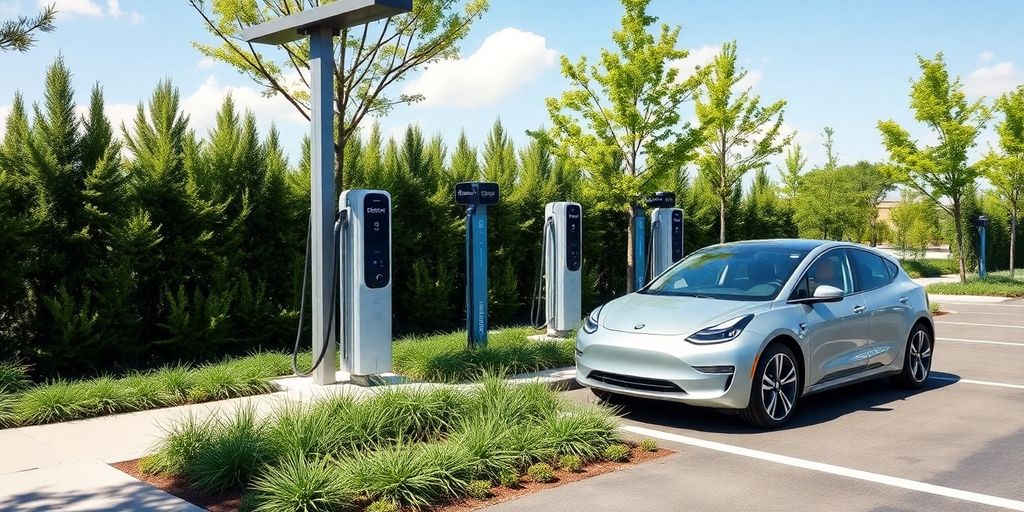
Adding EV chargers can really help keep customers coming back. Think of it as offering a perk that other businesses might not have. It shows you’re thinking about their needs and are up-to-date with current trends. Plus, while their car is charging, they’re more likely to spend time (and money) at your place. It’s a win-win.
Enhancing Brand Reputation
Going green is good for business. Installing EV chargers shows you care about the environment, which can seriously boost your brand’s image. People like to support companies that are doing their part. It’s a simple way to show you’re committed to sustainability. It can also attract new customers who are environmentally conscious.
Generating Additional Revenue Streams
Don’t forget, EV chargers can also bring in extra cash. You can charge users a fee to plug in, creating a new revenue stream. It might not be a huge amount at first, but as more people switch to EVs, it can add up. Plus, you could offer different charging plans or memberships. Think about it like this:
- Pay-per-use charging
- Monthly subscription for frequent users
- Partnerships with local businesses for discounted charging
Wrapping It Up: Planning for EV Charging Needs
So, when it comes to figuring out how many EV charging spots you should plan for, it really boils down to a few key things. First, think about your customer base and how many of them drive electric vehicles. A good rule of thumb is to aim for one DC fast charger for every 10 to 20 parking spots. But don’t forget to consider future growth—EV ownership is on the rise, and you might need more chargers down the line. Also, keep an eye on local regulations; some places are already requiring a certain percentage of parking spots to be EV-ready. In the end, planning ahead can not only help you meet current demand but also set you up for success as more people make the switch to electric vehicles.
Frequently Asked Questions
How many EV charging stations should I install?
A good rule of thumb is to have at least one fast charger for every 10 to 20 parking spots. This can change based on how many customers or employees drive electric vehicles (EVs).
What types of chargers should I consider?
There are three main types of chargers: Level 1 (slow), Level 2 (faster), and Level 3 (very fast). Choose based on how long cars will be parked and how quickly you want to charge them.
How can I prepare for more EVs in the future?
Think about increasing your charging spots as more people buy EVs. You can start with a few chargers and add more over time as needed.
What are the benefits of adding EV chargers to my business?
Adding chargers can attract more customers, improve your business’s image, and even help you make money by charging for the electricity used.
Are there any rules I need to follow for installing EV chargers?
Yes, many areas have laws that require new buildings to have a certain number of EV charging spots. It’s good to check local regulations.
How can I find the best location for my EV chargers?
Look for busy areas where people park often, like shopping centers or office buildings. You can also ask customers or employees about their EV usage.
