


So, you’ve got an electric car, and you’re probably wondering about the best ways to keep that battery happy and healthy. It’s not just about plugging it in; there’s a bit more to it, especially when it comes to temperature. We’re going to talk about how long to cool down EV battery before charging? because, believe it or not, the battery’s temperature can really affect its life and how well it charges. Let’s dig into some simple tips to make sure your EV battery lasts a good long time.
Key Takeaways
- Keep your EV battery between 20% and 80% charge for the best long-term health.
- Allow your battery to cool down for a bit after a long drive before plugging it in to charge.
- Try to avoid driving or charging your EV in really hot or really cold weather if you can.
- Use your car’s climate control and other features smartly to save battery power.
- Modern EVs have systems that help manage battery temperature, which is good for charging.
Understanding EV Battery Temperature Dynamics
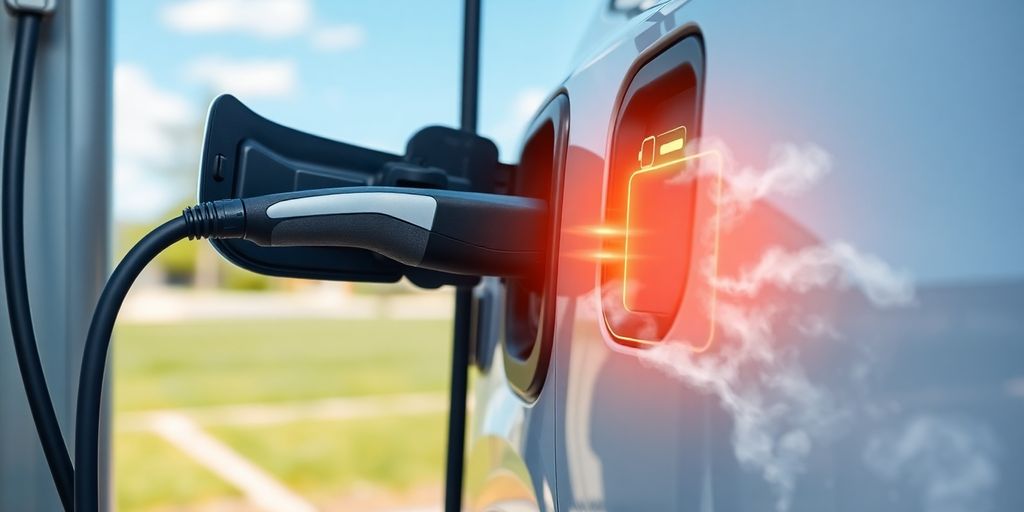
It’s easy to overlook, but the temperature of your EV battery plays a huge role in its performance and lifespan. We’re not just talking about whether it’s a hot summer day or a freezing winter morning. The internal temperature of the battery itself matters a lot, and keeping it within a good range is key. Think of it like this: your battery has a ‘happy zone’ when it comes to temperature.
Optimal Temperature Range for Charging
Car charger manufacturers actually have temperature recommendations for charging your EV! The sweet spot for charging a lithium-ion battery is usually between 15 and 35 degrees Celsius (59 to 95 degrees Fahrenheit). Now, realistically, you can’t always control the weather, but knowing this range helps you make smarter choices. Charging outside this range isn’t the end of the world, but doing it consistently can impact the battery over time. For example, you can find EV charging stations that are indoors to help regulate temperature.
Impact of Extreme Heat on Battery Health
Heat is a battery’s enemy. When an EV battery gets too hot, some bad stuff can happen inside. High temperatures can degrade the separator and the materials that bind compounds inside the battery. You might also see electrolyte decomposition. Basically, the battery’s components start to break down faster, which leads to reduced capacity and a shorter lifespan. Driving in extreme temperatures can affect your car’s range. Modern EVs try to regulate their battery’s temperature, but it still takes energy to do that. Parking in a garage or shaded area can help minimize exposure to harsh weather.
Effects of Cold Temperatures on Battery Performance
Cold weather isn’t great either, though the effects are a bit different. In cold temperatures, it’s much harder for ions to transfer through the separator material. This means the battery’s internal resistance goes up, and it can’t deliver power as efficiently. You’ll notice this as reduced range and slower charging speeds. It’s like the battery is sluggish and struggling to do its job. It’s okay to prolong exposure to these extremes occasionally, but try to avoid it.
Why Cooling Down Your EV Battery Matters
It’s easy to overlook, but letting your EV battery cool down before charging can really make a difference in the long run. Think of it like this: you wouldn’t want to run a marathon and then immediately eat a huge meal, right? Same idea here. Cooling down helps prevent damage and keeps your battery running smoothly.
Preventing Accelerated Battery Degradation
Heat is a major enemy of EV batteries. When a battery gets too hot, especially during charging, it can cause the internal components to break down faster. This leads to reduced capacity, meaning you won’t be able to drive as far on a single charge. It’s like constantly overworking any machine; eventually, it’s going to wear out quicker. Letting the battery cool down allows those internal components to relax and avoid that extra stress. You can also consider the impact of EV charging stations on battery health.
Enhancing Charging Efficiency
Ever notice how your phone charges slower when it’s hot? Same thing happens with EV batteries. When the battery is already warm, it’s harder for it to accept a charge efficiently. This means it’ll take longer to reach a full charge, and you might even lose some energy in the process. Cooling the battery down beforehand allows it to accept the charge more readily, shortening charging times and maximizing the amount of energy that actually goes into the battery. For fleets, understanding these nuances is key to EV adoption.
Preserving Overall Battery Lifespan
Ultimately, cooling down your EV battery is about extending its lifespan. By preventing degradation and enhancing charging efficiency, you’re helping the battery stay healthy for longer. This means fewer expensive battery replacements down the road and a more reliable EV experience overall. Think of it as an investment in the long-term health of your vehicle. Here are some things to consider:
- Consistent cooling practices can extend battery life by years.
- Reduced heat stress leads to better performance over time.
- A well-maintained battery contributes to a higher resale value for your EV.
Practical Steps to Cool Your EV Battery
It’s a fact: EV batteries don’t like being too hot. Just like your phone, excessive heat can degrade the battery faster. So, what can you do to keep your EV’s battery cool and happy?
Allowing Time for Natural Cooling
After a long drive, especially in hot weather, give your EV some time to cool down before plugging it in. Think of it like letting a hot engine cool before adding coolant. Even a short break can make a difference. The flow of ions from the anode to cathode happens at a much higher rate, and the byproduct is heat generation. Charging while the battery is still hot has the same effect as charging it in extremely warm ambient temperatures. This is especially important after using a level 2 charger or level 3 fast charging station.
Parking in Shaded or Cooler Areas
This one seems obvious, but it’s worth repeating. Parking in the shade can significantly reduce the amount of heat your car absorbs. If you have the option, choose a parking spot under a tree or in a covered area. Even better, use a windshield sunshade to deflect sunlight from the interior. Modern EVs devote some energy to regulate their EV battery’s temperature, heating or cooling off the battery to stay within an optimal temperature range. If possible, park your EV in a garage or a shaded area to minimize exposure to harsh weather conditions.
Utilizing Garage Space for Temperature Regulation
If you have a garage, use it! Garages tend to be cooler than the outside environment, especially during the hottest parts of the day. Parking your EV in the garage can help maintain a more consistent temperature, reducing the strain on the battery. Plus, it protects your car from the elements. Planning a summer EV road trip? Consider charging at locations with covered parking or garages to keep the battery cool during stops.
Charging Strategies for Battery Longevity
Adhering to the 20-80 Percent Rule
Okay, so you want your EV battery to last? Listen up. Sticking to the 20-80 percent rule is a game-changer. What does that mean? Simply put, try to keep your battery charge between 20% and 80% most of the time. It’s like a sweet spot for battery health. Charging to 100% all the time, or letting it drain completely, puts extra stress on the battery. Think of it like this:
- It minimizes the voltage stress on the battery cells.
- It reduces heat generation during charging and discharging.
- It helps maintain consistent performance over the long haul.
Avoiding Consistent Full Charges
I know, I know, it’s tempting to always top off that battery to 100%. You want that full range, right? But doing that all the time isn’t great for long-term battery health. When you consistently charge to full, it can cause extra chemical reactions inside the battery, which slowly degrade its capacity. It’s like constantly overfilling a glass – eventually, it’s gonna spill (or, in this case, lose some of its ability to hold a charge). Instead, consider these points:
- Only charge to 100% when you really need the extra range for a long trip.
- For daily driving, stick to that 80% target.
- Use your car’s charging settings to limit the maximum charge level. Many EVs let you set this in the car’s settings, so take advantage of it!
Preventing Complete Discharge
Just like consistently charging to 100% isn’t ideal, neither is letting your battery drain to zero. Running your EV battery down to empty can cause stress and potentially damage the battery cells. It’s like running your gas car on fumes – not a good idea! Here’s why you should avoid complete discharge:
- It can lead to increased internal resistance in the battery.
- It may cause the battery management system to work harder to recover.
- It can shorten the overall lifespan of the battery. If you’re looking for EV charging stations for your fleet, remember that consistent charging habits matter.
Instead, try to keep your battery above that 20% mark. If you know you won’t be driving for a while, it’s better to leave it with a partial charge (around 50-60%) than to store it completely empty. Also, remember that EV charging times can vary, so plan accordingly to avoid getting stranded with a dead battery.
Minimizing Battery Stress During Operation
It’s not just about charging; how you drive and use your EV impacts battery health. Let’s look at some ways to reduce stress on your battery while you’re on the road.
Driving Habits and Heat Generation
Aggressive driving, like rapid acceleration and hard braking, generates a lot of heat. Heat is a major enemy of EV batteries, accelerating degradation. Try to adopt smoother driving habits. Anticipate stops, accelerate gradually, and maintain a steady speed. This not only improves your range but also keeps your battery cooler. Think of it like this: gentle driving equals a happier, longer-lasting battery.
Strategic Use of Climate Control
Air conditioning and heating can really drain your battery. Here’s how to use them smartly:
- Precondition your car: While plugged in, use the car’s climate control to heat or cool the cabin. This uses grid power instead of battery power.
- Use sparingly: When possible, use seat heaters instead of the cabin heater, as they consume less energy. Dress appropriately for the weather to minimize reliance on climate control.
- Eco mode: Many EVs have an "eco" mode that limits the power consumption of the climate control system. It might not be as powerful, but it can save a significant amount of energy.
Turning Off Unnecessary Accessories
Everything that uses electricity in your car draws power from the battery. Be mindful of what you have running. For example, turn off headlights during the day, and unplug phone chargers when not in use. Even small things add up. Consider these points:
- Assess accessory usage: Regularly evaluate which accessories are truly needed during each drive.
- Minimize screen brightness: Lowering the brightness of the infotainment screen can reduce power consumption.
- Disable Bluetooth when not needed: If you’re not using Bluetooth, turn it off to conserve energy.
By making small adjustments to your driving habits and accessory usage, you can significantly reduce the stress on your EV battery and extend its lifespan. Remember, a little bit of effort can go a long way in preserving your battery produces electricity and keeping your EV running smoothly for years to come. Consider investing in a portable EV charging solution for added convenience.
Advanced Battery Management Systems

Modern EVs don’t just rely on you to baby their batteries; they have sophisticated systems working behind the scenes. These systems are designed to keep the battery operating within safe and efficient parameters, often without you even realizing it. Let’s take a look at how they work.
Automatic Temperature Regulation Features
EVs are equipped with advanced thermal management systems. These systems use liquid cooling or sometimes even refrigerant to maintain a consistent battery temperature. This is crucial for both charging and discharging, as extreme temperatures can significantly impact performance and lifespan. The system monitors the battery’s temperature and automatically adjusts cooling or heating as needed. It’s like having a personal climate control system just for your battery!
Preconditioning for Optimal Charging
Ever noticed how some EVs let you schedule charging? Well, many also include a preconditioning feature. This means the car will automatically heat or cool the battery to the ideal temperature before you plug it in. This is especially useful in very cold or very hot weather. By preconditioning, you can ensure the battery is ready to accept a charge at its maximum rate, improving charging efficiency and minimizing any potential stress. It’s like warming up before a workout, but for your battery.
Limitations on Charging Speed in Extreme Conditions
Even with advanced management systems, there are limits. If the battery is too hot or too cold, the car will often reduce the charging speed to protect it. You might notice this particularly at fast-charging stations. The car is essentially prioritizing the long-term health of the battery over a quick charge. It’s a safety mechanism to prevent damage. Think of it as the car saying, "I know you’re in a hurry, but trust me, this is for the best!" Here’s a quick example of how charging speeds might be affected:
| Temperature (°F) | Charging Speed | Notes |
|---|---|---|
| Below 32 | Reduced | Slower charging to protect the battery. |
| 60-80 | Optimal | Maximum charging speed. |
| Above 95 | Reduced | Slower charging to prevent overheating. |
These systems also work to optimize battery storage and overall performance. They are a key component in ensuring the longevity and reliability of your EV’s battery pack.
Long-Term Care for Your EV Battery
Regular Maintenance Practices
Think of your EV battery like any other crucial car component – it needs some TLC to keep it running smoothly for years. Regular check-ups are a good idea. Keep an eye on the battery’s performance. If you notice a sudden drop in range or charging issues, get it checked out by a qualified technician. Software updates are also important; manufacturers often release updates that optimize battery performance and efficiency. Don’t skip those! Also, make sure your EV charging stations are up to date.
Understanding Battery Degradation Over Time
All batteries degrade over time, it’s just a fact of life. The rate of degradation depends on several factors, including usage patterns, charging habits, and environmental conditions. Typically, EV batteries are designed to retain a significant portion of their capacity for many years. However, understanding how your battery is aging can help you adjust your driving and charging habits to minimize further degradation. Keep in mind that extreme temperatures can accelerate degradation, so try to avoid prolonged exposure to very hot or cold conditions. Here’s a simple table illustrating potential degradation over time:
| Year | Estimated Capacity Remaining |
|---|---|
| 1 | 97% |
| 3 | 92% |
| 5 | 88% |
| 8 | 80% |
Adapting to Unpredictable Charging Needs
Life happens, and sometimes you can’t always stick to the ideal charging routine. Maybe you need to take a long trip on short notice, or perhaps your usual charging spot is unavailable. It’s important to be flexible and adapt to these situations while still prioritizing battery health. Here are a few tips:
- Plan ahead: If you know you’ll need to charge on the go, research public charging options along your route. Consider investing in EV charging stations for your home.
- Use fast charging sparingly: While convenient, frequent fast charging can put extra stress on the battery. Use it when necessary, but stick to slower charging methods for regular use.
- Monitor your battery: Pay attention to your battery’s state of charge and adjust your driving habits accordingly. If you know you’ll have limited charging opportunities, drive conservatively to maximize range.
- Don’t panic: Occasional deviations from your ideal charging routine won’t ruin your battery. Just get back on track as soon as possible. Remember, modern EV batteries are designed to be durable and withstand a certain amount of stress.
Wrapping Things Up
So, what’s the big takeaway here? It’s pretty simple: treating your EV battery right means it’ll stick around longer and work better. Think of it like taking care of anything important you own. Little things, like letting the battery cool down a bit after a long drive before you plug it in, can really add up. And yeah, keeping it mostly between 20% and 80% charge is a good habit to get into. Nobody wants to replace a battery sooner than they have to, right? Just a few easy steps can make a real difference in how long your electric ride keeps going strong.
Frequently Asked Questions
How long should I let my EV battery cool down before charging?
It’s a good idea to let your EV battery cool down for a bit before plugging it in, especially if you’ve been driving for a while or in hot weather. Think of it like cooling down after a workout. Charging a hot battery can make it wear out faster over time. Giving it some time to cool helps keep it healthy and working well for longer.
How do extreme temperatures affect EV battery life?
Extreme temperatures, both really hot and really cold, can mess with your EV battery. High heat can make the battery degrade quicker, meaning it won’t hold a charge as well over time. Very cold temperatures can temporarily reduce how much power your battery can give, making your car’s range shorter. Modern EVs try to fix this by heating or cooling their batteries to stay in a good temperature zone.
What’s the best temperature for charging an EV battery?
The best temperature for charging your EV battery is usually between 59 and 95 degrees Fahrenheit (15 to 35 degrees Celsius). While you can’t always control the temperature, staying within this range helps your battery charge most efficiently and avoids extra stress.
What’s the 20-80 percent rule for EV charging?
It’s generally recommended to keep your EV battery charge between 20% and 80%. This range helps protect the battery from stress that comes from being too full or too empty. Always charging to 100% or letting it drop to 0% often can make your battery wear out faster.
Should I run my EV battery down before charging?
No, you shouldn’t try to run your EV battery completely empty before charging. Just like a gas car shouldn’t run out of fuel, letting your EV battery get too low can be bad for its long-term health. It’s better to charge it before it gets too low, ideally before it drops below 20%.
Do accessories like AC or heating affect EV battery life?
Yes, things like using air conditioning or heating a lot, or keeping unnecessary accessories like heated seats on, can use up a lot of battery power. Being smart about how you use these features can help save your battery’s charge and extend your driving range.
