


Thinking about going electric but worried about charging times? You’re not alone. Many people wonder, “how long does it take to charge your EV at a Blink charging station?” It’s a fair question, and the answer isn’t a simple one-size-fits-all. Several things play a role, from the car itself to the type of charger you’re using. Let’s break it down so you know what to expect.
Key Takeaways
- Charging speed at a Blink station depends on charger type (Level 2 or DC Fast), your EV’s battery size, and its current charge level.
- Level 2 chargers, like the Blink IQ 200, can add about 25-50 miles of range per hour, making them great for opportunistic charging.
- DC Fast Chargers offer the quickest way to add range, but charging speed can slow down as the battery gets fuller.
- EV drivers often charge opportunistically, topping up when convenient rather than waiting for a full charge, which is good for battery health.
- The Blink IQ 200 is designed for faster Level 2 charging, potentially cutting charge times compared to other standard Level 2 chargers.
Understanding Blink Charging Station Speeds
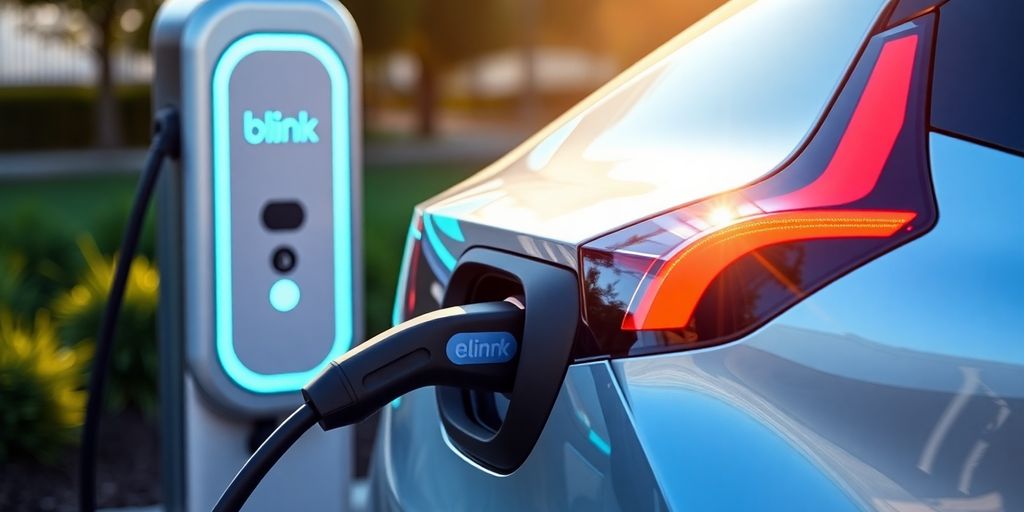
When you pull up to a Blink charging station, you’re probably wondering how quickly you’ll get back on the road. It’s not a one-size-fits-all answer, as a few things play a role. Think of it like filling up your gas tank – sometimes it’s quick, sometimes it takes a bit longer depending on the pump and your car.
Factors Influencing Charging Duration
Several things affect how long your EV needs to charge. The main ones are:
- Charger Type: Blink primarily uses Level 2 chargers, which are a good balance of speed and accessibility. These use a 240-volt outlet, a step up from a standard home outlet.
- Vehicle’s Battery: Just like cars have different gas tank sizes, EVs have different battery capacities. A bigger battery naturally takes longer to fill up.
- Current Battery Level: If your battery is nearly empty, it will take longer to charge than if it’s already half full. Most EVs also slow down charging as the battery gets closer to 100% to protect the battery.
- Ambient Temperature: Extreme cold or heat can sometimes affect charging speed. Batteries tend to charge a bit slower in very cold weather.
Level 1 vs. Level 2 Charging Capabilities
It’s helpful to know the difference between charging levels. Level 1 charging uses a regular 120-volt household outlet. It’s super slow, adding maybe 4 miles of range per hour. You’d be looking at days for a full charge, which isn’t practical for most people on the go. Blink stations focus on Level 2 charging. These use a 240-volt outlet, similar to what a clothes dryer might use. This setup is much faster, typically adding 20-30 miles of range for every hour you’re plugged in. This is why Level 2 chargers are the standard for public charging.
The Blink IQ 200 Advantage
Blink uses the IQ 200 model for its charging stations, and it’s pretty good. This charger is designed to deliver a robust charge, often providing between 30-65 miles of range per hour. It can handle up to 80 amps, which is a strong output for a Level 2 charger. This means you get a quicker charge compared to many other Level 2 options out there, getting you back on the road faster. It’s a solid piece of equipment for getting drivers moving again without unnecessary delays.
Estimating Your EV’s Recharge Time

So, you’re curious about how long it’ll take to get your electric ride topped up at a Blink station? It’s not a one-size-fits-all answer, really. A bunch of things play into it, kind of like how long it takes to charge your phone – some days it’s faster, some days it feels like forever.
Impact of Battery Size and State of Charge
First off, your EV’s battery size is a big deal. Think of it like a gas tank; a bigger tank naturally takes longer to fill. So, a car with a larger battery pack will generally need more time to reach a full charge compared to one with a smaller battery. Then there’s the ‘state of charge,’ which is just a fancy way of saying how much juice is already in the battery when you plug in. If you’re starting from nearly empty, it’s obviously going to take longer than if you’re just topping it off from, say, 50%. Most EV batteries are happiest and most efficient when they’re between 40% and 80% charged, so you might not always need to go from 0 to 100%.
Range Added Per Hour of Charging
Another way to look at it is how much range you’re getting back each hour. With a Level 2 charger, like the ones Blink often uses, you can expect to add somewhere around 25 to 50 miles of range for every hour you’re plugged in. This can vary a bit depending on your specific car and the charger’s output. It’s a good way to gauge if a quick stop for coffee will give you enough miles to get where you’re going.
Opportunistic Charging Habits
This is where you get smart about charging. Instead of waiting until the battery is almost dead, try to plug in whenever you have a chance. Maybe you’re at the grocery store, or you’re meeting friends for dinner. If you can plug in for an hour or two during these times, you’re essentially doing ‘opportunistic charging.’ It means you’re less likely to need a long charging session later on. It’s all about making charging a part of your routine, rather than a special event. This approach can really help manage your EV charging expenses and keep your battery topped up without much fuss.
How Long Does It Take to Charge Your EV at a Blink Charging Station?
So, you’re curious about how long it’ll actually take to juice up your electric car at a Blink station. It’s not a one-size-fits-all answer, really. Think of it like filling up a gas tank, but with more variables. The time it takes to charge your EV at a Blink charging station depends on a few key things.
Charging Speed Variations
Blink offers different charging speeds, and this is the biggest factor. You’ve got your Level 2 chargers, which are pretty common and good for topping up while you’re out and about. Then there are DC fast chargers, which are like the express lane for EVs. A Level 2 charger might add about 25 to 50 miles of range per hour, depending on your car and the specific charger. DC fast charging, on the other hand, can add significantly more range in a shorter amount of time, but it’s not always available everywhere, and it can be harder on your battery if you use it constantly.
Vehicle Model and Charger Compatibility
Your car plays a big role too. Different EV models have different battery sizes and onboard charging capabilities. A car with a smaller battery will naturally charge faster than one with a massive battery pack. Also, not all cars can accept the fastest charging speeds. You’ll want to check your car’s manual or use a tool like the Blink Charging Time Calculator to get a more precise idea for your specific vehicle. For instance, a Chevy Bolt EV, with its 66 kWh battery, can fully charge on a Blink IQ 200 charger in about 8.5 hours, which is pretty quick for a Level 2 charger. This is because the IQ 200 can deliver up to 65 miles of range per hour.
DC Fast Charging vs. Level 2 Charging with Blink
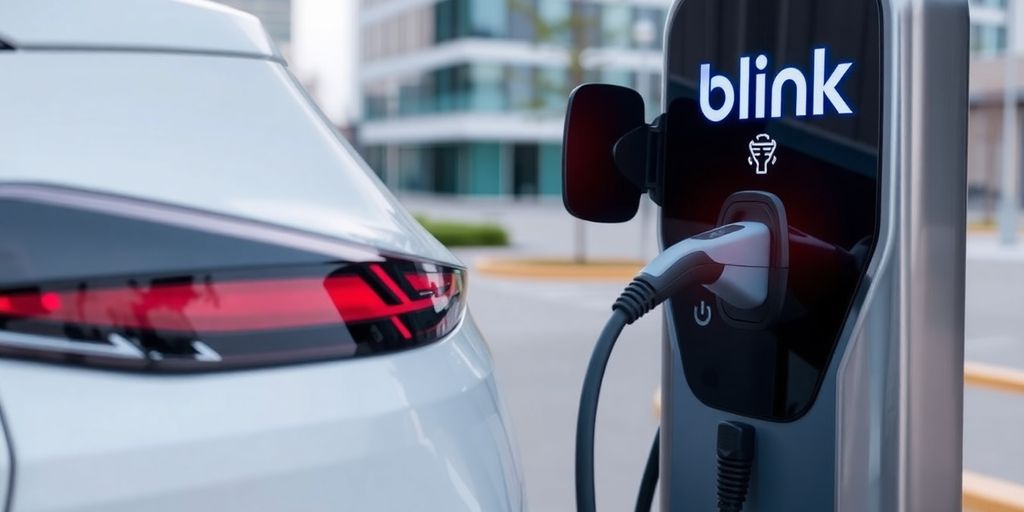
When you’re looking to get your EV back up to speed, Blink offers a couple of main ways to do it: DC Fast Charging and Level 2 Charging. They’re pretty different, and knowing which one you’re using can make a big difference in how long you’re plugged in.
DC Fast Charging for Quick Refueling
Think of DC Fast Charging, sometimes called Level 3, as the express lane for EV charging. This is the quickest way to get a significant amount of range back into your battery. It bypasses your car’s onboard charger and sends DC power directly to the battery. This is super handy if you’re on a road trip and need to add a lot of miles in a short amount of time, like grabbing a quick bite. However, it’s worth noting that charging speeds can slow down as your battery gets closer to being full, a process called tapering. While it’s fast, frequent use of DC fast charging might have an impact on your battery’s long-term health, depending on your specific EV model.
Level 2 Charging Efficiency with Blink IQ 200
Level 2 charging is what most people use for regular top-ups, whether at home or at public stations. It uses a 240-volt connection, which is a step up from the standard 120-volt outlet. Blink’s IQ 200 chargers are a great example of Level 2 technology. These are designed to be faster than typical Level 2 chargers, often adding between 30 to 65 miles of range per hour. This makes them perfect for when you’re out running errands, grabbing a meal, or even just doing some shopping. You can get a decent charge in the time it takes to do most everyday activities. It’s a good balance between speed and being gentler on your EV’s battery compared to DC fast charging. For many EV owners, Level 2 EV charging is the sweet spot for daily use, offering convenience and efficiency. The Level 2 EV chargers are a popular choice for both home and public charging.
Optimizing Your Charging Experience

So, you’ve got your EV plugged into a Blink station. Now what? Making the most of your charging time is all about understanding a few key things. It’s not just about plugging in and walking away; a little bit of knowledge can go a long way in getting you back on the road faster and keeping your car’s battery happy.
Understanding Charging Levels
Not all charging is created equal, and knowing the difference between the types of charging available can really help. Blink offers various charging solutions, and each has its own speed and best use case. It’s good to know which level suits your needs at any given moment. For instance, if you’re just popping into a store for a quick errand, you might not need the fastest charge possible. But if you’re on a road trip, you’ll want to find a DC fast charger to get back to driving quickly. This guide helps EV owners choose the right charging level. Understanding these levels ensures efficient and convenient charging for your electric vehicle.
Maximizing Charging Efficiency
Want to get the most out of every charging session? Think about your battery’s state of charge. Most EVs slow down their charging speed as the battery gets closer to full, especially after 80%. So, if you only need a partial charge, stopping around that 80% mark can actually be quicker overall than waiting for a full 100%. Also, consider your driving habits. If you often find yourself needing a quick top-up, planning your stops around Blink stations that offer DC fast charging can make a big difference. This breakthrough significantly reduces charging times, making EV ownership more convenient and practical for a wider audience. Gain 100 miles of range in just 5 minutes with the right charger.
Here are a few tips to keep in mind:
- Plan Ahead: Use the Blink app to find stations along your route and check their availability.
- Know Your Car: Understand your EV’s charging capabilities and how it interacts with different charger types.
- Charge Smart: Avoid charging to 100% every single time, especially with DC fast charging, as it can sometimes be slower at the very end and might impact long-term battery health.
- Bundle Up: Look into Blink Mobility’s package deals if you plan on frequent charging; they can offer significant savings.
Real-World Charging Scenarios
When you’re out and about with your electric vehicle, fitting in a charge often happens during other activities. Think about stopping for a meal or running some errands. These moments are perfect for topping up your battery without adding extra time to your day. For instance, a quick bite to eat might give you enough charge for another 50 miles, which is super handy if you’re just running local trips. It’s all about making the most of your downtime.
Charging During Errands or Meals
Most people find that charging their EV while they’re already stopped for something else makes the most sense. You grab lunch, do some shopping, or even catch a movie, and your car gets a little boost. It’s not usually about getting a full charge this way, but more about adding enough range to comfortably get to your next destination or home. A Level 2 charger at a grocery store or restaurant can add a decent amount of miles while you’re inside. It’s a pretty convenient way to keep your battery happy without really noticing the extra time.
Impact of Frequent Fast Charging on Battery Health
While DC fast charging is amazing for when you’re in a hurry, using it all the time might not be the best for your EV’s battery in the long run. Think of it like sprinting versus jogging; sprinting is fast, but doing it constantly can wear you out quicker. Most EVs are designed to slow down charging as the battery gets closer to full, especially with DC fast chargers. Also, charging to 100% frequently, particularly with fast chargers, can put more stress on the battery. Many EV owners find that charging to around 80% is a good balance for daily driving, saving the full charge for longer trips. It’s a trade-off between speed and long-term battery care. For those looking for rapid charging, a new electric vehicle charging station in NYC offers impressive speeds, providing up to 200 miles of range in just 5 minutes, which is a game-changer for city driving. However, it’s worth noting that the cost of installing a commercial electric vehicle (EV) charging station can vary, so understanding your options is key.
Wrapping Up Your Blink Charging Experience
So, charging your EV at a Blink station really comes down to a few things: the charger itself, how much juice your car already has, and the specific model you’re driving. Think of it less like filling a gas tank and more like topping up your phone – you do it when it’s convenient. Blink’s IQ 200 chargers are pretty speedy for Level 2, giving you a good chunk of range in about an hour. For the most accurate idea of how long you’ll be plugged in, it’s always best to check your car’s manual or use Blink’s charging calculator. Happy driving!
Frequently Asked Questions
How long does it typically take to charge an EV at a Blink station?
Charging your electric car at a Blink station usually takes between 30 minutes to a few hours. It really depends on the type of charger you use and your car’s battery. Think of it like charging your phone – a quick top-up or a full charge takes different amounts of time.
What are the different charging speeds available at Blink stations?
Blink offers different charging speeds. Level 2 chargers are common and can add about 25-50 miles of range for every hour you charge. For a really fast charge, some stations might offer DC Fast Charging, which is much quicker but might not be available everywhere.
Does my car’s battery size and current charge level affect charging time?
Your car’s battery size and how much charge it already has play a big role. If your battery is almost empty, it will take longer. Many EV drivers don’t wait for their battery to be completely empty; they charge up whenever it’s convenient, like while grabbing a bite to eat or shopping.
How does my specific electric vehicle model affect charging speed?
Yes, the specific model of your EV matters. Some cars can accept a faster charge than others. Blink stations are equipped with chargers like the Blink IQ 200, which is designed to charge faster than many other Level 2 chargers, helping you get back on the road sooner.
What’s the difference between Level 1 and Level 2 charging?
Level 1 charging uses a regular home outlet and is quite slow, adding only about 4 miles per hour. Level 2 charging, which is what most Blink public stations use, is much faster, adding 20-30 miles per hour or even more with advanced chargers like the IQ 200.
Can charging frequently with fast chargers harm my EV’s battery?
While fast charging is convenient, charging your EV very frequently using DC Fast Chargers might affect your battery’s long-term health over time. It’s often best to use Level 2 charging when possible for daily use and save fast charging for when you really need it.
