


Charging an electric vehicle (EV) can feel a bit confusing, especially when you’re trying to figure out how long it will take at a charging station. The time it takes to charge your EV varies based on several factors, including the type of charger you’re using and the size of your vehicle’s battery. In this article, we’ll break down the different charger types and what to expect when charging at home or on the go.
Key Takeaways
- Charging times can vary widely based on charger type; Level 1 takes the longest, while DC fast chargers are the quickest.
- A typical 60 kWh battery can charge in about 8 hours with a Level 2 charger, but only around 30 minutes at a DC fast charger.
- Factors like battery size, charger output, and vehicle acceptance rate all influence charging time.
- Most EV drivers tend to top off their batteries rather than charging from empty to full.
- As technology improves, charging times are expected to decrease, making EVs even more convenient.
Charging Times For Different Charger Types
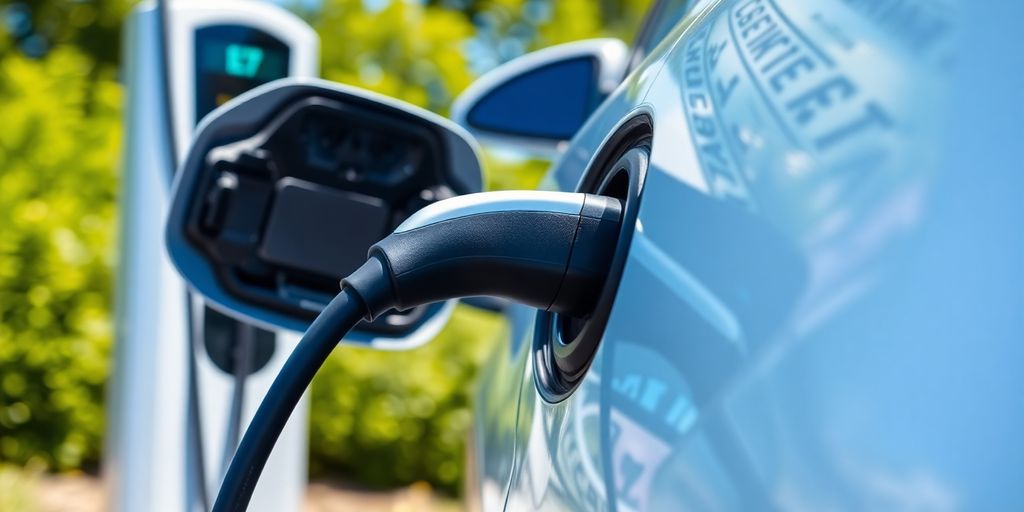
Alright, let’s talk about how long it actually takes to charge your EV. It’s not a simple answer, because it really depends on what kind of charger you’re using. Think of it like filling up a gas tank – a tiny hose takes way longer than a big one.
Understanding Level 1 Chargers
Level 1 chargers are the ones that come with your EV. They plug into a standard 120V household outlet. It’s the slowest way to charge, adding only about 3-5 miles of range per hour.
Think of it as trickle-charging. It’s fine for topping off, or if you only drive a few miles a day, but not ideal for a quick turnaround. If you plug in overnight, you might get a decent charge, but don’t expect miracles. It’s more like charging your phone; you top it up during the day if you need to and give it a full charge at home overnight.
Exploring Level 2 Chargers
Level 2 chargers are a big step up. These use 240V, like your clothes dryer, and can add 12-80 miles of range per hour, depending on the amperage. Most people install these at home for faster charging.
Public charging stations also often use Level 2. The charging time varies a lot based on the car’s battery size and the charger’s output, but you’re generally looking at a few hours for a full charge. It’s a good option if you’re at work, shopping, or grabbing a bite to eat.
The Speed of DC Fast Chargers
DC Fast Chargers (also called Level 3) are the speed demons of the EV world. These are high-power chargers found at public charging stations along highways. They can add significant range in a short amount of time – we’re talking 60-200 miles in about 30 minutes.
However, not all EVs can use them, and the charging speed can vary. Plus, they’re generally more expensive than Level 2 charging. But if you’re on a road trip and need a quick boost, they’re a lifesaver. A rapid charger will offer the fastest charging time at the highest cost, which is great if you’re on the road and want to continue your onward journey. If you’re in no rush, using a lower kW rated charger will be cheaper. You can leave your car to charge overnight or while you run some errands.
Factors Influencing Charging Duration
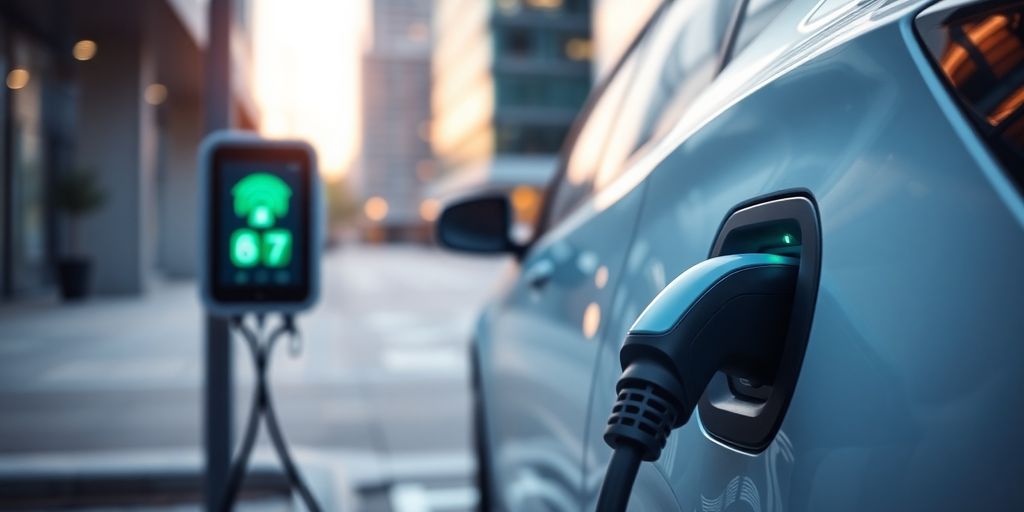
Okay, so you want to know how long it really takes to charge an EV? It’s not as simple as just plugging it in and waiting. Several things play a part in how quickly your battery fills up. Let’s break it down.
Battery Size and Capacity
Think of your EV’s battery like the gas tank in a regular car – the bigger it is, the longer it takes to fill. Battery capacity is measured in kilowatt-hours (kWh), and a higher kWh rating means more range, but also a longer charging time. A small EV with a 40 kWh battery will charge much faster than a large SUV with a 100 kWh battery, assuming all other factors are equal. It’s just simple math, really.
Charger Power Output
The charger’s power output is like the flow rate of a gas pump. Chargers are rated in kilowatts (kW). A higher kW rating means more power is delivered to the battery per unit of time, resulting in faster charging. You’ll find different charger levels, each with a different power output. For example, a Level 1 charger might only provide 1.8 kW, while a DC fast charger can pump out 150 kW or more. Obviously, the 150 kW charger will get you back on the road much faster.
Vehicle Charge Acceptance Rate
Here’s a thing a lot of people don’t realize: your car can only accept power at a certain rate. It’s like trying to pour water into a funnel – if you pour too fast, it overflows. The vehicle’s charge acceptance rate is the maximum rate at which its battery management system (BMS) can safely accept power. Even if you plug into a super-powerful 350 kW charger, if your car’s max is 150 kW, that’s all you’re going to get. So, it’s important to know your car’s charging capabilities to avoid wasting time (and money) at a charger that’s too powerful for it.
Typical Charging Scenarios
Charging at Home
Okay, so charging at home is probably the most common scenario for EV owners. Most people just plug in their car when they get home and let it charge overnight. It’s super convenient, like charging your phone. You wake up to a full battery every morning. Most home chargers are Level 2 (240V), which means you can get a decent charge overnight. Level 1 (120V) is also an option, but it’s pretty slow; you’ll only get a few miles of range per hour. If you’re thinking about getting an EV, installing a Level 2 charger at home is a good idea. It makes life so much easier.
Charging on the Go
Charging on the go is a bit different. You’re not just plugging in overnight; you’re trying to get enough juice to get to your destination. This usually involves using public charging stations. The speed of charging is super important here. You’ll want to find a DC fast charger if you’re in a hurry. These can add a significant amount of range in a short amount of time. But they’re not always available, and they can be more expensive than Level 2 chargers. Planning your route and knowing where the charging stations are is key.
Using Public Charging Stations
Public charging stations are popping up everywhere, which is great. You’ll find them at grocery stores, shopping malls, and even some gas stations. There are a few things to keep in mind when using public chargers:
- Availability: Check ahead of time to make sure the charger is available and working. Apps like PlugShare can help with this.
- Cost: Public charging can be free, but most of the time, you’ll have to pay. The price can vary depending on the charging speed and the network.
- Charging Speed: Public chargers come in different speeds. Level 2 chargers are common, but DC fast chargers are becoming more widespread. Choose the one that best fits your needs and timeline.
Think of it like topping up your phone; you top it up during the day if you need to and give it a full charge at home overnight. A lot of EV drivers use "top up charging" whenever they park, be it at home overnight or during the day at the supermarket, gym, or their workplace. Instead of letting the battery run empty and waiting while it fully recharges, drivers make use of the time their car is parked (which is about 95% of the time) to keep the battery topped up.
Comparing Charging Speeds
Rapid Charging vs. Standard Charging
Okay, so let’s talk about how fast your EV actually charges. It’s not all created equal, that’s for sure. You’ve got your standard charging, which is like a slow drip, and then you’ve got rapid charging, which is like a firehose. The difference in time is significant, and it really impacts how you use your EV.
Standard charging, often Level 1 or Level 2, is what you’ll typically use at home or at some public charging spots. It’s convenient, but it can take a while – think overnight or several hours to get a full charge. Rapid charging, on the other hand, uses DC fast chargers. These are the ones you’ll find at dedicated charging stations along highways. They can add a significant amount of range in a relatively short time, like 20-30 minutes for a decent boost. But, not all cars can take the fastest charge, and using rapid charging all the time isn’t great for your battery’s long-term health.
Time to Charge from Empty to Full
Ever wondered how long it really takes to go from zero to hero? Well, it depends. A lot. Battery size is a big factor. A smaller battery will obviously fill up faster than a huge one. Then there’s the charger itself. A Level 1 charger might take upwards of 24 hours to fully charge some EVs, while a Level 2 could do it in 6-8 hours. DC fast chargers are the speed demons, potentially getting you to 80% in under an hour, but remember, charging slows down as you approach full.
Here’s a rough idea:
- Level 1 (120V): 20-40+ hours
- Level 2 (240V): 4-10 hours
- DC Fast Charger: 30 minutes – 1 hour (to 80%)
Real-World Charging Examples
Let’s get practical. Imagine you’re driving a Chevy Bolt with a 65 kWh battery. If you plug it into a Level 2 charger at home, it might take around 7 hours to fully charge. Now, picture you’re on a road trip in a Tesla Model 3 with a 75 kWh battery. Using a Tesla Supercharger, you could add about 200 miles of range in roughly 30 minutes. Or, say you have a Nissan LEAF with a smaller 40 kWh battery. A DC fast charger could get you from 20% to 80% in about 40 minutes. These are just examples, of course. Actual times will vary based on temperature, battery condition, and the specific charging equipment. It’s always a good idea to check your car’s manual and the charging station’s specs for the most accurate estimates.
Maximizing Charging Efficiency
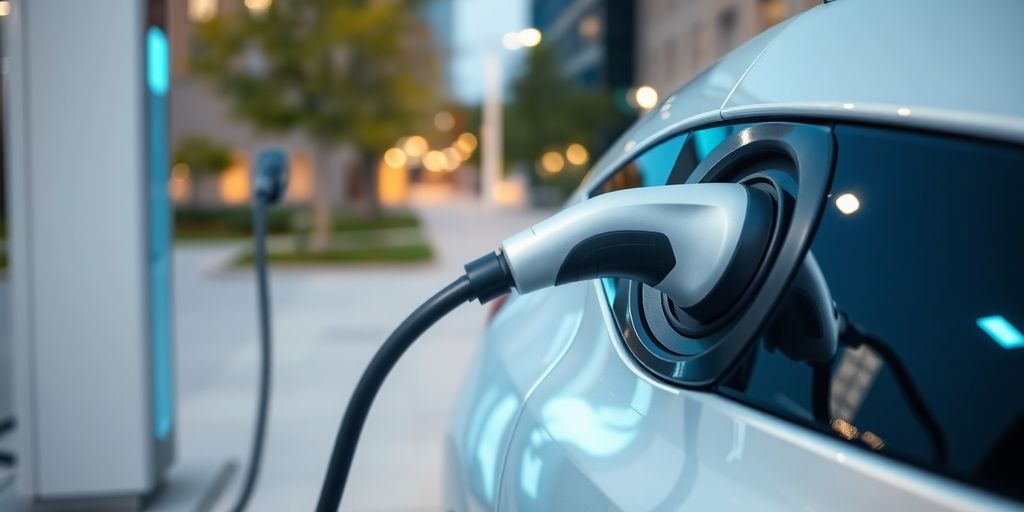
Let’s be real, nobody wants to spend more time than necessary waiting for their EV to charge. So, how do you get the most out of every charging session? It’s all about understanding a few key things and making some smart choices.
Optimal Charging Practices
- Top up when you can: Instead of waiting until your battery is almost empty, try to plug in whenever you have the chance. This is called "top up charging", and it can help keep your battery at a decent level without long waits.
- Avoid extreme charge levels: Charging to 100% or letting your battery drain completely can put stress on the battery over time. It’s generally better to keep it between 20% and 80% for everyday use. This can extend the life of your battery.
- Consider the temperature: Extreme temperatures, both hot and cold, can affect charging speed. If possible, charge in a more moderate environment. Colder temperatures can slow down the charging process, especially with rapid chargers.
Using Smart Charging Solutions
Smart charging is all about using technology to optimize your charging. This can include:
- Scheduled charging: Set your car to charge during off-peak hours when electricity rates are lower. Many EVs and charging stations have this feature built-in.
- Load balancing: If you have multiple EVs or other high-power appliances, a smart charging system can balance the load to prevent overloading your electrical system.
- Remote monitoring: Some charging stations allow you to monitor your charging progress and adjust settings remotely using a smartphone app.
Understanding Charging Costs
Charging costs can vary widely depending on where and when you charge. Here’s what to keep in mind:
- Home charging is usually cheaper: Electricity rates at home are typically lower than at public charging stations.
- Public charging costs vary: Different charging networks have different pricing structures. Some charge by the kilowatt-hour (kWh), while others charge by the minute. Some even have subscription plans.
- Consider time-of-use rates: If your electricity provider offers time-of-use rates, charging during off-peak hours can save you money. Check with your local provider to see if this is an option.
Future of EV Charging Technology
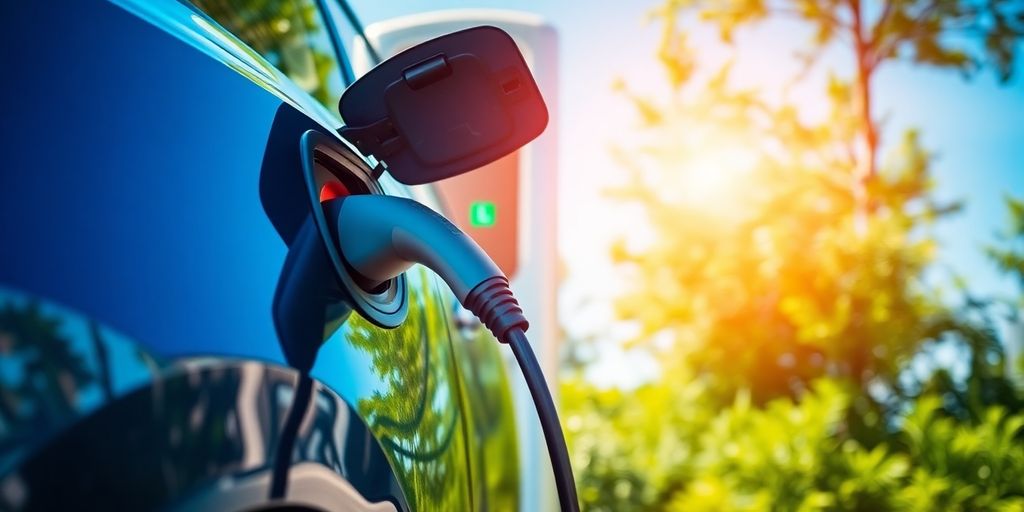
Advancements in Charging Infrastructure
Okay, so the future of EV charging? It’s looking pretty cool, actually. We’re not just talking about faster chargers, but a whole new way of thinking about how and where we juice up our electric rides. Think charging stations popping up everywhere – not just gas stations, but grocery stores, parking garages, even built into streetlights. The goal is to make charging as easy as filling up with gas, but, you know, without the fumes and the guilt. Wireless charging is also becoming more of a thing, imagine just parking over a spot and charging without even plugging in! That’s the dream, right?
Impact of Battery Technology
Battery tech is where the real magic happens. It’s not just about making batteries bigger so we can drive further. It’s about making them charge faster, last longer, and be more sustainable. Solid-state batteries are a big deal – they’re safer, more energy-dense, and can handle faster charging speeds. Plus, there’s a lot of research into using different materials to make batteries cheaper and more environmentally friendly. Basically, better batteries mean less range anxiety and a smaller carbon footprint. It’s a win-win.
Emerging Charging Solutions
Beyond the usual plugs and stations, there are some seriously interesting ideas floating around. Think about battery swapping, where you just swap out your empty battery for a full one in minutes. Or mobile charging units that come to you if you’re stranded. And then there’s the whole vehicle-to-grid (V2G) thing, where your EV can actually feed energy back into the grid, helping to stabilize the power supply. It sounds like science fiction, but it’s getting closer to reality every day. Here’s a quick rundown:
- Battery Swapping: Quick replacements for depleted batteries.
- Mobile Charging: On-demand charging services.
- Vehicle-to-Grid (V2G): EVs contributing energy back to the grid.
Wrapping It Up
So, how long does it take to charge an electric vehicle at a charging station? Well, it really depends on a few things. If you’re using a fast charger, you might be looking at around 30 minutes to get a decent charge. But if you’re at a slower station, it could take several hours. Most folks don’t wait for a full charge anyway; they just top off while they’re out and about. Remember, the size of your battery and the type of charger you’re using will play a big role in how long it takes. So, whether you’re on a road trip or just running errands, plan your charging stops accordingly!
Frequently Asked Questions
How long does it take to charge an electric vehicle (EV) at a charging station?
Charging an EV can take anywhere from 30 minutes to over 12 hours, depending on the charger type and battery size.
What are the different types of chargers for EVs?
There are three main types of chargers: Level 1 (slow), Level 2 (fast), and DC Fast Chargers (very fast). Each type charges at a different speed.
Can I charge my EV at home?
Yes, you can charge your EV at home using a regular outlet or a dedicated home charging station.
What affects how fast my EV charges?
The charging speed depends on the charger’s power output, the size of your EV’s battery, and how quickly your vehicle can accept the charge.
Is charging an EV expensive?
Charging costs vary by location and type of charger, but many find it cheaper than gas. Charging at home can also save money.
What is the best way to charge my EV?
For daily use, it’s best to charge your EV at home overnight. For long trips, use fast chargers along your route.
