


Ever wondered, “how fast do EV charging stations work?” It’s a common question for anyone thinking about an electric vehicle. The truth is, there’s no single answer. Charging speeds can change a lot depending on the type of charger, your car, and even the weather. Let’s break down what you need to know about charging times and how to get the most out of your EV.
Key Takeaways
- Rapid chargers are usually the quickest way to power up your EV, often adding a lot of range in a short time.
- Most home charging setups are slower but great for overnight charging, fitting right into your daily routine.
- Your electric car’s battery size and what it can handle for charging speed really affect how long it takes.
- Public charging stations offer different speeds, from quick top-ups to slower, more affordable options.
- Things like the outside temperature can actually make your charging a bit slower than usual.
Understanding EV Charging Speeds
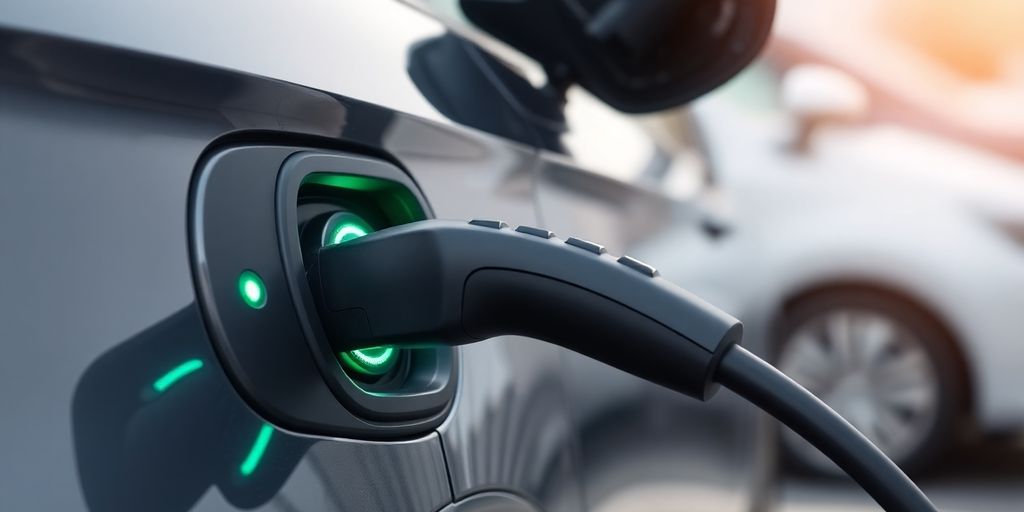
Alright, let’s break down how fast your electric car actually charges. It’s not as simple as just plugging in and waiting. There are a few different factors at play, and understanding them can save you a lot of time and frustration. Think of it like filling up a gas tank, but with more variables.
Rapid Chargers: The Fastest Option
Rapid chargers are the superheroes of the EV charging world. These bad boys can seriously cut down your charging time. We’re talking about adding a significant amount of range in a relatively short period. For example, a rapid charger can juice up a Nissan LEAF pretty quickly, or give a Tesla Model S a decent boost in under an hour. They’re not always available, but when you find one, it’s a game-changer. Keep in mind that not all cars can take full advantage of the fastest rapid chargers, so check your car’s specs.
Home Charging Point Capabilities
Most people do the bulk of their charging at home, which is super convenient. Home charging points usually come in two flavors: 3.7kW and 7kW. A 7kW charger is obviously faster, but even the 3.7kW option is fine for overnight charging. Think of it like this: you plug in when you get home from work, and by morning, you’re good to go. It’s a slow and steady approach, but it works for most daily commutes. You can explore EV home charging options to find the best fit for your needs.
Vehicle Compatibility with Charging Rates
Here’s a key thing to remember: your car can only charge as fast as it’s designed to charge. You can plug it into a super-duper fast charger, but if your car’s maximum charging rate is lower, that’s all you’re going to get. It’s like trying to pour water through a tiny funnel – it doesn’t matter how much water you have, the funnel limits the flow. So, before you get too excited about a particular charging station, make sure your car can actually handle the maximum charge rate it offers.
Charging Times at Public Stations
Rapid Charging Station Performance
Okay, so you’re out and about and need a charge. Rapid charging stations are your best bet for a quick turnaround. These chargers can add a significant amount of range in a short period, making them ideal for long journeys. How fast? Well, a typical EV with a 60kWh battery can go from empty to full in as little as 30 minutes at a 150kW rapid charger. Of course, that’s best-case. Factors like the car’s maximum charging rate and the battery’s current state of charge play a big role. Keep in mind that rapid charging usually costs more than slower options, but the convenience is often worth it when you’re pressed for time. You can find free EV plug-in charging at some public stations.
Public 7kW Charger Durations
Public 7kW chargers are pretty common, you’ll find them in parking garages, shopping centers, and workplaces. They’re slower than rapid chargers, but still faster than your standard wall outlet at home. Expect a full charge for that same 60kWh battery to take around 8 hours. These are great for topping up while you’re at work or running errands. Think of it as a slow and steady approach to keeping your battery happy. It’s also worth noting that the cost of charging an electric car at these stations is usually lower than rapid charging.
22kW Chargepoint Efficiency
Now, 22kW chargepoints are a step up from the 7kW options. They’re not as widespread as the slower ones, but you’ll find them in some public locations. With a 22kW charger, you can expect to fully charge a 60kWh battery in about 3 hours. This is a good middle ground between speed and cost. If you’re looking to start an EV charging station business, these could be a good option to include. Just remember that your car needs to be able to accept that much power to take full advantage of the faster charging speed.
Home Charging Speed Considerations
Typical 7kW Home Charger Performance
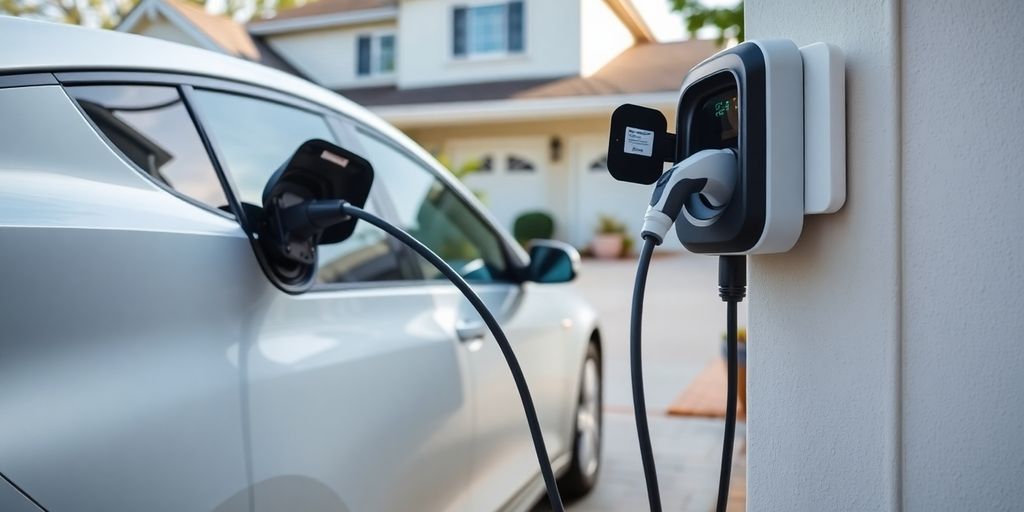
Okay, so you’ve decided to charge at home – smart move! Most folks opt for a 7kW home charger, and for good reason. A 7kW charger is like the sweet spot for overnight charging. It’s not crazy expensive to install, and it gives you a decent charging speed.
Think of it this way: a typical EV with a 60kWh battery will take around 8 hours to charge fully from empty using a 7kW charger. That’s perfect for plugging in when you get home from work and waking up to a full battery. Plus, you can often schedule your charging to take advantage of off-peak electricity rates, saving you some money. It’s a win-win!
Slower 3.7kW Home Charger Times
Now, let’s talk about the slower option: a 3.7kW home charger. These are often cheaper to buy and install, but you’re definitely sacrificing speed. With a 3.7kW charger, that same 60kWh battery will take closer to 16 hours to charge fully. That’s basically an entire day!
Here’s a quick comparison:
| Charger Power | Approximate Full Charge Time (60kWh Battery) |
|---|---|
| 3.7kW | 16 hours |
| 7kW | 8 hours |
If you don’t drive much daily or you can top up your battery frequently, a 3.7kW charger might be okay. But if you need a full charge regularly, you’ll probably find it frustratingly slow. Consider the home charger carefully.
Limitations of 22kW Home Chargers
Okay, so you might be thinking, "Why not just get the fastest charger possible?" That’s where 22kW home chargers come in. On paper, they sound amazing – super-fast charging! However, there’s a catch. Most homes don’t have the electrical infrastructure to support a 22kW charger. These chargers require three-phase power, which is more common in commercial buildings than in residential homes.
Installing three-phase power can be expensive, involving upgrades to your electrical panel and potentially even the connection to the grid. Plus, even if you do have three-phase power, your EV needs to be able to accept that much power. Many EVs can only charge at a maximum of 7kW or 11kW, even if the charger can deliver more. So, before you get too excited about a 22kW charger, make sure your home and your car can actually handle it. It might be overkill for your EV charging needs.
Miles Per Hour of Charging
Range Added by 3.7kW Slow Chargers
Okay, so you’re using a 3.7kW charger. These are your basic, slower chargers, often found at home or older public charging points. With a 3.7kW charger, you’re generally looking at adding around 10-15 miles of range per hour of charging. It’s not super fast, but it’s reliable for overnight charging or topping up while you’re at work. If you’re in a rush, this might not be ideal, but for consistent, low-cost charging, it does the job. If you’re thinking about starting a charging business, you’ll want to consider offering faster options too.
Range Added by 7kW Fast Chargers
Now we’re talking! A 7kW charger is a step up. These are common for home installations and can also be found at public charging stations. With a 7kW charger, you can expect to add roughly 25-30 miles of range per hour. This is a good balance between speed and convenience. It’s fast enough to make a noticeable difference in a relatively short amount of time. For example, if you charge for 3 hours while shopping, you could add close to 90 miles of range. Not bad, right? This is a pretty good option for EV home charging.
Range Added by 22kW Fast Chargers
Okay, these are getting serious. 22kW chargers are less common, especially for home use, but you’ll find them at some public charging locations. The big thing to remember is that not all cars can actually accept 22kW. But if yours can, you’re in for a treat. You could potentially add 60-90 miles of range per hour. That’s a significant boost! Imagine adding almost 100 miles during a lunch break. However, keep in mind that the actual rate depends on your car’s maximum charging capacity and the battery’s current state.
Range Added by Rapid Chargers
Rapid chargers are the kings of speed. We’re talking 50kW and up. These are almost exclusively found at public charging stations along highways and in service areas. The range added per time is impressive. A 50kW rapid charger can add around 90 miles in about 30 minutes. And if you’re lucky enough to find a 150kW or higher charger? You could potentially add up to 200 miles in the same 30 minutes! These are perfect for long journeys when you need a quick boost to get to your next destination. Just be aware that using rapid chargers frequently can impact your battery’s long-term health, so it’s best to use them when you really need them. Also, be aware of charging station fees as they can be higher for rapid charging.
Factors Influencing Charging Speed
Okay, so you’re probably wondering why your neighbor’s EV charges faster than yours, even though you’re both using the same public charger. Well, it’s not always about the charger itself. Several things can affect how quickly your EV sucks up that sweet, sweet electricity. Let’s break it down.
Battery Size and Its Impact
Think of your EV battery like a gas tank. A bigger tank battery capacity (measured in kWh) simply takes longer to fill. It’s pretty straightforward. A Nissan LEAF with a smaller battery will charge faster than a Tesla Model S with a massive one, assuming all other factors are equal. It’s just simple math, really.
Vehicle’s Maximum Charging Rate
Your car can only handle so much power at once. It’s like trying to drink from a firehose – even if the firehose is blasting water, you can only swallow so much. If your EV’s maximum charging rate is 7kW, plugging it into a 50kW rapid charger won’t magically make it charge faster. It’ll still only pull 7kW. Always check your car’s specs to know its limit.
Charging Point’s Maximum Rate
On the flip side, the charging point also has a maximum rate. If your car can handle 50kW, but you’re plugged into a 7kW charger, you’re only getting 7kW. It’s a two-way street. The slower of the two – the car or the charger – will dictate the charging speed. Public charging stations affordable EV charging stations have different rates, so pay attention!
Environmental Conditions and Efficiency
Believe it or not, the weather plays a role. Cold temperatures can slow down the charging process, especially with rapid chargers. Batteries don’t like being cold, and the charging process becomes less efficient. You might see a slight decrease in charging speed during the winter months. Plus, colder temperatures also mean your car is less efficient overall, so you’ll get fewer miles per hour of charging. It’s a double whammy!
Full Charge Times for Various EVs
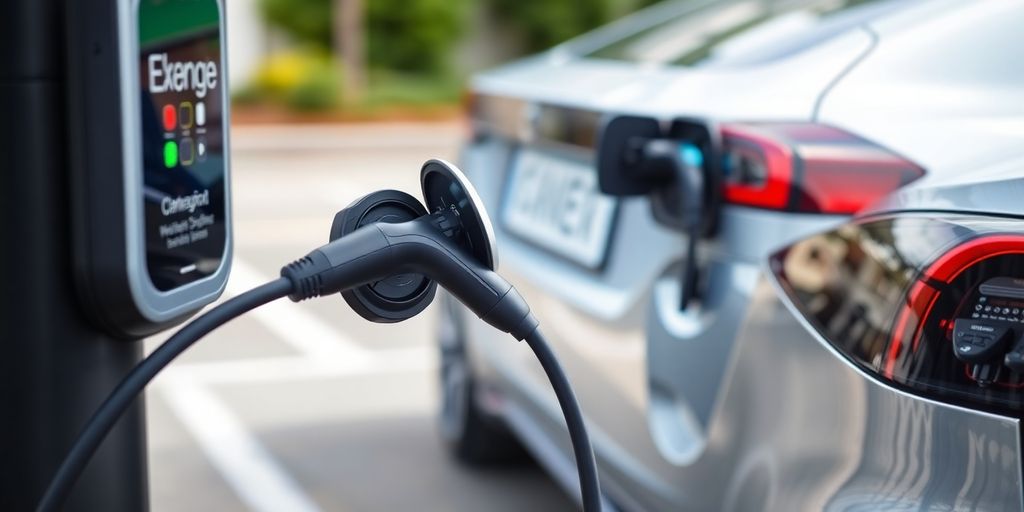
Okay, let’s get into how long it actually takes to charge some popular EVs. It’s not a one-size-fits-all answer, because battery size and charger speed both play a huge role. Think of it like filling up different sized gas tanks with different sized hoses.
Nissan LEAF Charging Durations
Let’s start with the Nissan LEAF. This is a pretty common EV, so it’s a good benchmark. The charging time for a Nissan LEAF can vary quite a bit depending on the charger you’re using.
| Charger Type | Charging Time (Approximate) |
|---|---|
| 3.7kW Home Charger | 13 hours |
| 7kW Home Charger | 6-7 hours |
| 50kW Rapid Charger | Around 1 hour |
So, if you’re using a regular home charger EV home charging, you’re looking at an overnight charge. But if you can find a rapid charger, you can get a decent charge in the time it takes to grab a coffee and a snack. Keep in mind that these are estimates, and real-world conditions can affect these times.
Tesla Model S Charging Durations
Next up, the Tesla Model S. This is a higher-end EV with a bigger battery, so naturally, it takes longer to charge.
| Charger Type | Charging Time (Approximate) |
|---|---|
| 3.7kW Home Charger | 21 hours |
| 7kW Home Charger | 11 hours |
| 50kW Rapid Charger | Around 1 hour 30 minutes |
As you can see, charging a Tesla Model S from empty using a slow charger can take a while. That’s why many Tesla owners opt for installing a 22kW chargepoint at home or rely on Tesla’s Supercharger network for faster charging on the go.
Mitsubishi Outlander PHEV Charging Durations
Finally, let’s look at the Mitsubishi Outlander PHEV. Being a plug-in hybrid, it has a much smaller battery than a full EV, so charging times are significantly shorter.
| Charger Type | Charging Time (Approximate) |
|---|---|
| 3.7kW Home Charger | 4 hours |
| 7kW Home Charger | 4 hours |
| 50kW Rapid Charger | Around 40 minutes |
Because of its smaller battery, even a standard home charger can fully charge the Outlander PHEV overnight. Rapid charging is super quick, making it convenient for topping up while you’re out and about. It’s worth noting that some PHEVs might not be compatible with the fastest rapid chargers.
Optimizing Your EV Charging Experience
Topping Up Versus Full Charges
Okay, so here’s the deal. Most EV drivers don’t sweat charging from zero to full all that much. It’s way more practical to think about how many miles you’re adding when you plug in for a quick top-up. Think of it like your phone – you usually just give it a boost when you can, rather than waiting for it to die completely. This approach can really change how you think about EV fleet charging and range anxiety.
Cost-Benefit of Different Charger Speeds
Choosing the right charger speed is a balancing act. Sure, rapid chargers are tempting because they’re fast. But they also tend to be pricier. Level 2 chargers, whether at home or public, offer a good middle ground. Slow chargers are the cheapest, but obviously, they take the longest. Here’s a quick breakdown:
- Rapid Chargers: Highest cost, fastest charging.
- Level 2 Chargers: Moderate cost, moderate charging speed.
- Level 1 Chargers: Lowest cost, slowest charging.
Consider how often you need a full charge versus a quick boost. If you mostly do short trips, a slower, cheaper option might be just fine. But if you frequently take long journeys, investing in faster EV charging stations might be worth it.
Daily Charging Habits
Developing good daily charging habits can make owning an EV way easier. Here are a few tips:
- Plug in whenever possible: Even if you don’t need a full charge, topping up whenever you have access to a charger can keep your battery nicely full.
- Take advantage of off-peak hours: Many electricity providers offer lower rates during off-peak hours, usually at night. Set your car to charge then to save money.
- Combine daytime top-ups with overnight charging: This is a great way to ensure your car is always ready to go. Use public chargers for a boost during the day and your home charger overnight.
By following these tips, you can really streamline your EV charging routine and make the most of your electric car.
Wrapping It Up: EV Charging Speed
So, what’s the real deal with how fast EV charging stations work? Well, it’s not a one-size-fits-all answer, that’s for sure. You’ve got everything from super speedy rapid chargers that can get you back on the road in about the time it takes to grab a coffee, to those slower home chargers that do their thing overnight while you’re catching some Zs. It really comes down to your car’s battery size, what kind of charger you’re hooked up to, and even the weather outside. But the good news is, with more and more options popping up, finding a charging solution that fits your life is getting easier all the time. It’s all about picking the right speed for your needs, whether you’re in a hurry or just chilling at home.
Frequently Asked Questions
How long does it take to fully charge an electric car?
The time it takes to fully charge an electric car can be as quick as 30 minutes or as long as 12 hours or more. It mostly depends on how big the car’s battery is and how powerful the charging station is.
How fast do electric cars charge at public stations?
Rapid chargers are the quickest way to power up your EV. For instance, a Nissan LEAF (2018 model) can get a full charge in about an hour or less, a Tesla Model S (2019 model) in under two hours, and a Mitsubishi Outlander PHEV (2018 model) in just 40 minutes.
How long does it take to charge an electric car at home?
At home, typical charging points are either 3.7kW or 7kW. A Tesla Model S (2019) would need 11 to 21 hours for a full charge, a Nissan LEAF (2018) between 4 and 11 hours, and a Mitsubishi Outlander PHEV (2018) about 4 hours.
Can all electric cars use rapid chargers?
Yes, almost all fully electric cars can use rapid chargers. However, most plug-in hybrid electric cars cannot.
What’s the difference in charging time between 7kW and 3.7kW home chargers?
A 7kW home charger will fill up a typical 60kWh electric car battery from empty in just under 8 hours. This is perfect for overnight charging. A slower 3.7kW home charger would take around 16 hours for the same charge.
If my car can charge faster than the charging station, will it charge quicker?
Even if your car can charge at 11kW, if you plug it into a 7kW charging station, it will only charge at the 7kW speed. The car will always charge at the slower of the two rates: its own maximum charging rate or the charging station’s maximum rate.
