


Ever wonder how your phone charges without a cable? Well, imagine that for your electric car! Wireless EV charging is a pretty cool idea, and it’s getting closer to being a normal thing. It basically lets you power up your car just by parking it in the right spot, no messy cords involved. We’re going to break down how does wireless EV charging work, what it’s all about, and why it might be the future for electric vehicles.
Key Takeaways
- Wireless EV charging uses magnetic fields to transfer power without physical contact.
- It’s about as efficient as regular plug-in charging, so you’re not losing much energy.
- You can charge your car simply by parking it over a special pad.
- This technology means no more dealing with bulky cables.
- It could even allow cars to charge while driving on special roads in the future.
Understanding Wireless EV Charging
How Inductive Charging Works
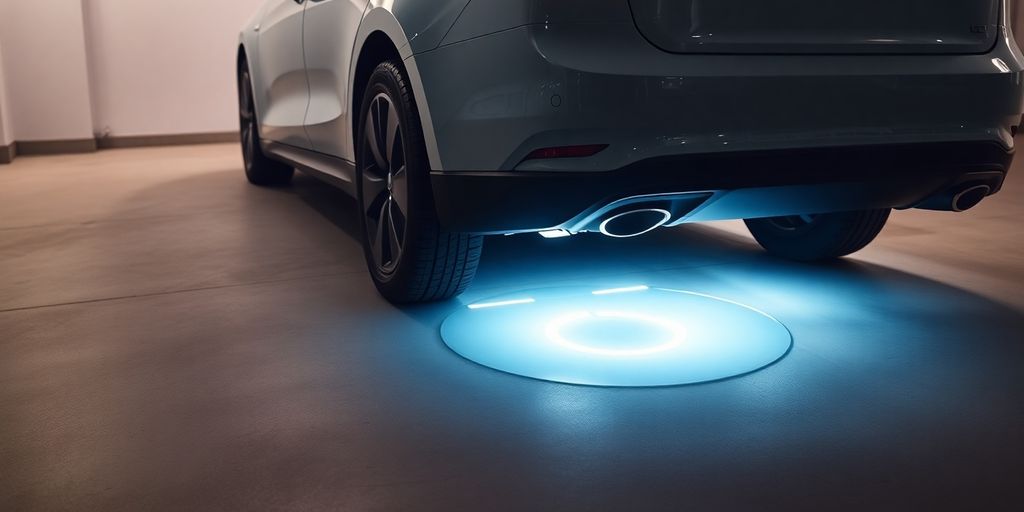
Wireless EV charging, at its core, relies on inductive charging, a method that transfers energy between two objects through an electromagnetic field. Think of it like charging your smartphone on a charging pad, but on a much larger scale. The charging station has a coil that generates an electromagnetic field, and the EV has a receiving coil. When the car is parked over the charging pad, energy is transferred wirelessly, charging the battery. It’s pretty neat, and it eliminates the need to fumble with cables, especially in bad weather.
Magnetic Resonance Technology
While inductive charging is the basic principle, many wireless EV charging systems use magnetic resonance technology. This tech improves the efficiency and range of energy transfer. Instead of just relying on close proximity, magnetic resonance allows for a bit more flexibility in the alignment between the charging pad and the vehicle. It works by tuning the coils in both the charger and the car to resonate at the same frequency. This resonance allows for a more efficient transfer of power, even if the car isn’t perfectly aligned over the charging pad. It’s like hitting the right note on a tuning fork to get another one vibrating.
Efficiency Compared to Plug-In Charging
One of the big questions people have is whether wireless charging is as efficient as plugging in. The good news is that it’s getting pretty close! Early wireless charging systems had some efficiency losses, but newer systems are much better. While plug-in charging can achieve efficiencies of 80-95%, some advanced wireless systems are now hitting 90-93%. This means you’re not losing a ton of energy in the transfer. Plus, the convenience factor is a huge win for many EV owners.
Here’s a quick comparison:
| Charging Method | Efficiency (Approximate) |
|---|---|
| Plug-In (Level 2) | 80-95% |
| Wireless (Modern) | 90-93% |
Benefits of Wireless EV Charging
Enhanced Convenience and Time Savings
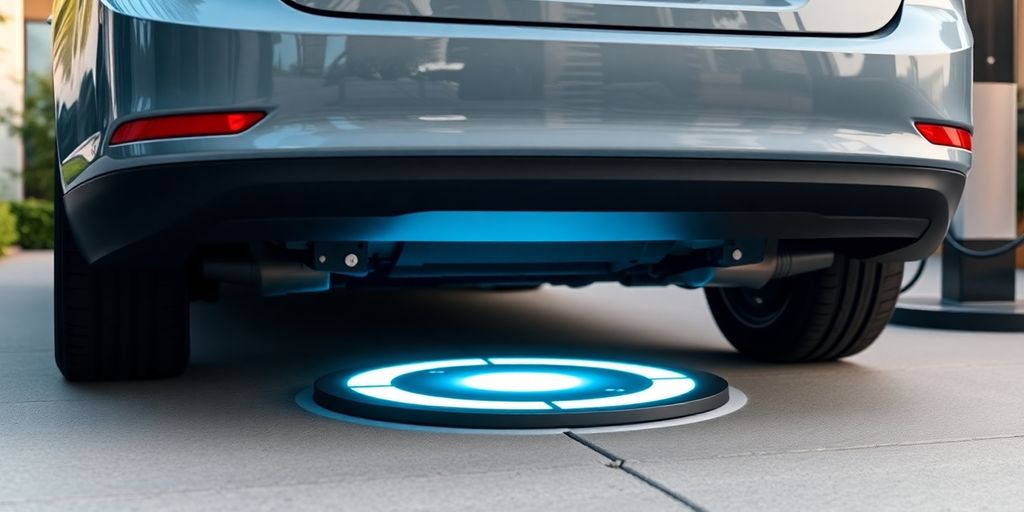
Wireless EV charging really shines when it comes to convenience. Imagine never having to fumble with cables again, especially in bad weather. You just park over the charging pad, and the charging starts automatically. This saves time and effort, making the whole EV ownership experience much smoother. Think about it: no more wrestling with tangled cords in the garage or at public charging stations. It’s a simple, hands-free way to keep your EV powered up. Plus, with wireless charging, you can "powersnack" your electric vehicle whenever you park, maintaining the battery’s charge throughout the day without any extra effort.
Improved Safety and Reduced Risk
Traditional charging cables can become damaged over time, especially with exposure to extreme temperatures or constant wear and tear. Damaged cables pose a safety risk, potentially leading to electric shock or other hazards. Wireless charging eliminates this risk entirely. There are no cables to trip over, no connectors to corrode, and no wires to become frayed. This makes the charging process safer for both the vehicle owner and anyone nearby. Plus, you won’t have to worry about the expense of replacing damaged cables, which can add up over time.
Cable-Free Charging Experience
The most obvious benefit of wireless EV charging is the elimination of cables. This not only enhances convenience and safety but also contributes to a cleaner, more streamlined charging experience. No more bulky cables cluttering your garage or trunk. With wireless charging, you simply park and charge, enjoying a hassle-free way to keep your EV ready to go. This cable-free approach is particularly appealing for those who value simplicity and ease of use. It’s a small change that can make a big difference in the overall EV ownership experience. Wireless charging is just as efficient as a Level 2 plug-in charger, so you don’t have to sacrifice charging speed for the convenience of a cable-free experience.
Types of Wireless EV Charging
Wireless EV charging isn’t just one thing; there are a couple of different ways it can work, each with its own advantages and use cases. Let’s break down the main types you’ll encounter.
Static Charging for Homes and Offices
Static charging is probably what comes to mind when you first think about wireless EV charging. It’s the kind where your car is stationary while it’s getting its juice. Think of it like a wireless charging pad for your phone, but on a much larger scale. Instead of plugging in, you simply park your EV over a charging pad, usually installed on your garage floor or in a designated parking spot. The charging begins automatically. It’s super convenient for home or office use. Imagine pulling into your garage after a long day and not having to fumble with cables – just park and charge! This is great for home EV charging.
Dynamic Charging on Roads and Highways
Now, this is where things get really interesting. Dynamic charging refers to the ability to charge your EV while it’s in motion. The idea is that special charging coils would be embedded in the road, allowing your car to charge as you drive. This is still largely in the development and testing phase, but the potential is huge. Imagine driving down the highway and constantly replenishing your battery, eliminating range anxiety altogether! Of course, there are significant infrastructure challenges to overcome, and the costs would be substantial. Stellantis is already working on solutions to build dynamic EV charging into roadways. It’s expected to operate smoothly at speeds up to 65 mph, allowing EV owners to drive long distances without having to stop for a charge or risk running out of power. It’s a long-term vision, but it could revolutionize EV ownership. Here’s a quick comparison:
- Static Charging:
- Convenient for home and office
- Simple installation
- Lower initial cost
- Dynamic Charging:
- Enables continuous charging on the move
- Reduces range anxiety
- Requires significant infrastructure investment
Current State of Wireless EV Charging
Market Availability and Projections
Wireless EV charging is no longer a concept from the distant future; it’s here, albeit in limited market availability. You can find it in parts of Europe and Asia, and the buzz suggests it’s heading to the USA soon. The global wireless electric vehicle charging systems market is projected to exceed $825 million by 2027. That’s a lot of juice! People are excited about it too. One study showed that a large percentage of EV owners are interested in wireless charging capabilities.
Key Industry Players and Innovations
Several companies are making waves in the wireless EV charging space. WiTricity, for example, is a big name, licensing its tech to others. Then you have Continental AG, working on solutions for electric vehicles. Even Tesla got in on the action, acquiring Wiferon, a German wireless EV charging supplier. It feels like everyone is waiting to see what Tesla does next. FLO EV Charging is also keeping a close eye on things, anticipating further developments. These companies are pushing the boundaries, working on making wireless charging more efficient and accessible. It’s a competitive field, and innovation is happening fast. The Society of Automotive Engineers (SAE) published official standards for EV charging in 2020, and automakers are now quietly testing and prototyping.
Wireless EV Charging Infrastructure
Installation and Cost Considerations
Getting wireless EV charging set up isn’t quite as simple as plugging something into the wall. It involves a bit more planning and, of course, some costs to think about. The initial expense can be higher than traditional plug-in chargers, but the convenience factor is a big draw for many.
- Home Installation: For home setups, you’ll need a qualified electrician to install the charging pad and ensure it’s properly connected to your electrical system. This can involve some digging and concrete work, depending on whether you want it flush with your driveway or garage floor.
- Commercial Installation: Businesses looking to offer wireless charging will face similar installation considerations, but on a larger scale. Parking lot layouts, electrical capacity, and accessibility all play a role.
- Cost Breakdown: Expect to pay for the charging equipment itself, which currently can be around $3,500 plus installation. Installation costs can vary widely depending on the complexity of the job. Don’t forget to factor in potential upgrades to your electrical panel if needed. Thinking about EV charging stations can help you plan your budget.
Future Roadway Integration
The really exciting part of wireless EV charging is the potential for dynamic charging – charging while you drive! This is still in the early stages, but the idea is to embed charging coils in roadways. Imagine driving down the highway and your car is charging the whole time. No more range anxiety!
- Pilot Programs: Several pilot programs are underway to test the feasibility of dynamic charging. These involve installing charging coils in short stretches of road and testing them with specially equipped vehicles.
- Infrastructure Challenges: Integrating wireless charging into existing roadways is a massive undertaking. It requires significant investment, coordination between government agencies and private companies, and addressing technical challenges like durability and efficiency.
- Long-Term Vision: The long-term vision is to create a network of wirelessly charging roads that would allow EVs to travel long distances without stopping to charge. This would revolutionize transportation and accelerate the adoption of electric vehicles. It’s a big dream, but companies like Continental AG are working hard to make it a reality.
The Charging Process Explained
Simple Parking and Charging Steps
Okay, so you’re thinking about ditching the cable and going wireless with your EV? Here’s the lowdown on how it actually works. It’s way simpler than you might think. Basically, you just park your car over a charging pad. Seriously, that’s pretty much it.
Here’s a breakdown:
- Park Over the Pad: Use your car’s display or camera system to guide you. You don’t have to be perfect, but close is good. DC charging is easier than you think.
- Engage Park: Put your car in park. This is important for safety, obviously.
- Charging Starts Automatically: The system should kick in automatically. You’ll probably see a notification on your car’s screen confirming that charging has started. If not, check your car’s manual or the charging system’s instructions.
- Walk Away: That’s it! Go do your thing. Shop, work, binge-watch your favorite show – whatever.
- Charging Stops Automatically: Once your battery reaches the desired level (or is full), the charging should stop on its own.
It’s almost like magic, but it’s really just science. The car and the charging pad communicate, and power flows without you having to lift a finger (except to park, of course).
Optimizing Battery Health with Wireless Charging
Wireless charging is convenient, but what about your battery? Can it actually help keep your battery in good shape? Here’s the deal:
- Consistent, Smaller Charges: Wireless charging makes it super easy to "top off" your battery whenever you park. This can be better for long-term battery health than waiting until it’s almost empty and then doing a full charge. Think of it like snacking throughout the day instead of eating one huge meal. This is especially useful when considering EV charging times.
- Reduced Heat: Some wireless charging systems are designed to minimize heat generation during the charging process. Excessive heat is bad for batteries, so this can be a plus.
- Smart Charging Management: Many modern EVs have sophisticated battery management systems that work with wireless chargers to optimize the charging process. This includes things like adjusting the charging rate to prevent overcharging and managing the battery’s temperature.
However, it’s not all sunshine and roses. Wireless charging can be less efficient than plugging in, meaning some energy is lost in the transfer. This could generate more heat, but good systems are designed to minimize this. Also, like any charging method, it’s still important to avoid consistently charging to 100% if you don’t need to, as this can degrade the battery over time. Wireless charging offers a convenient way to maintain optimal battery health through frequent, smaller charging sessions.
Future Outlook for Wireless EV Charging
Anticipated Technological Advancements
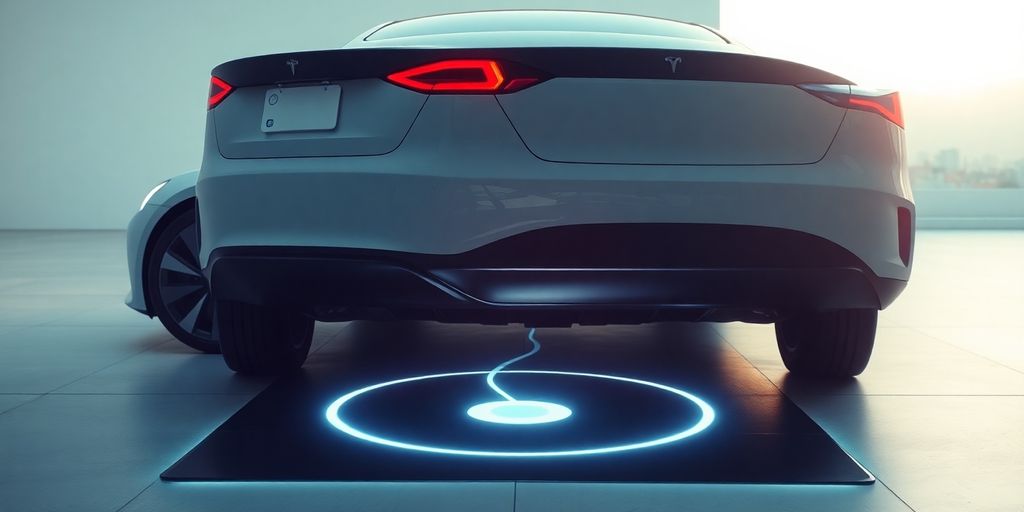
Wireless EV charging is still pretty new, but it’s expected to get way better in the coming years. One area to watch is charging speed. Right now, it’s not as fast as plugging in, but companies are working on boosting the power transfer. There’s also research into making the systems more efficient, so less energy is lost during charging. Another cool thing is the potential for dynamic charging built into the roadways, where you can charge while driving. Imagine never having to stop at a charging station again! That would be a game-changer.
Industry Adoption and Standardization
Right now, wireless EV charging is kind of all over the place. Different companies use different tech, and there aren’t many universal standards. But that’s starting to change. Organizations like SAE have published official standards, and more automakers are getting on board. As more EVs come with wireless charging capabilities, and as more public charging spots add wireless options, it’ll become way more common. It’s like when WiFi first came out – it took a while, but now it’s everywhere. The hope is that wireless EV charging will follow a similar path. The global wireless electric vehicle charging systems market is projected to exceed $825 million by 2027.
Here are some things that need to happen for wireless EV charging to really take off:
- More EVs need to have it as an option. Right now, only a few cars offer it. If more automakers include it, that’ll drive adoption.
- We need more public charging spots. It’s not much use if you can only charge at home. Public wireless charging spots will make it way more convenient.
- The cost needs to come down. Wireless charging systems can be expensive. As the tech gets more common, the price should drop, making it more accessible.
Wrapping It Up
So, that’s the scoop on wireless EV charging. It’s pretty cool how it all works, right? No more fumbling with cables or trying to find a plug. Just park your car, and it starts charging. It’s efficient, it’s easy, and it really feels like the future is here. While we might not see super-fast wireless charging everywhere just yet, the idea of charging your car just by driving over a special road is definitely something to look forward to. It’s clear this tech is going to make owning an EV even simpler for everyone.
Frequently Asked Questions
How does wireless EV charging actually work?
Wireless EV charging works by using special magnetic fields to send power from a pad on the ground to a receiver on the car. When the car parks over the pad, the magnetic fields link up, and electricity flows without any cables. It’s like how some cell phones charge wirelessly.
Is wireless EV charging as efficient as plugging in?
Yes, wireless EV charging is just as good as plugging in your car. Many wireless systems can charge your car with 90-93% efficiency, which is very close to the 80-95% efficiency of most plug-in chargers.
What are the biggest advantages of wireless EV charging?
The main benefits are convenience and safety. You don’t have to deal with messy cables, and there’s less risk of tripping or damaging charging cords. It also saves you a little time since you just park and go.
What are the different kinds of wireless EV charging?
There are two main types: static and dynamic. Static charging is for when your car is parked, like at home or in a parking lot. Dynamic charging is a newer idea where your car could charge while driving on special roads with charging pads built in.
Is wireless EV charging available right now?
While not super common yet, wireless EV charging is becoming more available. Companies like WiTricity are leading the way, and even big car makers are looking into it. Some places in Europe and Asia already have it, and it’s expected to grow in the USA soon.
How much does it cost to get a wireless EV charger?
The cost can vary, but a home wireless charging system might be around $3,500, plus installation fees. As more companies get involved and the technology becomes more common, these prices might change.
