


Electric vehicle (EV) charging stations are becoming a common sight, and for good reason. With more people switching to EVs, businesses are finding ways to profit from this trend. But how does EV charging make money? This article will explore the various revenue models and strategies that businesses can use to turn EV charging into a profitable venture.
Key Takeaways
- EV charging stations can generate revenue through pay-per-use and subscription models.
- Location matters; stations in high-traffic areas attract more customers and increase profits.
- Charging stations can enhance customer experience and lead to longer visits and additional sales.
- Dynamic pricing strategies can optimize earnings based on demand and charging times.
- Government incentives can help offset installation costs and boost profitability.
Understanding EV Charging Revenue Models
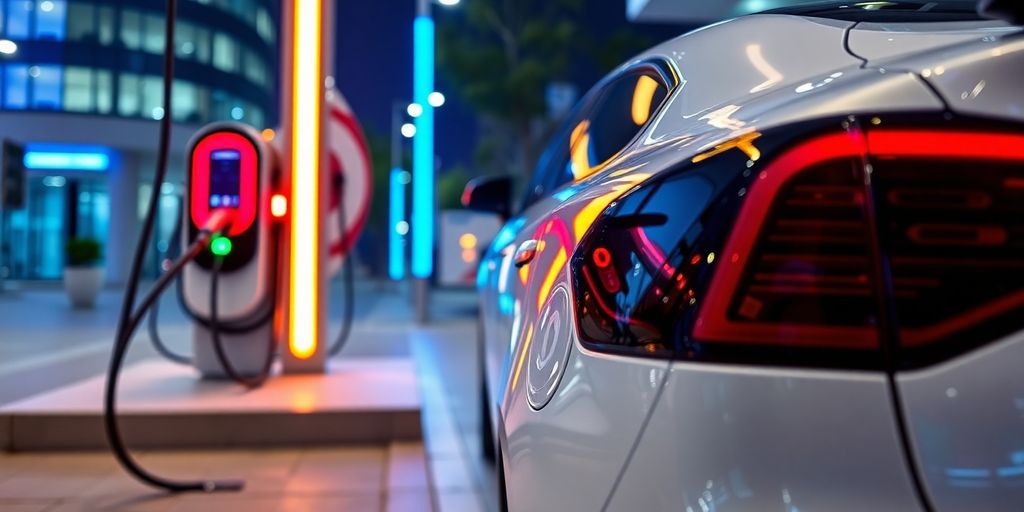
So, you’re thinking about getting into the EV charging game? Awesome! But how do you actually make money doing it? There are a few different ways to approach it, and the best one for you will depend on your location, your target customers, and how much you want to invest upfront. Let’s break down the main revenue models.
Pay-Per-Use Charging
This is probably the most straightforward model. Customers pay for each charging session, either based on the amount of electricity they use (kWh) or the amount of time they spend plugged in. Think of it like filling up at a gas station, but with electrons. The price can vary depending on the time of day, the location, and the speed of the charger. For example, DC fast chargers will usually cost more per minute than Level 2 chargers. This model works well in high-traffic areas where people need a quick charge, like rest stops or shopping centers. It’s also pretty easy to understand for customers, which is a plus. You can use apps like the enhanced Electrify America app to improve visibility of EV chargers.
Subscription-Based Models
Instead of paying each time, customers pay a recurring fee (monthly or annually) for access to your charging network. This can be a good option for people who charge their EVs regularly and want predictable pricing. It’s like a gym membership, but for your car! The subscription fee might give them unlimited charging, or a certain amount of kWh per month. This model can provide a steady stream of income for you, and it can also help build customer loyalty. Plus, it can be attractive to EV drivers who want to avoid the hassle of paying each time they charge. AMPPAL offers guidance for building EV charging stations in new homes.
Advertising Opportunities
Don’t underestimate the power of advertising! While people are waiting for their cars to charge (which can be anywhere from 20 minutes to a few hours), they’re a captive audience. You can sell advertising space on the charging station itself, or on a screen nearby. This could be anything from local businesses to national brands. You could also partner with nearby businesses to offer discounts or promotions to EV drivers while they’re charging. This can be a win-win situation: you generate extra revenue, and the businesses get more customers. Just make sure the ads are relevant and not too intrusive, or you might annoy your customers. Think about offering local businesses the chance to advertise to a specific demographic, or even partnering with sustainable brands to align with the eco-friendly nature of EVs.
Attracting Customers Through EV Charging Stations
It’s not just about being ready for the future; putting in EV charging stations is a smart way to get more people to visit your business and make more money. Let’s look at how adding public EV charging can help your business grow.
Enhancing Customer Experience
Think about it: people with EVs need to charge. If you’ve got a charging station, you’re solving a problem for them. This convenience can really improve how customers see your business. It shows you’re thinking about their needs and are up-to-date with new technology. Plus, it puts your business on the map in apps like Google Maps and PlugShare, making it easier for EV drivers to find you when they need a charge. Rivian owners will soon be able to access Tesla’s Supercharger network, which shows how important it is to improve EV infrastructure.
Increasing Dwell Time
When someone stops to charge their EV, they’re going to be there for a bit. This gives you a chance to sell them other stuff. Maybe they’ll grab a coffee, a snack, or even do some shopping while they wait. The longer they stay, the more likely they are to spend money. It’s a simple idea, but it can really boost your sales. Studies show that the extra money from people coming into your store or restaurant is often more than what you make from the charging itself.
Cross-Selling Opportunities
EV drivers are often a pretty desirable customer base. They tend to be younger, more educated, and have more money to spend. So, while they’re charging, you can try to sell them higher-end products or services. Think about it: someone who cares about the environment and drives an EV might also be interested in organic food, eco-friendly products, or other premium items. By offering AC and DC charging, you can cater to different driver needs and encourage them to spend more time and money at your location.
Profitability of Commercial EV Charging Stations
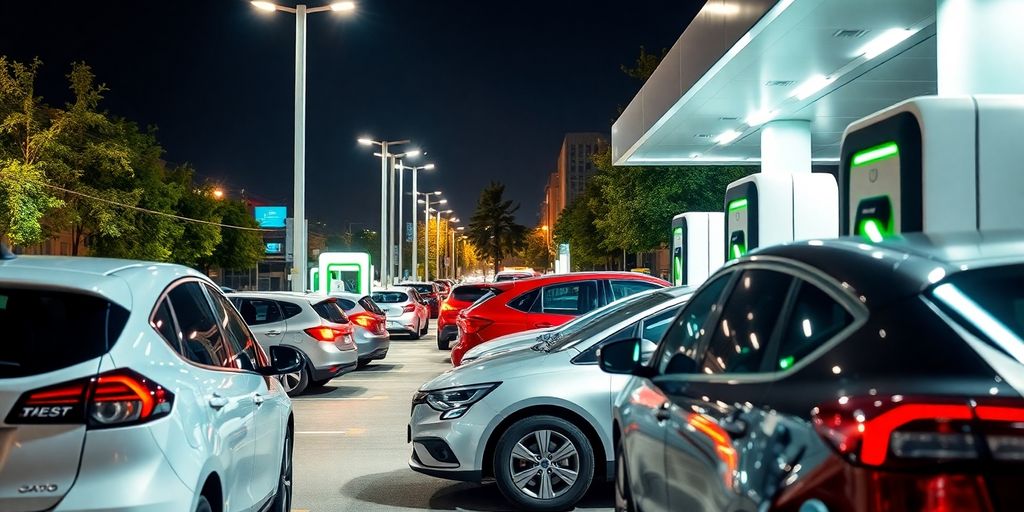
Revenue from Electricity Sales
Okay, so how do you actually make money with these things? The most obvious way is selling electricity. People pay for the juice they use, just like at a gas station. You set a price per kWh, and EV drivers pay to charge up. It’s pretty straightforward. A lot of EV drivers will pay up to $3 an hour to charge at a commercial station, and some will even pay $4!
Impact of Location on Profitability
Location, location, location! It’s not just a real estate thing; it’s huge for EV charging stations, too. A charging station in a busy shopping center or near a highway is going to see way more use than one tucked away in an industrial park. Think about where EV drivers are likely to be and where they’ll need a charge. High-traffic areas equal more potential customers. Also, consider the local competition. Are there already a bunch of charging stations nearby? If so, you might need to adjust your pricing or business model to attract customers.
Long-Term Financial Benefits
Beyond just selling electricity, think about the long game. EV charging stations can bring in more customers to your business. People are more likely to visit a place where they can charge their car. This can lead to increased sales and revenue for your main business. Plus, having charging stations can boost your property value and make it more attractive to tenants. It’s an investment that pays off in more ways than one. You can also explore options to maximize profits by billing customers directly, increasing foot traffic, or even partnering with outside companies for branding opportunities. The key is to explore the possibilities and find what works best for your specific situation. The EV market is growing, and getting in early can give you a serious edge.
Pricing Strategies for EV Charging
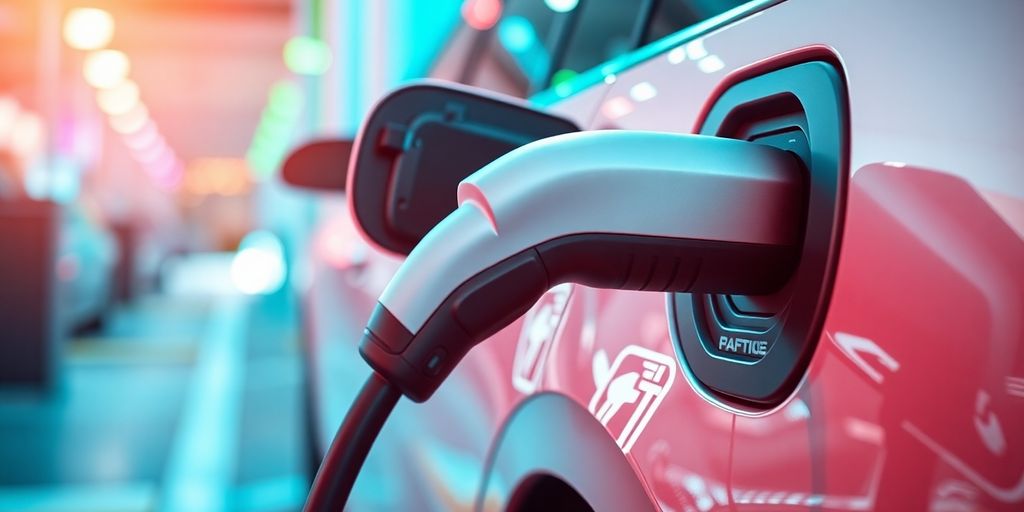
Alright, so you’re setting up EV chargers and want to make some money, right? A big part of that is figuring out how to price your charging services. It’s not just about covering costs; it’s about attracting customers and staying competitive. Let’s break down some common pricing strategies.
Dynamic Pricing Models
Dynamic pricing is all about changing your rates based on demand, time of day, or even the weather. Think of it like surge pricing for ride-sharing apps. The idea is to maximize revenue during peak hours and attract customers during off-peak times. For example, you might increase prices during the morning and evening commutes when more people need a charge. Or, you could lower prices on weekends to encourage more use. You’ll need a charging management platform to easily adjust these settings. This can help balance the load on your EV charging stations and make the most of your investment.
Flat Rate vs. Time-Based Charging
This is a classic debate. A flat rate is simple: you charge a fixed fee per charging session, regardless of how much electricity is used or how long it takes. This is easy to understand, but it might not be the most fair if some cars charge much faster than others. Time-based charging, on the other hand, charges by the hour or minute. This can be more equitable, but it also requires more monitoring and can be confusing for customers. Some places also add a connection fee. It really depends on your location and the needs of your customers. For example, if you’re in a high-traffic area, pay-per-use charging can be quite profitable. You can also set your own charging fees and adjust them as needed.
Incentives and Discounts
Everyone loves a good deal! Offering incentives and discounts can be a great way to attract and retain customers. Consider offering lower rates for members, discounts for charging during off-peak hours, or even partnerships with local businesses to offer bundled deals. For example, a coffee shop could offer a discount to EV drivers who charge while they grab a coffee. You could also offer a subscription model for regular users, providing a steady income stream. Don’t forget about government incentives like tax credits and rebates, which can make your charging station even more attractive to potential customers.
The Role of Government Incentives
Government incentives are a big deal when it comes to making EV charging more widespread and profitable. They help lower the initial costs and make it easier for businesses and individuals to invest in EV infrastructure.
Tax Credits and Rebates
Tax credits and rebates are like getting a discount after you buy something. The government offers these to people and businesses that purchase and install EV chargers. For example, the Inflation Reduction Act includes a tax credit for EV charging stations in low-income or non-urban areas. These incentives can significantly reduce the overall cost, making it more attractive to invest in charging stations. It’s like getting a head start in the EV charging game.
Grants for Infrastructure Development
Grants are another way the government helps build up the EV charging network. These are basically free money (well, not really, but you know what I mean) that can be used to cover a big chunk of the costs of setting up charging stations. The National Electric Vehicle Infrastructure (NEVI) Formula Program, for instance, can fund a large percentage of project costs for charging stations that meet certain criteria. This helps convenience stores install EV chargers and other businesses get charging stations up and running without breaking the bank.
Support for Renewable Energy Integration
It’s not just about getting more chargers out there; it’s also about making sure they’re powered by clean energy. The government often provides incentives for integrating renewable energy sources, like solar power, with EV charging stations. This can include tax credits for installing solar panels or grants for using renewable energy to power the chargers. This not only reduces the carbon footprint of EV charging but can also lower electricity costs in the long run. It’s a win-win for the environment and your wallet.
Building Brand Loyalty with EV Charging
Positioning as an Eco-Friendly Business
More and more people care about the environment, and they want to support businesses that do too. By offering EV charging, you’re showing that you’re committed to sustainability. This can really boost your brand’s image and make customers feel good about choosing you. Think of it as a way to tell everyone that your organization is openly committed to a more sustainable future.
Attracting Environmentally Conscious Consumers
EV drivers are often more environmentally aware than the average consumer. They’re actively looking for businesses that share their values. Having Level 2 charging for Tesla and other EVs can be a major draw for this group. They’re far more likely to choose a location where they can charge their vehicle. Plus, these drivers are likely to turn into loyal, repeat customers once they know your business offers this service.
Leveraging Sustainability Certifications
Did you know that having EV charging stations can help you earn sustainability certifications? Things like LEED or GBB can really set you apart. These certifications show that you’re serious about sustainability, and they can attract even more environmentally conscious customers. It’s a great way to calculate charging prices and show your commitment to a greener future.
Here’s a simple breakdown of how it works:
- Install EV charging stations.
- Meet the requirements for certifications like LEED or GBB.
- Promote your certifications to attract eco-conscious customers.
It’s a win-win!
Future Trends in EV Charging Profitability
The EV charging landscape is constantly evolving, and understanding future trends is key to maximizing profitability. Let’s look at what’s coming.
Technological Advancements
Technology is going to keep changing the game. Expect faster charging speeds, wireless charging, and more efficient energy storage solutions. These advancements will reduce charging times and improve the overall user experience. For example, solid-state batteries could dramatically increase energy density, leading to faster charging and longer ranges. Better grid management systems will also play a role, optimizing energy distribution and reducing costs. Imagine pulling up to a charging station and getting a full charge in just 15 minutes – that’s the direction we’re headed. This will also impact EV infrastructure and how it’s built.
Market Growth Projections
The EV market is projected to grow significantly in the coming years. As more people switch to electric vehicles, the demand for charging stations will increase, creating more opportunities for revenue generation. Consider these points:
- Increased EV adoption rates, especially as prices come down.
- Expansion of charging infrastructure in urban and rural areas.
- Growing demand from fleet operators transitioning to electric vehicles.
With more than 40 million EVs expected to be on the road, the need for EV charging network at commercial properties will only increase. This growth will drive higher utilization rates for charging stations, making them more profitable.
Emerging Business Models
New business models are emerging to capitalize on the growing EV charging market. These include:
- Battery swapping services: Instead of charging, drivers can quickly swap their depleted batteries for fully charged ones.
- Mobile charging solutions: On-demand charging services that come to the vehicle’s location.
- Integration with renewable energy sources: Charging stations powered by solar or wind energy, reducing operating costs and environmental impact.
These innovative approaches offer new ways to generate revenue and attract customers. For example, integrating charging stations with local businesses can create a synergistic relationship, driving traffic and increasing sales for both parties. The key is to stay flexible and adapt to the changing needs of the EV market.
Wrapping It Up
In conclusion, getting into the EV charging game can really pay off. With more folks switching to electric cars, the demand for charging stations is only going to rise. By setting up these stations, businesses can not only make money from charging fees but also draw in more customers who might stick around and spend while they wait. Plus, it helps boost your brand image as eco-friendly, which is a big deal these days. So, if you’re thinking about adding EV chargers to your property, it’s definitely worth considering. It’s a smart move for both your wallet and the planet.
Frequently Asked Questions
How do EV charging stations make money?
EV charging stations earn money by charging drivers for the electricity they use. They can set prices based on how much power is consumed or how long the car is plugged in.
What types of payment models are used for EV charging?
There are several payment models, including pay-per-use, where drivers pay for the electricity they use, and subscription models, where users pay a monthly fee for unlimited charging.
Can businesses attract more customers with EV charging stations?
Yes! Having EV charging stations can draw in more customers. Many EV owners prefer to shop at places where they can charge their cars.
What pricing strategies work best for EV charging?
Businesses can use different pricing strategies like dynamic pricing, where costs change based on demand, or flat rates, where customers pay a set fee regardless of usage.
Are there government incentives for installing EV chargers?
Yes, many governments offer tax credits, rebates, and grants to help businesses cover the costs of installing EV charging stations.
What are the future trends in EV charging profitability?
Future trends include more technological advancements, growth in the EV market, and new business models that could help increase profits from charging stations.
