


Figuring out how long it takes to charge an electric car can feel a bit like solving a puzzle, right? There’s no single, simple answer because a bunch of things can change the charging time. It’s not just about plugging it in and walking away. We’re talking about everything from the kind of charger you’re using to the size of your car’s battery. This guide will help clear up all those questions about ev charging stations how long they take.
Key Takeaways
- Charging duration depends on your car’s battery size and the charger’s power.
- Most EV drivers top up their charge often, rather than waiting for an empty battery.
- A 7kW home charger can fill a typical EV battery overnight, which is super convenient.
- Rapid chargers can add a lot of range in a short time, perfect for quick stops.
- It’s helpful to know how many miles you get per hour of charging, not just full charge times.
Understanding EV Charging Stations How Long

So, you’re thinking about getting an electric vehicle (EV), or maybe you already have one. One of the first questions that pops into everyone’s head is: "How long does it take to charge these things?" It’s not as simple as filling up a gas tank, but it’s also not as complicated as you might think. Let’s break it down.
Factors Influencing Charging Duration
Okay, so how long it takes to charge an EV depends on a bunch of things. First, there’s the size of the battery. A bigger battery obviously takes longer to fill up than a smaller one. Then, there’s the charger itself. Are you using a regular wall outlet, a Level 2 charger at home, or a super-fast DC fast charger? The charger’s power output makes a huge difference. Finally, the car’s maximum charging rate matters. Some cars can take in power faster than others. All these things play a part.
Typical Charging Times for Electric Vehicles
Let’s talk numbers. If you’re using a standard 120V wall outlet (Level 1 charging), you might only get a few miles of range per hour of charging. A Level 2 charger (240V), which you can install at home, is much faster – you could get 20-30 miles of range per hour. DC fast chargers are the speed demons, adding significant range in a short amount of time – think 50 miles in 30 minutes, or even faster with the newest chargers. Here’s a quick comparison:
- Level 1 (120V): 3-5 miles of range per hour
- Level 2 (240V): 20-30 miles of range per hour
- DC Fast Charger: 50+ miles in 30 minutes
The Concept of Top-Up Charging
One thing to keep in mind is that you don’t always have to charge from empty to full. Most EV owners "top-up" their batteries regularly, just like you might top off your phone’s battery throughout the day. This means you’re often only adding a partial charge, which takes less time. Plus, charging speed slows down as the battery gets closer to full, so it’s often more efficient to charge to 80% and then unplug.
Home Charging: EV Charging Stations How Long
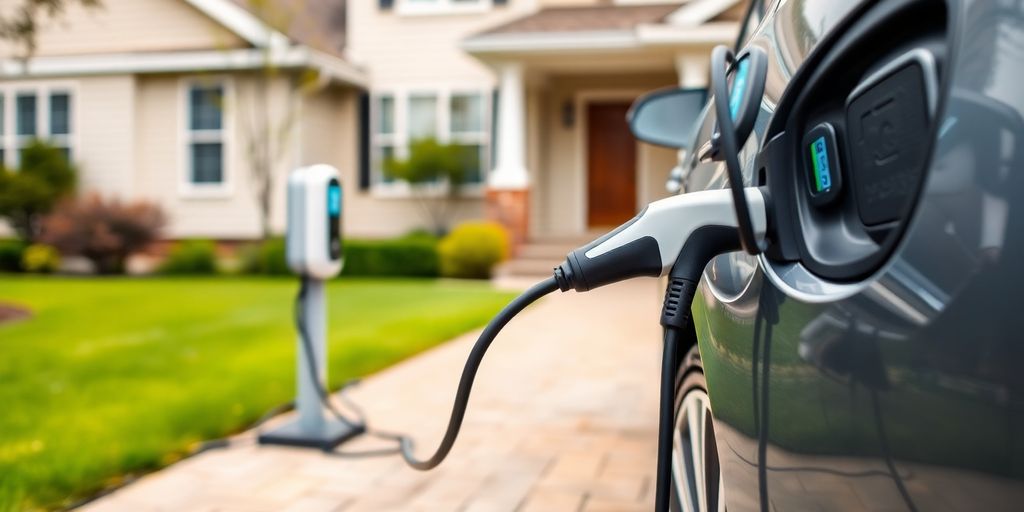
Home charging is super convenient, right? I mean, who wants to sit around at a charging station when you could be sleeping? Let’s get into the details of how long it takes to charge your EV at home.
Overnight Charging Convenience
The best part about home charging is that you can plug in your car before bed and wake up to a full battery. It’s like magic, but with electricity. No more detours to public charging stations – just a fully charged car ready to go when you are. Plus, you usually get cheaper electricity rates overnight, which is a nice bonus. I usually plug mine in around 10 PM and it’s good to go by 7 AM.
Comparing 3.7kW and 7kW Home Chargers
Okay, so here’s where it gets a little technical, but don’t worry, it’s not rocket science. You’ve got a couple of options for home chargers, mainly 3.7kW and 7kW. The higher the kW, the faster the charging. A 3.7kW charger is like a slow sipper, while a 7kW charger is more like gulping down your drink. Here’s a quick comparison:
- 3.7kW Charger:
- Good for smaller EVs or plug-in hybrids.
- Takes longer to fully charge a larger battery.
- Cheaper to install.
- 7kW Charger:
- Charges faster, ideal for larger EVs.
- Can fully charge most EVs overnight.
- Slightly more expensive to install.
To give you an idea, a 60kWh battery might take around 16 hours to charge with a 3.7kW charger, but only about 8 hours with a 7kW charger. Big difference, right?
When 22kW Home Chargers Are Used
Now, you might hear about 22kW home chargers and think, "Wow, that sounds fast!" And you’d be right, they are fast. But here’s the thing: most homes don’t have the electrical setup to handle that much power. These chargers need three-phase power, which is more common in industrial buildings than houses. So, while they’re an option, they’re not really practical for most people. Plus, the cost of upgrading your home’s electrical system can be pretty high. Unless you really need that extra speed and have the cash to splash, a 7kW charger is usually the way to go.
Public Charging: EV Charging Stations How Long
Rapid Charging for Quick Turnarounds
Public charging stations are a game-changer when you’re on the move. Rapid chargers, typically rated at 50kW or higher, can significantly reduce charging times compared to home or slower public chargers. Think of it this way: you can add a substantial amount of range during a quick stop at a rest area or while grabbing a coffee. For example, some EVs can gain around 100 miles of range in about 30-40 minutes using a 50kW rapid charger. This makes public rapid charging ideal for long trips or when you need to quickly replenish your battery.
Cost-Benefit of Slower Public Chargers
While rapid chargers offer speed, they often come with a higher price tag. Slower public chargers, like Level 2 chargers (around 7kW), are usually more economical. These are great if you have more time to spare, such as while you’re at work, shopping, or attending an event. Leaving your car plugged in for a few hours at a slower charger can be a cost-effective way to add range without breaking the bank. It’s all about balancing convenience and cost based on your specific needs.
Accessing Public Charging Networks
Finding and using public charging stations is becoming increasingly easy. Several networks operate across the country, each with its own app or payment system. Here’s what you should know:
- Network Apps: Download apps from networks like Electrify America, ChargePoint, or EVgo to locate stations, check availability, and initiate charging.
- Membership vs. Pay-as-you-go: Some networks offer membership options with discounted rates, while others allow you to pay per session without a membership.
- Location Matters: Public chargers are commonly found at shopping centers, workplaces, highway rest stops, and even some residential areas. Plan your routes accordingly to take advantage of these locations.
- Connector Types: Make sure the charging station has the correct connector for your EV (CHAdeMO, CCS, or Tesla’s proprietary connector).
Maximizing Range: EV Charging Stations How Long
Miles Per Hour of Charging
Okay, so you’re driving an EV, and the range anxiety is starting to creep in. One of the most useful things to know is how many miles of range you’re adding per hour of charging. This helps you figure out if that quick stop is actually going to get you where you need to go. Different chargers give you different mileage gains per hour.
Here’s a rough idea:
| Charger Type | Miles of Range Added per Hour |
|---|---|
| 3.7kW (Slow) | Up to 15 miles |
| 7kW (Fast) | Up to 30 miles |
| 22kW (Fast) | Up to 90 miles |
| 43-50kW (Rapid) | Up to 90 miles in 30 mins |
| 150kW (Rapid) | Up to 200 miles in 30 mins |
Strategic Top-Up Charging Benefits
Instead of always aiming for a full charge, think about "top-up" charging. It’s like grabbing a coffee – a little boost to get you through.
- It keeps your battery in a happy zone (20-80% is often recommended).
- It’s often cheaper, especially if you’re using public chargers with tiered pricing.
- It reduces range anxiety because you’re constantly adding a buffer.
Real-World Charging Habits
Let’s be real, nobody really waits for their EV to hit 0% before charging. Most EV drivers have developed some habits:
- Overnight Charging: Plugging in at home is the most common and convenient way to start each day with a full or near-full battery.
- Workplace Charging: If available, charging at work can significantly reduce the need for public charging.
- Occasional Rapid Charging: For long trips, rapid chargers are a must, but they’re often used sparingly due to cost and potential impact on battery health over time.
Battery Size and Charging Speed: EV Charging Stations How Long
Impact of Battery Capacity on Charge Time
Okay, so picture this: you’ve got two EVs, one with a small battery, like 40 kWh, and another with a massive one, say 100 kWh. The bigger the battery, the longer it’s gonna take to fill ‘er up, plain and simple. It’s like filling a kiddie pool versus an Olympic-sized swimming pool. More water (or in this case, electricity) needed for the big one. Makes sense, right?
Charger Power Ratings Explained
Now, let’s talk chargers. You’ve got your Level 1, Level 2, and DC fast chargers. Think of them like different sized hoses. Level 1 is like a garden hose – slow and steady. Level 2 is a bit bigger, like a regular hose. DC fast chargers? Those are like fire hoses, blasting electricity into your car. The higher the kW (kilowatt) rating, the faster the charge. So, a 50kW charger will juice you up way quicker than a 7kW one. Here’s a quick rundown:
- Level 1 (120V): Slowest, adds a few miles per hour.
- Level 2 (240V): Faster, good for home charging.
- DC Fast Chargers (400V+): Fastest, for road trips.
Vehicle Compatibility with Charging Stations
Here’s the thing: not all cars can handle all chargers. It’s like trying to plug a European appliance into an American outlet without an adapter. Some EVs have a maximum charging rate they can accept. So, even if you plug into a super-fast 350kW charger, if your car’s max is 150kW, that’s all you’re gonna get. Also, some cars use different plugs (CHAdeMO vs. CCS), especially older models. Always double-check that your car and the charging station are compatible before you plug in. It’s a bummer to find out the hard way!
Practical Charging Scenarios: EV Charging Stations How Long
Empty-to-Full Charging Times
Okay, so you’re wondering how long it really takes to charge an EV from zero to 100%. It’s not something most EV drivers sweat over daily, but it’s good to know. A typical EV with a 60kWh battery will take about 8 hours to charge fully using a 7kW home charger. But, if you’re using a rapid charger (150kW), you could be looking at around 30 minutes. Of course, this all depends on the battery size and the charger’s power.
Adding Range with Rapid Chargers
Rapid chargers are a game-changer when you need to add miles quickly. Let’s say you’re on a road trip and need to add 200 miles of range. With a 50kW rapid charger, you could get around 100 miles in about 35 minutes. So, a little over an hour should get you back on the road with plenty of juice. It’s super convenient for those longer journeys when you don’t have time for a full charge.
Charging Hybrid Electric Vehicles
Charging a hybrid is a bit different. Most plug-in hybrids have smaller batteries than fully electric cars. This means they charge much faster. You can usually fully charge a hybrid overnight with a standard home charger. However, many plug-in hybrids cannot use rapid chargers, so keep that in mind. It’s more about topping off the battery to maximize your electric range for daily commutes.
Conclusion
So, we’ve talked a lot about how long it takes to charge an electric car. It really comes down to a few things: the size of your car’s battery and how fast the charger is. You can get a quick boost at a rapid station if you’re in a hurry, or take your time with a slower charger, maybe even overnight at home. Most folks just top up their charge whenever they can, which makes a lot of sense. It’s kind of like charging your phone; you don’t always wait for it to be completely dead before plugging it in. Knowing how many miles you get per hour of charging is probably more helpful than worrying about a full charge from empty. It’s all about fitting charging into your daily routine, making it work for you.
Frequently Asked Questions
How long does it take to charge an electric car at a charging station?
The time it takes to fully charge an electric car can be as short as 30 minutes or longer than 12 hours. This depends on how big the car’s battery is and how fast the charging station can deliver power. For example, a common electric car with a 60kWh battery can get a full charge in under 8 hours using a 7kW home charger. If you’re using a super-fast public charger, that same car could be full in less than 30 minutes.
How long does it take to charge an electric car at home?
Charging your electric car at home usually happens overnight. A typical 7kW home charger can fill up a 60kWh electric car battery from empty in just under 8 hours. This is perfect because it lines up with the time you’re likely sleeping. Slower chargers, like a 3.7kW one, would take about 16 hours for the same job. While 22kW home chargers exist, they’re not very common for homes because they need a special kind of electrical setup that most houses don’t have.
What is top-up charging?
Most electric car owners don’t wait for their battery to be completely empty before charging. Instead, they ‘top up’ their car whenever they park, whether it’s at home overnight, at the grocery store, or at work. This way, the battery stays mostly full, and the car is always ready to go. It’s like how you might charge your phone throughout the day instead of waiting for it to die.
How many miles of range do you get per hour of charging?
When you charge your electric car, it’s helpful to think about how many miles of driving range you get per hour of charging. This number changes based on the type of charger you use. For example, a standard 7kW home charger can add about 25 miles of range per hour. A faster 22kW public charger might give you around 75 miles per hour. The quickest rapid chargers, like a 150kW one, can add hundreds of miles in a short time, sometimes over 500 miles per hour!
What factors affect how long it takes to charge an electric car?
The time it takes to charge your electric car depends on a few main things. First, the size of your car’s battery matters – a bigger battery takes longer to fill. Second, the power of the charger is key; a stronger charger (measured in kilowatts or kW) will charge your car faster. Finally, the car itself plays a role, as different models can accept different charging speeds.
Can all electric cars use rapid chargers?
Yes, almost all fully electric cars can use rapid chargers, which are the fastest type of public charger. However, most plug-in hybrid electric cars cannot use these super-fast chargers. It’s always a good idea to check your car’s manual or the charging station’s information to make sure it’s compatible.
