


If you’re diving into the world of electric vehicles (EVs), you might be curious about how charging works. Specifically, you may wonder, do EV chargers stop charging when full? Unlike traditional gas cars, EVs have different systems in place to manage charging. This article will break down how EV charging works, the technology behind it, and what you should know about charging your electric car safely and efficiently.
Key Takeaways
- EV chargers automatically stop charging when the battery is full.
- Most EVs switch to trickle charging to maintain battery health.
- Overcharging is generally not a concern due to built-in safety features.
- You can set charging limits to optimize battery longevity.
- Public chargers also typically stop charging automatically when full.
Understanding EV Charging Systems
How EV Charging Works
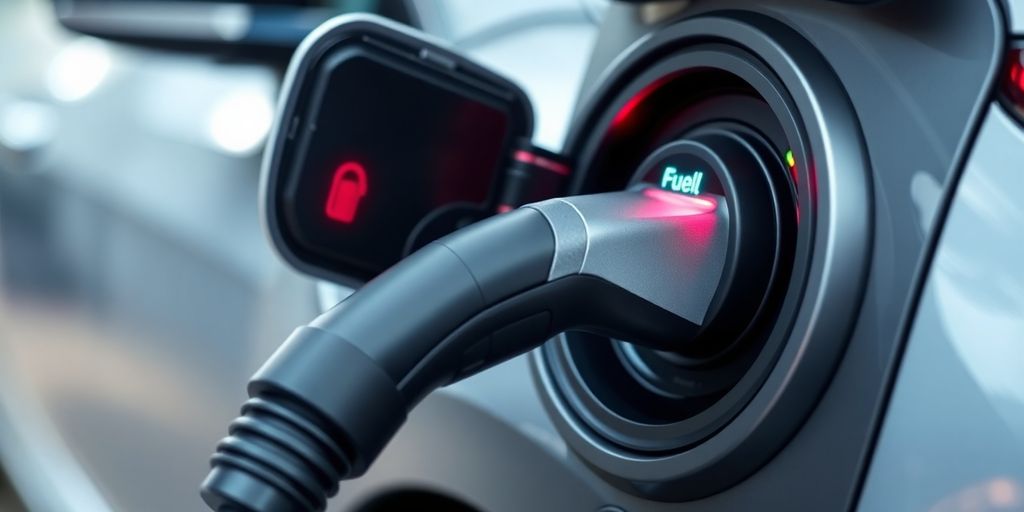
Okay, so how does this whole EV charging thing actually work? It’s not as simple as plugging in your phone. The EVSE (Electric Vehicle Supply Equipment) doesn’t actually "charge" the battery. Instead, your EV has an onboard charger that converts AC power from the grid into DC power that the battery can use. Think of the charging station as more of a power supply than a charger itself. The car decides how much power to draw and when to stop. It’s a smart system, really.
Importance of Battery Management Systems
Battery Management Systems (BMS) are the unsung heroes of the EV world. These systems constantly monitor the battery’s voltage, temperature, and state of charge. They’re like the brain of the battery pack, making sure everything stays within safe operating limits. Without a BMS, you could easily overcharge or over-discharge the battery, which would seriously shorten its lifespan. A good BMS also balances the charge across all the individual cells in the battery pack, ensuring that they all wear evenly. It’s a complex job, but it’s absolutely essential for keeping your EV running smoothly for years to come. You can use EV charging apps to monitor the BMS.
Types of EV Chargers
There are basically three main types of EV chargers, and they’re not all created equal:
- Level 1 Charging: This is your standard household outlet (120V). It’s the slowest way to charge, adding only a few miles of range per hour. Good for topping off, but not practical for a full charge.
- Level 2 Charging: This uses a 240V outlet, like the one your dryer uses. It’s much faster than Level 1, adding around 20-30 miles of range per hour. Most home charging stations are Level 2.
- DC Fast Charging: This is the fastest way to charge, using high-voltage DC power. It can add hundreds of miles of range in an hour, but it’s not available for home use. You’ll find these at public charging stations. It’s important to consider cold weather when using these chargers.
Automatic Charging Cut-Off Features
What Happens When the Battery is Full
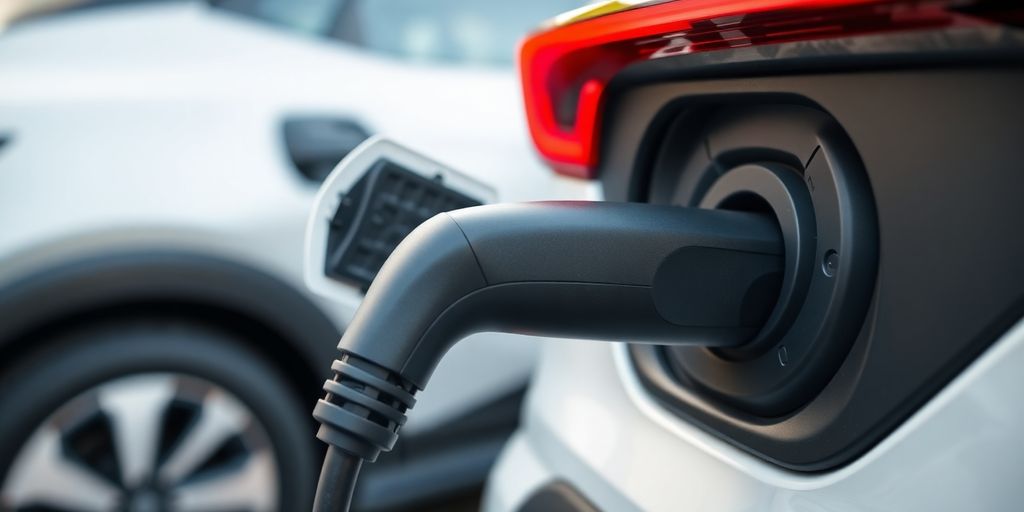
So, you’ve plugged in your EV and are wondering what happens when it hits 100%. Good question! Modern EVs are designed to automatically stop charging once the battery reaches its maximum capacity. This is a standard feature to protect the battery and prevent any potential issues. The car’s battery management system (BMS) communicates with the charger to regulate the charging process. Once full, the BMS signals the charger to cut off the power supply. It’s pretty neat, actually.
Trickle Charging Explained
You might have heard about trickle charging. It’s a bit of a misunderstood concept in the EV world. After your EV reaches full charge, it doesn’t continuously draw significant power. However, the car’s systems still need a little juice to maintain things like the BMS, security, and other background processes. This is where a very small amount of power, a "trickle," might be used. It’s not really charging in the traditional sense, more like keeping the battery topped off. Some cars also perform a cell balancing act, ensuring each cell in the battery pack is at the same voltage. This can take a few hours, but it’s done at a very low power draw. This battery cell balancing is important for long-term battery health.
Safety Mechanisms in EV Charging
Safety is a big deal when it comes to EV charging. That’s why there are multiple layers of protection built into the systems. Besides the automatic cut-off, there are other mechanisms in place to prevent overcharging, overheating, and other potential hazards. These include:
- Temperature sensors: These monitor the battery’s temperature and can reduce or stop charging if it gets too hot.
- Voltage monitoring: The BMS constantly monitors the voltage of the battery pack and individual cells to ensure they stay within safe limits.
- Circuit breakers and fuses: These protect the charging system from overloads and short circuits.
These safety features work together to ensure a safe and reliable charging experience. So, you can rest easy knowing that your EV is designed to protect itself. Investing in EV charging stations with robust safety features is a smart move for peace of mind.
Impact of Overcharging on Battery Life
Consequences of Overcharging
Okay, so, overcharging. It’s something people worry about with EVs, right? The good news is that modern EVs are designed to prevent actual overcharging. However, keeping a battery at 100% for extended periods can still have a negative impact. Think of it like this: it’s not about exploding your battery, but more about potentially shortening its lifespan over time. Leaving your car plugged in for many hours after it hits full charge might degrade the battery faster. It’s a slow burn, not a sudden catastrophe. This is why understanding home EV charging is important.
How EVs Prevent Overcharging
EVs have built-in battery management systems (BMS) that are pretty smart. Once the battery reaches its maximum charge, the BMS either stops the charging process altogether or switches to trickle charging. Trickle charging is like a battery ‘top-up’, maintaining the full charge without actually overcharging. It’s also worth noting that the BMS balances the charge across all the individual battery cells. This process, called equalization, ensures each cell is at the same voltage, which is crucial for battery health. It might run for several hours at a low power, but it’s all part of keeping your battery in good shape. So, can fast charging affect battery life? Yes, but the BMS helps mitigate those effects.
Best Practices for Battery Maintenance
So, what can you do to keep your EV battery happy and healthy? Here are a few things:
- Avoid keeping the battery at 100% for long periods. Once it’s charged, unplug it if you can.
- Try to keep the charge between 20% and 80% for daily use. This seems to be the sweet spot for long-term battery health.
- Use your EV manufacturer’s app (if they have one) to set charging schedules. This lets you control when and how much your car charges.
- Don’t always wait until the battery is almost empty before charging. Regular, smaller charges are generally better than infrequent, full charges.
- Be mindful of extreme temperatures. Both very hot and very cold conditions can impact battery performance and longevity.
EV batteries will degrade over time, that’s just a fact. You might see a range reduction of a few percentage points per year. But by following these best practices, you can help minimize that degradation and keep your EV running smoothly for years to come.
User Control Over Charging Settings
Setting Charging Limits
One of the coolest things about modern EVs is how much control you have over the charging process. It’s not just plug-and-pray anymore. You can actually tell your car, "Hey, only charge up to 80%," or whatever limit you prefer. Why would you do this? Well, charging to 100% all the time can put extra stress on the battery over the long haul. Setting a lower limit, like 80% or 90%, can help extend the battery’s lifespan. Plus, for everyday driving, you probably don’t need a full charge anyway. Most EVs let you set these limits right in the car’s settings, or through a mobile app. It’s super convenient.
Monitoring Charge Status
Gone are the days of guessing how much juice you’ve got left. EVs give you real-time updates on your charging status. You can see exactly how much charge you’ve got, how long it’ll take to reach your desired level, and even the charging speed. Most cars have a display right on the dashboard, and a companion app that lets you check in from anywhere. This is especially handy if you’re using a public charger and want to know when you can unplug the wall charger first. No more waiting around unnecessarily!
Customizing Charging Preferences
EVs let you tailor the charging process to fit your lifestyle. Want to charge only during off-peak hours when electricity rates are lower? No problem. Most EVs let you schedule charging sessions, so you can take advantage of those sweet, sweet savings. You can also set preferences for charging speed, depending on whether you need a quick top-up or a slow, gentle charge. Some cars even learn your driving habits and automatically adjust charging settings to optimize battery health and efficiency. It’s like having a personal charging assistant. For fleet managers, understanding the costs of public and home charging stations is crucial for budgeting and operational efficiency. AMPPAL offers EV charging solutions that can help optimize these costs.
Public Charging Stations and Their Features
Do Public Chargers Stop Charging Automatically?
Yeah, so, do public EV chargers stop charging when your car’s battery is full? Generally, yes, they do. Most public charging stations are designed with automatic shut-off features. Once your EV reaches its maximum charge level, the charging process should cease. This is a standard safety and efficiency measure. I remember using a Chargepoint machine in Vegas, and I got a text the second my car was done charging. It’s pretty cool. However, it’s always a good idea to double-check the specific policies of the charging network you’re using, just to be sure. You can also find EV charging apps to help you monitor the charging status.
Differences Between Home and Public Chargers
Home and public chargers differ in a few key ways. Home chargers are usually Level 1 or Level 2, offering slower charging speeds, but they’re super convenient for overnight charging. Public chargers, on the other hand, can be Level 2 or DC fast chargers, providing much faster charging times. However, public chargers often come with fees, and you might have to wait in line to use one. Plus, the pricing structure can vary; some charge by the kilowatt-hour (kWh), while others charge by the amount of time you’re plugged in. I’ve heard stories about Volt owners getting a raw deal because they charge slower than Teslas, so they end up paying more per kWh when charged by time. It’s something to keep in mind. Also, designing EV charging stations in urban environments requires careful planning.
Understanding Charging Fees
Charging fees at public stations can be a bit of a headache to understand. As I mentioned, some stations charge by the kWh, which seems fair since you’re paying for the energy you use. Others charge by the minute or hour, which can be less ideal if your car charges slower. Some stations also have different rates depending on the time of day or whether you’re a member of their network. And then there’s the issue of idle fees, which some stations impose if you leave your car plugged in after it’s finished charging. It’s always a good idea to check the charging station’s app or website for their fee structure before you plug in. Free charge stations are great but hard to find. Also, remember to check out the largest EV charging company in the US for more options.
Common Myths About EV Charging
Debunking Overcharging Myths
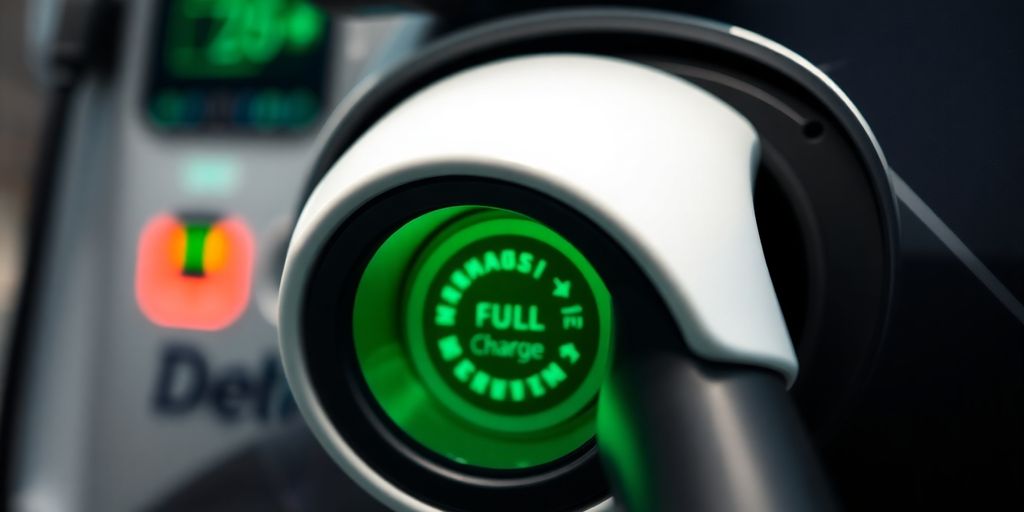
One of the biggest worries people have is about overcharging their EV. The good news is, you really can’t overcharge your EV. Modern EVs have sophisticated battery management systems (BMS) that prevent this. Once your battery hits 100%, the charging either stops completely or switches to a trickle charge to maintain the full charge without causing damage. It’s similar to how your smartphone works; you leave it plugged in overnight, and it’s fine. These systems are designed to protect the battery and extend its life. If you’re still concerned, many EVs let you set a custom charging limit, like 80%, to further ease your mind. This is a great way to manage your EV charging.
Misconceptions About Battery Health
There are a lot of old wives’ tales floating around about EV batteries. Let’s clear some of them up:
- Myth: Fully discharging your battery is good for it. Reality: Unlike older nickel-cadmium batteries, modern lithium-ion batteries in EVs actually prefer to be kept between 20% and 80% charge for optimal health. Deep discharges can stress the battery.
- Myth: Fast charging ruins your battery. Reality: While frequent fast charging can cause slightly more wear over time, it’s not going to destroy your battery. BMS systems manage the process to minimize any potential damage. Plus, advancements in battery technology are making them more resilient to fast charging.
- Myth: Cold weather kills your battery range. Reality: Cold weather does reduce range, but it’s temporary. The cold affects the chemical reactions in the battery, making it less efficient. However, the range returns to normal when the battery warms up. Many EVs also have thermal management systems to help mitigate this.
Clarifying Charging Time Expectations
People often underestimate how long it takes to charge an EV, especially when comparing it to filling up a gas tank. Here’s a more realistic look:
- Level 1 Charging (120V outlet): This is the slowest method, adding only a few miles of range per hour. It’s fine for topping off, but not practical for a full charge.
- Level 2 Charging (240V charger): This is much faster, adding 20-30 miles of range per hour. Most home chargers are Level 2, and they’re ideal for overnight charging. Consider the costs of public and home charging stations when making your decision.
- DC Fast Charging: This is the quickest option, adding significant range in a short amount of time. However, not all EVs can handle the highest charging speeds, and using it too frequently might slightly impact long-term battery health. ChargeScape is working to improve electric vehicle charging to address these concerns.
It’s also important to remember that charging speed slows down as the battery gets closer to full. Going from 20% to 80% is much faster than going from 80% to 100%.
Future of EV Charging Technology
Advancements in Charging Systems
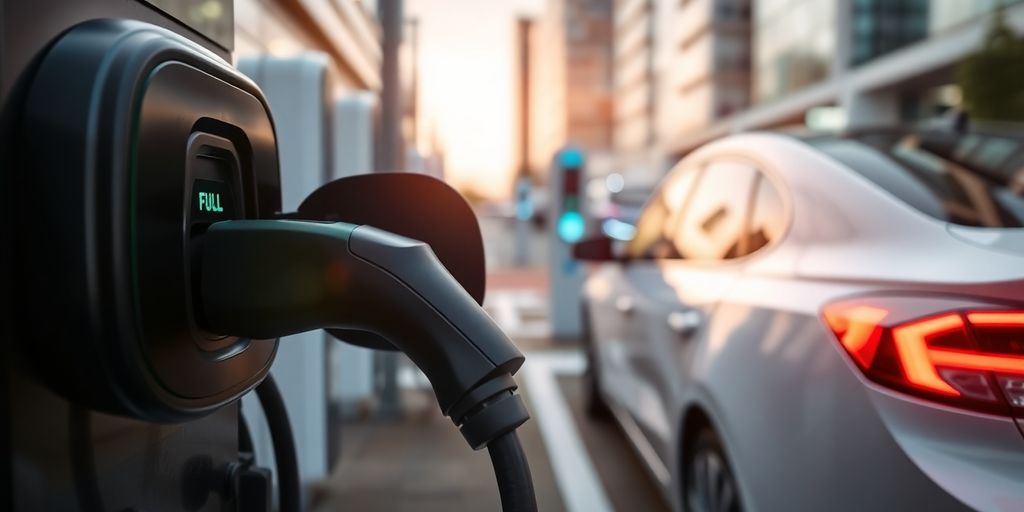
The future of EV charging is looking pretty cool, honestly. We’re not just talking about faster chargers, but completely new ways to get juice into our cars. Think wireless charging becoming more common – imagine just parking over a spot in your garage and charging without even plugging in! Also, battery tech is improving, meaning they can take a faster charge without degrading as quickly. It’s all about convenience and speed, making the switch to electric even easier.
Smart Charging Solutions
Smart charging is going to be a big deal. It’s all about optimizing when and how we charge our EVs. This means things like:
- Vehicle-to-grid (V2G) technology: Your car can actually send energy back to the grid when it’s needed, helping to stabilize the power supply. It’s like your car becomes a giant battery for the neighborhood!
- AI-powered charging schedules: The system learns your driving habits and automatically schedules charging for when electricity is cheapest and demand is lowest. This can save you money and reduce strain on the grid.
- Integration with renewable energy sources: Smart chargers can prioritize using solar or wind power to charge your car, making your driving even greener. If you are interested in solar options for home charging, there are many resources available.
The Role of Renewable Energy in EV Charging
Renewable energy is key to making EVs truly sustainable. If we’re powering our electric cars with coal, we’re not really solving the problem, are we? The goal is to link EV charging with renewable sources like solar and wind. This can happen in a few ways:
- Home solar + EV charger: Many people are installing solar panels on their roofs and using that energy to charge their cars. It’s a great way to reduce your carbon footprint and save money on electricity bills.
- Public charging stations powered by renewables: More and more public charging stations are being powered by solar or wind energy. This makes it easy to charge your car with clean energy, even when you’re on the go. The development of fast charging technology is also crucial for enhancing charging efficiency.
- Community solar programs: Some communities are setting up shared solar farms that residents can subscribe to, allowing them to power their homes and EVs with clean energy, even if they don’t have solar panels on their own roofs.
Wrapping It Up
So, to sum it all up, yes, electric vehicles do stop charging when their batteries are full. You don’t have to babysit the charging process. Thanks to smart battery management systems, they either stop charging completely or switch to a trickle charge to keep the battery topped off without overdoing it. This feature helps extend the battery’s life, which is a big win for EV owners. If you’re looking to keep your battery healthy, it’s also a good idea to charge it between 30% and 80%. Overall, you can plug in your EV and go about your day without worrying about overcharging.
Frequently Asked Questions
Do electric cars stop charging when the battery is full?
Yes, electric cars are designed to stop charging automatically when their battery is full. They have special systems that manage the battery to prevent overcharging.
What is trickle charging?
Trickle charging is a method that keeps the battery at full charge without adding too much power. It helps maintain the battery’s health.
Can I overcharge my electric vehicle?
No, you can’t overcharge your electric vehicle. The car’s system will disconnect the charger once the battery is full.
How can I check my charging status?
Most electric cars have lights or displays that show how much charge the battery has. You can check these to see the charging status.
What happens at public charging stations?
Public charging stations also stop charging automatically when the battery is full, just like home chargers.
Are there any myths about EV charging?
Yes, some people think you can overcharge an EV or that charging takes too long. These are not true because of the smart systems in EVs.
